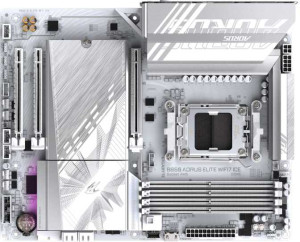
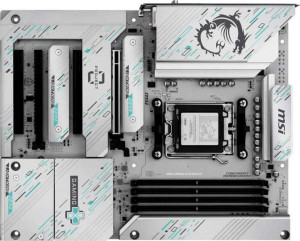
At their core, both the Gigabyte B850 Aorus Elite WiFi7 Ice and the MSI B850 Gaming Plus Wi-Fi PZ share the same fundamental platform: the AM5 socket, B850 chipset, and standard ATX form factor. Their wireless credentials are also identical, with full Wi-Fi 7 (802.11be) support spanning all major Wi-Fi generations, paired with Bluetooth 5.4. Both boards support overclocking, include RGB lighting, and carry a 3-year warranty. For a buyer focused purely on platform compatibility or wireless capability, these two boards are effectively interchangeable.
The only meaningful differentiators in this group come down to BIOS resilience features. The Gigabyte board ships with a dual BIOS — a backup chip that automatically takes over if the primary BIOS becomes corrupted during a failed flash or update. This is a significant safety net for enthusiasts who update firmware frequently or push overclocking limits. The MSI board lacks this but counters with an easy BIOS reset mechanism, which allows users to clear a bad BIOS configuration without needing to physically remove the CMOS battery or use jumpers — a practical convenience, especially in tight cases. The Gigabyte board does not offer this feature.
In terms of general info, neither board holds an outright dominant position. The Gigabyte Aorus Elite has a slight edge for users who prioritize BIOS corruption recovery via dual BIOS, making it marginally better suited to heavy firmware tinkerers. The MSI Gaming Plus, meanwhile, wins on everyday BIOS recovery convenience with its easy reset feature. Choose the Gigabyte if firmware stability under aggressive updates matters most; choose the MSI if simple, tool-free BIOS recovery is more relevant to your workflow.