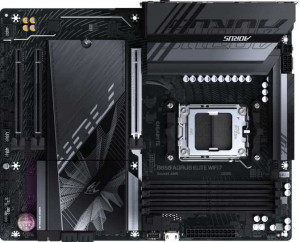
Gigabyte B850 Aorus Elite WiFi7
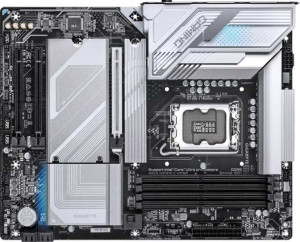
Gigabyte B860 Gaming X WiFi6E

Gigabyte B850 Aorus Elite WiFi7 Gigabyte B860 Gaming X WiFi6E

Overview

Welcome to our detailed spec comparison between the Gigabyte B850 Aorus Elite WiFi7 and the Gigabyte B860 Gaming X WiFi6E. Both boards share the ATX form factor, PCIe 5.0 support, and DDR5 memory compatibility, yet they target distinct platforms and priorities. Key battlegrounds include CPU socket compatibility, wireless connectivity standards, USB port variety, and memory performance ceilings — making this a fascinating head-to-head for builders weighing their next platform choice.

Common Features

  • Both products use the ATX form factor.
  • Wi-Fi connectivity is available on both products.
  • Bluetooth is available on both products.
  • Overclocking support is available on both products.
  • Easy BIOS reset is not available on either product.
  • Dual BIOS is present on both products.
  • aptX support is not available on either product.
  • Both products have 1 CPU socket.
  • Both products support a maximum memory amount of 256GB.
  • Both products have 4 memory slots.
  • Both products use DDR5 memory.
  • Both products have 2 memory channels.
  • ECC memory support is not available on either product.
  • Both products have 0 USB 3.2 Gen 1 ports (USB-C) on the rear panel.
  • Both products have 0 USB 3.2 Gen 2x2 ports.
  • Both products have 0 USB 4 20Gbps ports.
  • Both products have 0 Thunderbolt 3 ports.
  • Both products have 1 DisplayPort output.
  • Both products have 1 RJ45 port.
  • USB Type-C connectivity is present on both products.
  • Both products have 0 eSATA ports.
  • Both products provide 2 USB 3.2 Gen 1 ports through expansion.
  • Both products provide 4 USB 2.0 ports through expansion.
  • Both products have 4 SATA 3 connectors.
  • Both products have 6 fan headers.
  • Both products have 3 M.2 sockets.
  • A TPM connector is present on both products.
  • Both products have 0 U.2 sockets.
  • Both products have 0 PCIe 4.0 x16 slots.
  • Both products have 1 PCIe 5.0 x16 slot.
  • Both products have 2 PCIe x1 slots.
  • Both products support 7.1 audio channels.
  • RAID 0 support is available on both products.
  • RAID 1 support is available on both products.
  • RAID 5 support is available on both products.
  • RAID 10 (1+0) support is available on both products.
  • RAID 0+1 support is not available on either product.

Main Differences

  • The CPU socket is AM5 on Gigabyte B850 Aorus Elite WiFi7 and LGA 1851 on Gigabyte B860 Gaming X WiFi6E.
  • The chipset is B850 on Gigabyte B850 Aorus Elite WiFi7 and B860 on Gigabyte B860 Gaming X WiFi6E.
  • Wi-Fi 7 (802.11be) support is present on Gigabyte B850 Aorus Elite WiFi7 but not available on Gigabyte B860 Gaming X WiFi6E.
  • The Bluetooth version is 5.4 on Gigabyte B850 Aorus Elite WiFi7 and 5.3 on Gigabyte B860 Gaming X WiFi6E.
  • RGB lighting is present on Gigabyte B850 Aorus Elite WiFi7 but not available on Gigabyte B860 Gaming X WiFi6E.
  • The maximum native RAM speed is 5200 MHz on Gigabyte B850 Aorus Elite WiFi7 and 6400 MHz on Gigabyte B860 Gaming X WiFi6E.
  • The maximum overclocked RAM speed is 8200 MHz on Gigabyte B850 Aorus Elite WiFi7 and 9066 MHz on Gigabyte B860 Gaming X WiFi6E.
  • The number of USB 3.2 Gen 2 ports (USB-A) is 2 on Gigabyte B850 Aorus Elite WiFi7 and 1 on Gigabyte B860 Gaming X WiFi6E.
  • The number of USB 3.2 Gen 1 ports (USB-A) is 5 on Gigabyte B850 Aorus Elite WiFi7 and 2 on Gigabyte B860 Gaming X WiFi6E.
  • The number of USB 3.2 Gen 2 ports (USB-C) is 1 on Gigabyte B850 Aorus Elite WiFi7 and 0 on Gigabyte B860 Gaming X WiFi6E.
  • The number of USB 2.0 ports is 4 on Gigabyte B850 Aorus Elite WiFi7 and 5 on Gigabyte B860 Gaming X WiFi6E.
  • A USB 4 40Gbps port is present on Gigabyte B860 Gaming X WiFi6E but not available on Gigabyte B850 Aorus Elite WiFi7.
  • A Thunderbolt 4 port is present on Gigabyte B860 Gaming X WiFi6E but not available on Gigabyte B850 Aorus Elite WiFi7.
  • An HDMI output is present on Gigabyte B860 Gaming X WiFi6E but not available on Gigabyte B850 Aorus Elite WiFi7.
  • An S/PDIF Out port is present on Gigabyte B850 Aorus Elite WiFi7 but not available on Gigabyte B860 Gaming X WiFi6E.
  • The number of audio connectors is 2 on Gigabyte B850 Aorus Elite WiFi7 and 3 on Gigabyte B860 Gaming X WiFi6E.
Specs Comparison
Gigabyte B850 Aorus Elite WiFi7

Gigabyte B850 Aorus Elite WiFi7

Gigabyte B860 Gaming X WiFi6E

Gigabyte B860 Gaming X WiFi6E

General info:
CPU socket AM5 LGA 1851
chipset B850 B860
form factor ATX ATX
release date January 2025 January 2025
supports Wi-Fi
Wi-Fi version Wi-Fi 4 (802.11n), Wi-Fi 5 (802.11ac), Wi-Fi 6 (802.11ax), Wi-Fi 6E (802.11ax), Wi-Fi 7 (802.11be) Wi-Fi 4 (802.11n), Wi-Fi 5 (802.11ac), Wi-Fi 6 (802.11ax), Wi-Fi 6E (802.11ax)
Has Bluetooth
Bluetooth version 5.4 5.3
Easy to overclock
has RGB lighting
Easy to reset BIOS
Has dual BIOS
has aptX
CPU sockets 1 1
Has integrated graphics
warranty period 3 years 3 years
height 244 mm 244 mm
width 305 mm 305 mm
Has integrated CPU

The most fundamental distinction between these two boards is platform: the Gigabyte B850 Aorus Elite WiFi7 is built on the AM5 socket for AMD Ryzen processors, while the Gigabyte B860 Gaming X WiFi6E uses the LGA 1851 socket for Intel Core Ultra CPUs. This means they are not interchangeable — your CPU choice locks you into one of these boards, and no spec elsewhere in this comparison can override that constraint.

On wireless connectivity, the Aorus Elite has a clear edge: it supports Wi-Fi 7 (802.11be) and Bluetooth 5.4, whereas the Gaming X tops out at Wi-Fi 6E and Bluetooth 5.3. In practice, Wi-Fi 7 delivers significantly higher throughput and lower latency, particularly on congested networks, and Bluetooth 5.4 brings minor improvements in connection reliability over 5.3. The Aorus Elite also includes RGB lighting, which the Gaming X omits — a cosmetic difference, but relevant for users building a themed system.

Otherwise, the two boards are closely matched in this group: both are full-size ATX (identical 305 × 244 mm footprint), both support overclocking, feature dual BIOS, and carry a 3-year warranty. Neither has integrated graphics or an integrated CPU. The Aorus Elite holds a clear advantage in wireless capability and aesthetics, but the deciding factor for most buyers will simply be which CPU platform they are committed to.

Memory:
maximum memory amount 256GB 256GB
RAM speed (max) 5200 MHz 6400 MHz
overclocked RAM speed 8200 MHz 9066 MHz
memory slots 4 4
DDR memory version 5 5
memory channels 2 2
Supports ECC memory

The Gigabyte B850 Aorus Elite WiFi7 and the Gigabyte B860 Gaming X WiFi6E both support a maximum memory amount of 256GB, ensuring ample capacity for demanding workloads. Both motherboards are equipped with 4 memory slots and support DDR5 memory, with 2 memory channels for efficient data flow. There are no significant differences in these basic memory specifications between the two models.

However, when it comes to memory speed, the B860 Gaming X offers a higher maximum RAM speed of 6400 MHz, compared to the B850 Aorus Elite's 5200 MHz. Additionally, for overclocked memory, the B860 Gaming X supports a peak speed of 9066 MHz, while the B850 Aorus Elite can reach 8200 MHz. These differences in maximum and overclocked RAM speeds suggest that the B860 may offer slightly better performance in memory-intensive tasks.

Neither motherboard supports ECC memory, meaning that they are both intended for non-error-correcting setups, which is typical for consumer-grade boards. In summary, while both motherboards offer similar fundamental memory specifications, the B860 Gaming X offers higher memory speeds and overclocking potential.

Ports:
USB 3.2 Gen 2 ports (USB-A) 2 1
USB 3.2 Gen 1 ports (USB-A) 5 2
USB 3.2 Gen 2 ports (USB-C) 1 0
USB 3.2 Gen 1 ports (USB-C) 0 0
USB 2.0 ports 4 5
USB 3.2 Gen 2x2 ports 0 0
USB 4 40Gbps ports 0 1
USB 4 20Gbps ports 0 0
Thunderbolt 4 ports 0 1
Thunderbolt 3 ports 0 0
has an HDMI output
DisplayPort outputs 1 1
RJ45 ports 1 1
Has USB Type-C
eSATA ports 0 0
DVI outputs 0 0
has a VGA connector
PS/2 ports 0 0

The Gigabyte B850 Aorus Elite WiFi7 and the Gigabyte B860 Gaming X WiFi6E both offer a solid selection of ports for connectivity. In terms of USB 3.2 Gen 2 (USB-A) ports, the B850 Aorus Elite provides 2, while the B860 Gaming X offers only 1. The B850 also has 5 USB 3.2 Gen 1 (USB-A) ports, while the B860 Gaming X has 2. The B850 includes a USB 3.2 Gen 2 (USB-C) port, but the B860 does not. Both motherboards feature USB 2.0 ports, but the B850 has 4 while the B860 has 5. Neither board offers USB 3.2 Gen 2x2, USB 4 40Gbps, or USB 4 20Gbps ports.

In terms of display outputs, the B850 Aorus Elite offers a DisplayPort output, but lacks an HDMI output. In contrast, the B860 Gaming X includes both an HDMI output and a DisplayPort output, providing more display connectivity options. Both motherboards are equipped with an RJ45 Ethernet port for wired network connectivity. The B860 Gaming X additionally offers Thunderbolt 4 ports, while the B850 Aorus Elite has no Thunderbolt ports.

Both boards include a USB Type-C port, but only the B860 Gaming X offers a USB 4 40Gbps port and Thunderbolt 4, making it more versatile in terms of high-speed data transfer and display output options. On the other hand, the B850 Aorus Elite’s slightly greater number of USB 2.0 ports might be preferred for legacy devices. Neither motherboard includes eSATA, DVI, VGA, or PS/2 ports.

Connectors:
USB 3.2 Gen 1 ports (through expansion) 2 2
USB 2.0 ports (through expansion) 4 4
SATA 3 connectors 4 4
fan headers 6 6
USB 3.0 ports (through expansion) 2 2
M.2 sockets 3 3
Has TPM connector
U.2 sockets 0 0
Has mSATA connector
SATA 2 connectors 0 0

The Gigabyte B850 Aorus Elite WiFi7 and the Gigabyte B860 Gaming X WiFi6E offer identical specifications when it comes to their connectors. Both motherboards provide 2 USB 3.2 Gen 1 ports, 4 USB 2.0 ports, and 2 USB 3.0 ports through expansion. They each include 4 SATA 3 connectors for storage devices, and both boards are equipped with 6 fan headers to support cooling setups. Additionally, both motherboards have 3 M.2 sockets for high-speed storage options and include a TPM connector for added security.

Neither the B850 Aorus Elite nor the B860 Gaming X features a U.2 socket or an mSATA connector. Both boards also do not have SATA 2 connectors, focusing instead on the more modern SATA 3 standard.

In summary, the connector options are identical across both motherboards, with no significant differences between them in this category.

Expansion slots:
PCIe 4.0 x16 slots 0 0
PCIe 5.0 x16 slots 1 1
PCIe 3.0 x16 slots 0 0
PCIe x1 slots 2 2
PCI slots 0 0
PCIe 2.0 x16 slots 0 0
PCIe x4 slots 0 0
PCIe x8 slots 0 0

The Gigabyte B850 Aorus Elite WiFi7 and the Gigabyte B860 Gaming X WiFi6E have identical configurations when it comes to expansion slots. Both motherboards feature 1 PCIe 5.0 x16 slot and 2 PCIe x1 slots, with no PCIe 4.0 x16, PCIe 3.0 x16, PCIe x4, PCIe x8, or PCI slots available. Both motherboards also lack PCIe 2.0 x16 slots, providing only the latest PCIe 5.0 x16 slot for high-speed graphics cards or other expansion cards.

Overall, the expansion slot configuration is identical across both models, offering the same number and type of slots for potential upgrades.

Audio:
audio channels 7.1 7.1
Has S/PDIF Out port
audio connectors 2 3

The Gigabyte B850 Aorus Elite WiFi7 and the Gigabyte B860 Gaming X WiFi6E both support 7.1 audio channels, ensuring high-quality audio output. However, there is a key difference in the audio features between the two models. The B850 Aorus Elite includes an S/PDIF Out port, while the B860 Gaming X does not. In terms of audio connectors, the B850 offers 2, while the B860 provides 3, giving the latter more flexibility for connecting external audio devices.

In summary, both motherboards provide similar audio channel support, but the B850 Aorus Elite offers the additional S/PDIF Out port, while the B860 Gaming X compensates with more audio connectors.

Storage:
Supports RAID 1
Supports RAID 10 (1+0)
Supports RAID 5
Supports RAID 0
Supports RAID 0+1

The Gigabyte B850 Aorus Elite WiFi7 and the Gigabyte B860 Gaming X WiFi6E have identical RAID support features. Both motherboards support RAID 1, RAID 10 (1+0), RAID 5, and RAID 0, providing a range of options for configuring storage arrays. Neither motherboard supports RAID 0+1, as both lack this specific RAID configuration.

In summary, the storage features are exactly the same across both models, with no differences in terms of supported RAID levels.

Comparison Summary & Verdict

After examining every specification, these two boards serve clearly different audiences. The Gigabyte B850 Aorus Elite WiFi7 is the stronger pick for AMD enthusiasts, offering the AM5 socket, Wi-Fi 7 support, RGB lighting, a broader USB rear-panel layout with a USB-C Gen 2 port, and an S/PDIF audio output — ideal for users who want cutting-edge wireless and a feature-rich build. The Gigabyte B860 Gaming X WiFi6E, on the other hand, targets Intel LGA 1851 platform builders and stands out with its Thunderbolt 4 and USB 4 40Gbps port, higher native and overclocked RAM speeds of up to 9066 MHz, an HDMI output, and an extra audio connector. Choose the B850 Aorus Elite WiFi7 for AMD platform versatility and wireless future-proofing; opt for the B860 Gaming X WiFi6E if you need Intel compatibility, superior memory bandwidth, and advanced high-speed connectivity.

Gigabyte B850 Aorus Elite WiFi7
Buy Gigabyte B850 Aorus Elite WiFi7 if...

Buy the Gigabyte B850 Aorus Elite WiFi7 if you are building on the AMD AM5 platform and want Wi-Fi 7 support, RGB lighting, a wider USB port selection, and an S/PDIF audio output.

Gigabyte B860 Gaming X WiFi6E
Buy Gigabyte B860 Gaming X WiFi6E if...

Buy the Gigabyte B860 Gaming X WiFi6E if you are on the Intel LGA 1851 platform and need Thunderbolt 4, a USB 4 40Gbps port, higher memory speeds, and an HDMI output.