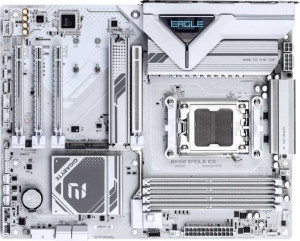
Both boards share a strong common foundation: the AM5 socket, standard ATX form factor, and near-identical dimensions make them drop-in compatible with the same cases and Ryzen processors. They also match on HDMI 2.1 output, RGB lighting, dual BIOS protection, overclocking support, and a 3-year warranty — so neither has a structural or longevity edge over the other at a glance.
The most meaningful split comes down to connectivity and usability. The MSI B840 Gaming Plus WiFi includes built-in Wi-Fi and Bluetooth, which the Gigabyte B850 Eagle Ice entirely lacks. For a desktop build, the absence of wireless on the Gigabyte means you are either tethered to ethernet or must budget for a separate PCIe/USB wireless adapter — an added cost and hassle. The MSI also wins on BIOS convenience with its easy BIOS reset feature, which can be a genuine time-saver during troubleshooting or failed overclocks. The Gigabyte's B850 chipset, one tier above the B840, does offer broader overclocking headroom and more I/O flexibility in principle, but none of that advantage is reflected in any other spec within this group.
For general use, the MSI B840 Gaming Plus WiFi holds a clear practical edge here: integrated wireless connectivity and easier BIOS management address real day-to-day needs without requiring extras. The Gigabyte's higher chipset tier is a latent advantage that would need to be evaluated against the connectivity trade-off — and for most users, built-in Wi-Fi and Bluetooth tip the balance toward the MSI.