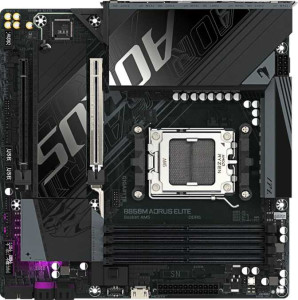
The port layouts on these two boards reflect genuinely different design philosophies. The Aorus Elite is built for users with a lot of legacy and standard USB-A peripherals, offering a total of 7 USB-A ports on the rear panel (5× Gen 1 + 2× Gen 2) — a practical advantage for desks crowded with mice, keyboards, headsets, and hubs. The Tomahawk Max, by contrast, trims USB-A down to just 3 and redirects that investment into 3× USB 3.2 Gen 2 Type-C ports, making it significantly better suited to modern peripherals, fast external SSDs, and the growing ecosystem of USB-C accessories that transfer at up to 10 Gbps each.
The display output difference is also worth noting, even though most discrete GPU users will rarely touch rear-panel video. The Aorus Elite provides a DisplayPort output, while the Tomahawk Max offers HDMI instead. Neither is objectively superior, but HDMI tends to have broader plug-and-play compatibility across monitors, TVs, and capture devices, while DisplayPort is preferred in multi-monitor or high-refresh-rate desktop setups. The choice here depends entirely on what display equipment a user already owns.
There is no outright winner in this group — it is a deliberate trade-off. The Aorus Elite is the stronger pick for users who rely on many USB-A devices simultaneously, while the Tomahawk Max is better aligned with a modern, USB-C-forward peripheral setup. Neither board supports USB4 or Thunderbolt, so both sit at the same ceiling for high-bandwidth connectivity.