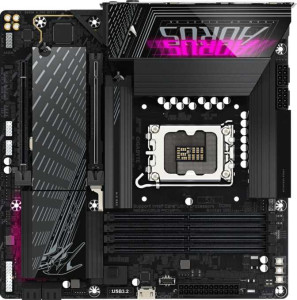
The most fundamental difference in this group is platform allegiance. The Gigabyte B850M Aorus Elite WiFi6E Ice uses the AM5 socket and a B850 chipset, making it an AMD Ryzen build platform, while the Gigabyte B860M Aorus Pro WiFi7 pairs an LGA 1851 socket with a B860 chipset, targeting Intel's current-generation Core Ultra lineup. This means the two boards are not interchangeable — your CPU choice is the deciding factor before anything else. Both chipsets sit in the mid-range tier of their respective ecosystems and both are listed as easy to overclock, though in practice chipset-level overclocking capabilities depend heavily on platform rules set by AMD and Intel respectively.
On connectivity, the B860M Aorus Pro WiFi7 holds a clear edge: it supports Wi-Fi 7 (802.11be) in addition to all older standards, whereas the B850M tops out at Wi-Fi 6E (802.11ax). Wi-Fi 7 delivers meaningfully higher theoretical throughput and lower latency, particularly on the 6 GHz band, and supports multi-link operation — a real-world advantage for users with a Wi-Fi 7 router. Similarly, the Pro WiFi7 features Bluetooth 5.4 versus 5.3 on the Elite, a minor but forward-looking improvement in connection stability and energy efficiency.
Beyond platform and wireless connectivity, the two boards are essentially twins in this spec group: identical Micro-ATX form factor at 244 × 244 mm, shared RGB lighting, dual BIOS, a 3-year warranty, and no integrated graphics or CPU. If you are already committed to an AMD or Intel platform, the choice is made for you. For users still undecided, the B860M Aorus Pro WiFi7 holds a general-info edge solely due to its newer Wi-Fi 7 and Bluetooth 5.4 support, which offer a more future-proof wireless foundation.