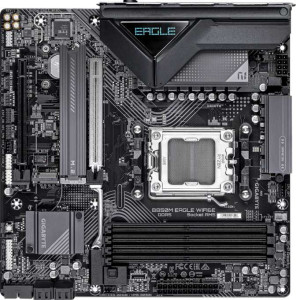
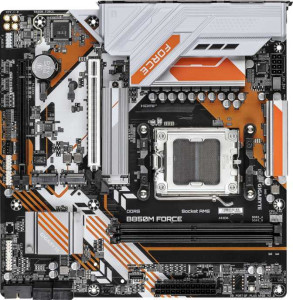
The rear I/O on these two boards is broadly similar — both provide the same complement of USB-A ports, a single RJ45, HDMI output, and a legacy PS/2 connector. The differences, while not dramatic, are consistent enough to matter depending on your peripheral setup. The Eagle Wi-Fi6E edges ahead with two DisplayPort outputs versus just one on the Force, making it the stronger pick for multi-monitor productivity builds that rely on integrated graphics outputs — particularly relevant given both boards carry HDMI as well.
The USB-C situation is where the quality gap shows up. The Eagle ships with a USB 3.2 Gen 2 Type-C port running at 10 Gbps, while the Force offers only a Gen 1 Type-C at 5 Gbps. For users connecting fast external SSDs or modern peripherals via USB-C, that 2× bandwidth difference is tangible — the Eagle′s port will saturate typical NVMe enclosures far more effectively. The Eagle also provides 4 USB 2.0 ports compared to the Force′s 2, which, while low-bandwidth, are practical for mice, keyboards, and dongles that do not need speed but do need dedicated connections.
Neither board offers USB4, Thunderbolt, or any high-bandwidth video alternatives beyond the DisplayPort and HDMI outputs, so both sit firmly in the mainstream tier. Still, the Eagle Wi-Fi6E holds a clear port advantage — faster USB-C, more display outputs, and more legacy USB connections — making it the more versatile choice for a fully populated desk setup.