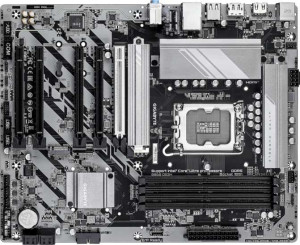
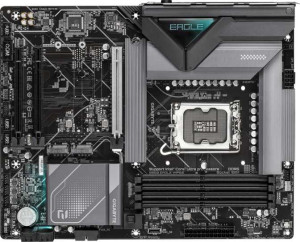
At the platform level, the Gigabyte B860 DS3H and the Gigabyte B860 Eagle WiFi6E are built on identical foundations: both use the LGA 1851 socket with the B860 chipset, share the same ATX form factor (244 × 305 mm), support overclocking, include dual BIOS protection, and carry a 3-year warranty. For a buyer evaluating platform longevity, compatibility, or repairability, these two boards are effectively interchangeable.
The real fork in the road is connectivity. The Eagle WiFi6E adds Wi-Fi and Bluetooth — features the DS3H entirely lacks. In practice, this means the Eagle can be placed anywhere in a room without running an Ethernet cable, and it supports wireless peripherals or audio devices natively. The DS3H, by contrast, requires a wired network connection and would need a separate adapter for any wireless functionality — an added cost and a slot or port consumed. On the flip side, the DS3H includes RGB lighting, which the Eagle omits, a minor aesthetic consideration with no performance implication.
The Eagle WiFi6E holds a clear advantage in this group for most users. Built-in wireless connectivity is a meaningful, practical feature that removes infrastructure constraints, and its absence on the DS3H is a genuine limitation rather than a minor omission. The RGB difference is cosmetic and unlikely to drive a purchasing decision on its own. Unless a builder has a dedicated wired setup and zero need for Bluetooth, the Eagle WiFi6E is the more capable and versatile choice based solely on these general specifications.