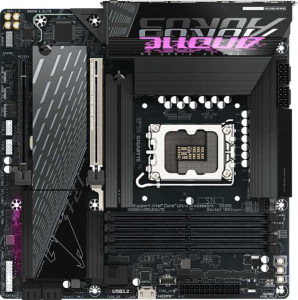
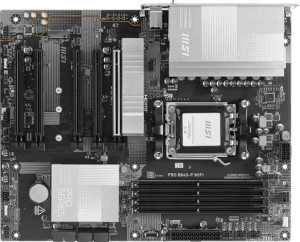
The most fundamental distinction here is platform compatibility: the Gigabyte B860M Aorus Elite uses an LGA 1851 socket paired with Intel's B860 chipset, while the MSI Pro B840-P WiFi uses an AM5 socket with AMD's B840 chipset. These two boards are entirely incompatible with each other's processors, so your CPU choice — Intel Arrow Lake or AMD Ryzen 9000 series — will determine which board is even relevant to you. Neither decision is objectively superior; it comes down to the broader ecosystem you are investing in.
Beyond platform, the boards diverge meaningfully in form factor and connectivity. The Gigabyte is a compact Micro-ATX (244 × 244 mm), making it a better fit for smaller builds or cases with tight clearances. The MSI is a full ATX (304.8 mm wide), offering more physical space for expansion slots and airflow routing in mid-tower or larger cases. On wireless connectivity, the MSI holds a clear practical edge: it includes both Wi-Fi and Bluetooth out of the box, while the Gigabyte offers neither — a significant omission in 2025 that would require an add-in card or USB adapter for wireless use.
Both boards share HDMI 2.1 output, dual BIOS, RGB lighting, a 3-year warranty, and are rated as easy to overclock — so neither has an edge on firmware resilience or longevity. However, the MSI also supports easy BIOS reset while the Gigabyte does not, which is a minor but real convenience advantage during troubleshooting. Overall, if wireless connectivity and BIOS accessibility matter to your build, the MSI Pro B840-P WiFi has a tangible edge in this category — provided you are building on the AMD platform.