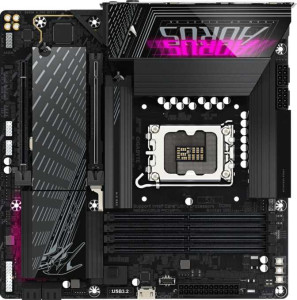
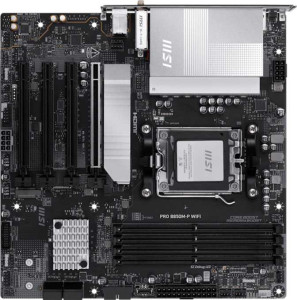
The single most important difference in this group is platform allegiance: the Gigabyte B860M Aorus Pro WiFi7 targets Intel's LGA 1851 socket with its B860 chipset, while the MSI Pro B850M-P Wi-Fi is built for AMD's AM5 socket with a B850 chipset. This is a binary fork in the road — your CPU choice dictates which board is even an option — so neither platform is universally superior here; the decision depends entirely on whether you are going Intel or AMD. Both are mid-range chipsets in their respective ecosystems, offering a solid feature set without the premium of a Z890 or X870 tier.
Beyond platform, the two boards are remarkably similar. Both share an identical Micro-ATX form factor with near-identical dimensions (~244 mm square), both support up to Wi-Fi 7 and Bluetooth 5.4, both carry HDMI 2.1, dual BIOS, RGB lighting, and a 3-year warranty. One meaningful operational difference, however, is BIOS accessibility: the MSI board supports easy BIOS reset, while the Gigabyte does not. In practice, this matters when troubleshooting a failed overclock or a memory training loop — the MSI board makes recovery less disruptive.
Overall, these two boards are evenly matched on general features, with the platform choice (Intel vs. AMD) being the decisive factor for most buyers. The one concrete functional edge goes to the MSI Pro B850M-P Wi-Fi for its easy BIOS reset capability, which adds a layer of convenience that enthusiasts and first-time builders alike will appreciate.