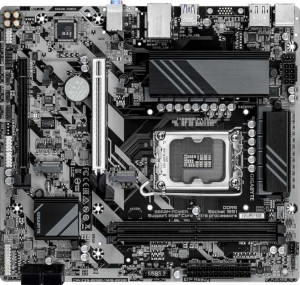
Gigabyte B860M Power
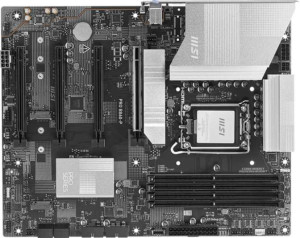
MSI Pro B860-P

Gigabyte B860M Power MSI Pro B860-P

Overview

Welcome to our detailed spec comparison between the Gigabyte B860M Power and the MSI Pro B860-P, two B860-chipset motherboards targeting different types of builders. While they share a common foundation — including the LGA 1851 socket, PCIe 5.0 support, and DDR5 memory — their differences in form factor, connectivity, and expansion potential make each board a distinct proposition. Read on to find out which one fits your build.

Common Features

  • Both products use the LGA 1851 CPU socket.
  • Both products feature the B860 chipset.
  • Neither product supports Wi-Fi.
  • Neither product includes Bluetooth.
  • Both products output HDMI via version 2.1.
  • Both products support easy overclocking.
  • Both products include dual BIOS.
  • Each product has 1 CPU socket.
  • Both products support a maximum RAM speed of 6400 MHz.
  • Both products use DDR5 memory.
  • Both products operate with 2 memory channels.
  • Neither product supports ECC memory.
  • Neither product includes USB 3.2 Gen 2 ports in USB-C format.
  • Neither product includes USB 3.2 Gen 1 ports in USB-C format.
  • Neither product includes USB 3.2 Gen 2x2 ports.
  • Neither product includes USB 4 20Gbps ports.
  • Neither product includes Thunderbolt 3 ports.
  • Both products have an HDMI output.
  • Both products feature 1 DisplayPort output.
  • Both products include 1 RJ45 port.
  • Both products provide 4 USB 2.0 ports through expansion.
  • Both products have 4 SATA 3 connectors.
  • Both products include a TPM connector.
  • Neither product has a U.2 socket.
  • Neither product has an mSATA connector.
  • Neither product includes SATA 2 connectors.
  • Both products have 1 PCIe 5.0 x16 slot.
  • Neither product includes PCIe 3.0 x16 slots.
  • Neither product includes PCI slots.
  • Neither product includes PCIe 2.0 x16 slots.
  • Neither product includes PCIe x8 slots.
  • Both products support 7.1 audio channels.
  • Neither product has an S/PDIF Out port.
  • Both products have 3 audio connectors.
  • Both products support RAID 0, RAID 1, RAID 5, and RAID 10.
  • Neither product supports RAID 0+1.

Main Differences

  • The form factor is Micro-ATX on Gigabyte B860M Power and ATX on MSI Pro B860-P.
  • RGB lighting is not present on Gigabyte B860M Power but is available on MSI Pro B860-P.
  • Easy BIOS reset is not available on Gigabyte B860M Power but is available on MSI Pro B860-P.
  • The warranty period is 3 years on Gigabyte B860M Power and 2 years on MSI Pro B860-P.
  • The height is 225 mm on Gigabyte B860M Power and 243.8 mm on MSI Pro B860-P.
  • The width is 244 mm on Gigabyte B860M Power and 304.8 mm on MSI Pro B860-P.
  • The maximum memory amount is 128 GB on Gigabyte B860M Power and 256 GB on MSI Pro B860-P.
  • The overclocked RAM speed reaches 9066 MHz on Gigabyte B860M Power and 8600 MHz on MSI Pro B860-P.
  • The number of memory slots is 2 on Gigabyte B860M Power and 4 on MSI Pro B860-P.
  • USB 3.2 Gen 2 ports (USB-A) number 0 on Gigabyte B860M Power and 2 on MSI Pro B860-P.
  • USB 3.2 Gen 1 ports (USB-A) number 3 on Gigabyte B860M Power and 2 on MSI Pro B860-P.
  • USB 2.0 ports number 3 on Gigabyte B860M Power and 4 on MSI Pro B860-P.
  • USB 4 40Gbps ports are absent on Gigabyte B860M Power but 1 is present on MSI Pro B860-P.
  • Thunderbolt 4 ports are absent on Gigabyte B860M Power but 1 is present on MSI Pro B860-P.
  • USB Type-C is not present on Gigabyte B860M Power but is available on MSI Pro B860-P.
  • A PS/2 port is present on Gigabyte B860M Power but absent on MSI Pro B860-P.
  • USB 3.2 Gen 1 ports through expansion number 2 on Gigabyte B860M Power and 4 on MSI Pro B860-P.
  • Fan headers number 3 on Gigabyte B860M Power and 6 on MSI Pro B860-P.
  • USB 3.0 ports through expansion number 2 on Gigabyte B860M Power and 4 on MSI Pro B860-P.
  • M.2 sockets number 2 on Gigabyte B860M Power and 3 on MSI Pro B860-P.
  • PCIe 4.0 x16 slots number 0 on Gigabyte B860M Power and 1 on MSI Pro B860-P.
  • PCIe x1 slots number 0 on Gigabyte B860M Power and 1 on MSI Pro B860-P.
  • PCIe x4 slots number 1 on Gigabyte B860M Power and 0 on MSI Pro B860-P.
Specs Comparison
Gigabyte B860M Power

Gigabyte B860M Power

MSI Pro B860-P

MSI Pro B860-P

General info:
CPU socket LGA 1851 LGA 1851
chipset B860 B860
form factor Micro-ATX ATX
release date January 2025 January 2025
supports Wi-Fi
Has Bluetooth
HDMI version HDMI 2.1 HDMI 2.1
Easy to overclock
has RGB lighting
Easy to reset BIOS
Has dual BIOS
CPU sockets 1 1
Has integrated graphics
warranty period 3 years 2 years
height 225 mm 243.8 mm
width 244 mm 304.8 mm
Has integrated CPU

Both the Gigabyte B860M Power and the MSI Pro B860-P share the same LGA 1851 socket and B860 chipset, meaning they target the same generation of Intel processors with identical platform-level support. Neither board includes Wi-Fi, Bluetooth, or integrated graphics, so users on both platforms will need to factor in discrete components for connectivity and display output. The shared HDMI 2.1 output and overclock-friendly design round out a largely equivalent feature baseline.

The most consequential difference is form factor: the B860M Power is a Micro-ATX board (225 × 244 mm), while the Pro B860-P is a full ATX board (243.8 × 304.8 mm). This means the MSI fits only in mid-tower or larger cases, while the Gigabyte opens up compact build options — a real advantage for space-constrained or small-form-factor builds. Beyond size, the MSI adds easy BIOS reset functionality and RGB lighting, which improve troubleshooting convenience and aesthetics respectively. The Gigabyte, however, counters with a notably longer 3-year warranty versus the MSI's 2-year warranty, offering greater long-term peace of mind.

Overall, neither board has a sweeping advantage — the choice hinges on priorities. The MSI Pro B860-P edges ahead for full-ATX builds where easier BIOS management and RGB are valued. The Gigabyte B860M Power is the stronger pick for compact system builders or anyone prioritizing a longer warranty.

Memory:
maximum memory amount 128GB 256GB
RAM speed (max) 6400 MHz 6400 MHz
overclocked RAM speed 9066 MHz 8600 MHz
memory slots 2 4
DDR memory version 5 5
memory channels 2 2
Supports ECC memory

On the fundamentals, both boards share a solid common ground: DDR5 memory support, a dual-channel architecture, and a standard rated speed of 6400 MHz. Neither supports ECC memory, keeping them firmly in the consumer rather than workstation tier. For most everyday builds, these shared traits mean comparable out-of-the-box memory performance.

Where they diverge is in capacity and expandability. The MSI Pro B860-P ships with 4 DIMM slots capable of holding up to 256 GB, while the Gigabyte B860M Power offers just 2 slots with a 128 GB ceiling. In practical terms, the MSI allows users to start with two sticks and expand later without replacing existing modules — a meaningful advantage for anyone planning a phased upgrade. The Gigabyte's two-slot design locks users into their initial configuration sooner. On the flip side, the Gigabyte pulls ahead on overclocked memory headroom, supporting XMP/EXPO profiles up to 9066 MHz versus the MSI's 8600 MHz — a tangible edge for enthusiasts who push RAM frequencies aggressively.

The verdict here depends on use case. The MSI Pro B860-P has a clear structural advantage for users who prioritize future-proofing, multitasking headroom, or content creation workloads that benefit from higher RAM capacity. The Gigabyte B860M Power carves out a niche for performance-focused builders who want maximum overclocked memory speeds in a compact setup and have no need to exceed two sticks.

Ports:
USB 3.2 Gen 2 ports (USB-A) 0 2
USB 3.2 Gen 1 ports (USB-A) 3 2
USB 3.2 Gen 2 ports (USB-C) 0 0
USB 3.2 Gen 1 ports (USB-C) 0 0
USB 2.0 ports 3 4
USB 3.2 Gen 2x2 ports 0 0
USB 4 40Gbps ports 0 1
USB 4 20Gbps ports 0 0
Thunderbolt 4 ports 0 1
Thunderbolt 3 ports 0 0
has an HDMI output
DisplayPort outputs 1 1
RJ45 ports 1 1
Has USB Type-C
eSATA ports 0 0
DVI outputs 0 0
has a VGA connector
PS/2 ports 1 0

For display and networking outputs, the two boards are essentially identical — both offer HDMI, one DisplayPort, and a single RJ45 ethernet port. The real story is in USB connectivity, where a significant gap emerges. The Gigabyte B860M Power tops out at USB 3.2 Gen 1 (5 Gbps) for its fastest USB-A ports and offers no USB-C whatsoever, while the MSI Pro B860-P not only includes USB 3.2 Gen 2 (10 Gbps) USB-A ports but also a USB 4 40 Gbps port with Thunderbolt 4 support.

That Thunderbolt 4 inclusion on the MSI is a meaningful differentiator. At 40 Gbps, it enables daisy-chaining high-bandwidth peripherals, connecting external GPU enclosures, or driving high-resolution displays through a single cable — capabilities the Gigabyte simply cannot match. The absence of any USB-C on the Gigabyte is increasingly a limitation as modern peripherals, storage devices, and monitors shift toward that connector standard. The Gigabyte does include a PS/2 port, which the MSI omits — useful in niche scenarios involving legacy input devices or KVM switches, but irrelevant for the vast majority of modern builds.

The MSI Pro B860-P holds a clear and substantial edge in this category. Its high-speed USB ecosystem, anchored by Thunderbolt 4 and USB 4, is better suited to current and future peripheral demands, making it the stronger choice for users who rely on fast external storage, docks, or advanced display setups.

Connectors:
USB 3.2 Gen 1 ports (through expansion) 2 4
USB 2.0 ports (through expansion) 4 4
SATA 3 connectors 4 4
fan headers 3 6
USB 3.0 ports (through expansion) 2 4
M.2 sockets 2 3
Has TPM connector
U.2 sockets 0 0
Has mSATA connector
SATA 2 connectors 0 0

Storage connectivity is identical at the baseline — both boards provide 4 SATA 3 connectors and a TPM header, giving them equivalent support for traditional drives and security module requirements. The divergence begins with M.2: the Gigabyte B860M Power offers 2 M.2 sockets, while the MSI Pro B860-P provides 3. That extra slot is genuinely useful for builders who want to run a high-speed NVMe boot drive, a secondary NVMe for fast storage, and a third M.2 device — whether for additional SSD capacity or an M.2-based peripheral — without sacrificing any SATA ports.

Fan header count tells a similar story. The Gigabyte's 3 fan headers are adequate for modest cooling setups, but the MSI's 6 headers cater far better to builds with multiple case fans, dedicated radiator pumps, or AIO coolers — all without needing a separate fan hub. For anyone building a thermally demanding system or a well-ventilated workstation, this difference is more than cosmetic. Internal USB expansion follows the same pattern: the MSI doubles the Gigabyte's USB 3.0/3.2 Gen 1 internal headers, enabling more front-panel and add-in card connectivity.

Across every meaningful metric in this category, the MSI Pro B860-P offers greater internal expandability. The Gigabyte B860M Power is not deficient in absolute terms, but for builders who anticipate a denser, more complex internal configuration, the MSI's additional M.2 slot and fan headers deliver a tangible practical advantage.

Expansion slots:
PCIe 4.0 x16 slots 0 1
PCIe 5.0 x16 slots 1 1
PCIe 3.0 x16 slots 0 0
PCIe x1 slots 0 1
PCI slots 0 0
PCIe 2.0 x16 slots 0 0
PCIe x4 slots 1 0
PCIe x8 slots 0 0

A PCIe 5.0 x16 slot is present on both boards, ensuring full-bandwidth support for current and next-generation discrete graphics cards — so GPU performance is not a differentiator here. The contrast emerges in secondary expansion. The Gigabyte B860M Power pairs its primary slot with a single PCIe x4 slot, whereas the MSI Pro B860-P adds both a PCIe 4.0 x16 slot and a PCIe x1 slot alongside its primary.

The practical implications are notable. The MSI's secondary PCIe 4.0 x16 physical slot — even if electrically wired at fewer lanes — accommodates a much wider range of add-in cards than a dedicated x4 slot, including capture cards, 10GbE NICs, or RAID controllers that expect a full-length physical form factor. The additional PCIe x1 slot further allows a compact add-in card, such as a sound card or USB expansion card, to coexist without consuming the larger slot. The Gigabyte's x4 slot is functional but more limiting in terms of card compatibility and simultaneous expansion.

The MSI Pro B860-P has the edge here, offering a more flexible and future-ready expansion layout. For users who plan to install multiple add-in cards beyond a GPU, the MSI's slot configuration provides meaningfully more options. The Gigabyte is adequate for single-GPU builds with minimal expansion needs, but it offers less room to grow.

Audio:
audio channels 7.1 7.1
Has S/PDIF Out port
audio connectors 3 3

Audio is the one category where there is nothing to debate. The Gigabyte B860M Power and MSI Pro B860-P are spec-for-spec identical: both deliver 7.1-channel surround audio, offer 3 analog audio connectors on the rear panel, and omit an S/PDIF optical output. Users who rely on digital optical passthrough to an external receiver or DAC will find neither board accommodates that without an add-in card.

The 7.1-channel capability is a reasonable standard for a consumer motherboard in this class, supporting multi-speaker surround setups for gaming or home theater use. The 3-connector layout — typically mic-in, line-in, and line-out — covers the essentials for headset and speaker users, though it is less flexible than the 5- or 6-jack configurations found on higher-end boards. Neither product distinguishes itself here.

This is a clear tie. Buyers for whom onboard audio quality or connectivity is a deciding factor will need to look beyond these specs — and likely beyond these two boards — as the data provided gives no basis to favor one over the other.

Storage:
Supports RAID 1
Supports RAID 10 (1+0)
Supports RAID 5
Supports RAID 0
Supports RAID 0+1

Storage redundancy support is identical across both boards. The Gigabyte B860M Power and MSI Pro B860-P each support RAID 0, RAID 1, RAID 5, and RAID 10, while neither supports RAID 0+1. This covers the full range of configurations most consumer and prosumer users would realistically deploy — from pure performance striping (RAID 0) to mirrored redundancy (RAID 1) to the parity-based protection of RAID 5 and the combined striping and mirroring of RAID 10.

The absence of RAID 0+1 is worth noting briefly: while functionally similar to RAID 10 in outcome, RAID 0+1 differs in how fault tolerance is structured at the array level. Its omission is common on consumer-grade boards and is unlikely to affect the vast majority of users. What matters is that both boards provide a solid and equivalent RAID foundation for those building NAS-adjacent workstations or simply wanting drive redundancy.

Much like the audio category, this is an unambiguous tie. Neither board offers any storage configuration advantage over the other, and the choice between them on this basis alone would be arbitrary.

Comparison Summary & Verdict

After examining every specification, these two boards serve clearly different audiences. The Gigabyte B860M Power is the stronger pick for compact builds: its Micro-ATX form factor, longer 3-year warranty, and higher overclocked RAM ceiling of 9066 MHz make it a capable and cost-conscious choice for small-footprint systems. The MSI Pro B860-P, however, is built for builders who need room to grow — offering 4 memory slots for up to 256 GB of RAM, 3 M.2 sockets, 6 fan headers, a Thunderbolt 4 port, USB 4 40Gbps, and an additional PCIe 4.0 x16 slot. If your priority is maximum expandability and modern connectivity, the MSI board is the clear match. Choose based on your case size and how much future-proofing your build demands.

Gigabyte B860M Power
Buy Gigabyte B860M Power if...

Buy the Gigabyte B860M Power if you are building a compact Micro-ATX system and want a longer 3-year warranty with a higher overclocked RAM speed ceiling.

MSI Pro B860-P
Buy MSI Pro B860-P if...

Buy the MSI Pro B860-P if you need maximum expandability, with 4 memory slots, 3 M.2 sockets, Thunderbolt 4, USB 4 40Gbps, and a full ATX layout for a feature-rich build.