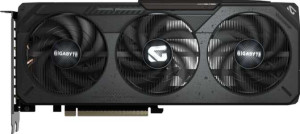
Gigabyte GeForce RTX 5050 Gaming OC
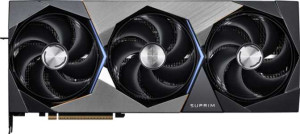
MSI GeForce RTX 5080 Suprim SOC

Gigabyte GeForce RTX 5050 Gaming OC MSI GeForce RTX 5080 Suprim SOC

Overview

Welcome to our in-depth spec comparison between the Gigabyte GeForce RTX 5050 Gaming OC and the MSI GeForce RTX 5080 Suprim SOC — two Blackwell-architecture GPUs built on the same 5 nm process, yet targeting very different audiences. We examine the key battlegrounds of raw compute performance, memory configuration, power consumption, and physical footprint to help you decide which card truly fits your needs.

Common Features

  • Both products support Double Precision Floating Point (DPFP).
  • Both products support ECC memory.
  • Both products use DirectX 12 Ultimate.
  • Both products support OpenGL version 4.6.
  • Both products support OpenCL version 3.
  • Both products support multi-display technology.
  • Both products support ray tracing.
  • Both products support 3D.
  • Both products support DLSS.
  • XeSS (XMX) support is not available on either product.
  • Both products have an HDMI output with HDMI version 2.1b.
  • Neither product has USB-C ports.
  • Neither product has DVI outputs.
  • Neither product has mini DisplayPort outputs.
  • Both products are built on the Blackwell GPU architecture.
  • Both products use PCIe version 5.
  • Both products are manufactured with a 5 nm semiconductor size.
  • Neither product features air-water cooling.

Main Differences

  • GPU base clock speed is 2317 MHz on Gigabyte GeForce RTX 5050 Gaming OC and 2295 MHz on MSI GeForce RTX 5080 Suprim SOC.
  • GPU turbo clock speed is 2632 MHz on Gigabyte GeForce RTX 5050 Gaming OC and 2745 MHz on MSI GeForce RTX 5080 Suprim SOC.
  • Pixel rate is 84.22 GPixel/s on Gigabyte GeForce RTX 5050 Gaming OC and 307.4 GPixel/s on MSI GeForce RTX 5080 Suprim SOC.
  • Floating-point performance is 13.48 TFLOPS on Gigabyte GeForce RTX 5050 Gaming OC and 59.03 TFLOPS on MSI GeForce RTX 5080 Suprim SOC.
  • Texture rate is 210.6 GTexels/s on Gigabyte GeForce RTX 5050 Gaming OC and 922.3 GTexels/s on MSI GeForce RTX 5080 Suprim SOC.
  • GPU memory speed is 1750 MHz on Gigabyte GeForce RTX 5050 Gaming OC and 1875 MHz on MSI GeForce RTX 5080 Suprim SOC.
  • Shading units total 2560 on Gigabyte GeForce RTX 5050 Gaming OC and 10752 on MSI GeForce RTX 5080 Suprim SOC.
  • Texture mapping units (TMUs) number 80 on Gigabyte GeForce RTX 5050 Gaming OC and 336 on MSI GeForce RTX 5080 Suprim SOC.
  • Render output units (ROPs) number 32 on Gigabyte GeForce RTX 5050 Gaming OC and 112 on MSI GeForce RTX 5080 Suprim SOC.
  • Effective memory speed is 20000 MHz on Gigabyte GeForce RTX 5050 Gaming OC and 30000 MHz on MSI GeForce RTX 5080 Suprim SOC.
  • Maximum memory bandwidth is 320 GB/s on Gigabyte GeForce RTX 5050 Gaming OC and 960 GB/s on MSI GeForce RTX 5080 Suprim SOC.
  • VRAM is 8GB on Gigabyte GeForce RTX 5050 Gaming OC and 16GB on MSI GeForce RTX 5080 Suprim SOC.
  • GDDR version is GDDR6 on Gigabyte GeForce RTX 5050 Gaming OC and GDDR7 on MSI GeForce RTX 5080 Suprim SOC.
  • Memory bus width is 128-bit on Gigabyte GeForce RTX 5050 Gaming OC and 256-bit on MSI GeForce RTX 5080 Suprim SOC.
  • HDMI port count is 2 on Gigabyte GeForce RTX 5050 Gaming OC and 1 on MSI GeForce RTX 5080 Suprim SOC.
  • DisplayPort outputs number 2 on Gigabyte GeForce RTX 5050 Gaming OC and 3 on MSI GeForce RTX 5080 Suprim SOC.
  • Thermal Design Power (TDP) is 130W on Gigabyte GeForce RTX 5050 Gaming OC and 360W on MSI GeForce RTX 5080 Suprim SOC.
  • Number of transistors is 16900 million on Gigabyte GeForce RTX 5050 Gaming OC and 45600 million on MSI GeForce RTX 5080 Suprim SOC.
  • Card width is 280 mm on Gigabyte GeForce RTX 5050 Gaming OC and 359 mm on MSI GeForce RTX 5080 Suprim SOC.
  • Card height is 117 mm on Gigabyte GeForce RTX 5050 Gaming OC and 150 mm on MSI GeForce RTX 5080 Suprim SOC.
Specs Comparison
Gigabyte GeForce RTX 5050 Gaming OC

Gigabyte GeForce RTX 5050 Gaming OC

MSI GeForce RTX 5080 Suprim SOC

MSI GeForce RTX 5080 Suprim SOC

Performance:
GPU clock speed 2317 MHz 2295 MHz
GPU turbo 2632 MHz 2745 MHz
pixel rate 84.22 GPixel/s 307.4 GPixel/s
floating-point performance 13.48 TFLOPS 59.03 TFLOPS
texture rate 210.6 GTexels/s 922.3 GTexels/s
GPU memory speed 1750 MHz 1875 MHz
shading units 2560 10752
texture mapping units (TMUs) 80 336
render output units (ROPs) 32 112
Has Double Precision Floating Point (DPFP)

At first glance, the base clock speeds of these two cards appear surprisingly close — the RTX 5050 Gaming OC actually edges ahead at 2317 MHz versus the RTX 5080 Suprim SOC's 2295 MHz. However, this is where any parity ends. The 5080 pulls ahead on boost, reaching 2745 MHz versus the 5050's 2632 MHz, and once you factor in the massive difference in execution resources, the per-clock advantage becomes irrelevant in practice.

The sheer scale gap in silicon is the defining story here. The RTX 5080 Suprim SOC carries 10,752 shading units, 336 TMUs, and 112 ROPs — roughly 4.2×, 4.2×, and 3.5× more than the RTX 5050's 2,560 shaders, 80 TMUs, and 32 ROPs, respectively. This translates directly into the throughput figures: the 5080 delivers 59.03 TFLOPS of floating-point performance and a texture rate of 922.3 GTexels/s, compared to 13.48 TFLOPS and 210.6 GTexels/s on the 5050. In real-world terms, that gap means the 5080 can handle far more complex geometry, higher-resolution rendering, and more demanding ray-traced scenes simultaneously — tasks where the 5050 would either struggle or require significant quality compromises.

Both GPUs support Double Precision Floating Point, which matters for compute workloads, and the 5080 also holds a modest edge in memory speed (1875 MHz vs. 1750 MHz). The RTX 5080 Suprim SOC has a decisive and commanding advantage across every meaningful performance metric in this group. The RTX 5050 Gaming OC occupies a different market tier entirely — it is not a competitive alternative for users prioritizing raw GPU performance.
Memory:
effective memory speed 20000 MHz 30000 MHz
maximum memory bandwidth 320 GB/s 960 GB/s
VRAM 8GB 16GB
GDDR version GDDR6 GDDR7
memory bus width 128-bit 256-bit
Supports ECC memory

The Gigabyte GeForce RTX 5050 Gaming OC has an effective memory speed of 20000 MHz, while the MSI GeForce RTX 5080 Suprim SOC is faster with an effective memory speed of 30000 MHz. The memory bandwidth also differs significantly, with the Gigabyte offering 320 GB/s, while the MSI provides 960 GB/s. The VRAM on the Gigabyte is 8GB, whereas the MSI card features 16GB of VRAM, doubling the capacity of the Gigabyte. The Gigabyte uses GDDR6 memory, while the MSI card steps up to GDDR7, indicating a newer generation of memory technology. Additionally, the MSI card has a wider memory bus width of 256-bit compared to the Gigabyte's 128-bit memory bus width.

Both products support ECC memory, ensuring error correction for more stable performance in demanding applications.

These differences in memory specs reflect the MSI card's larger, faster, and more advanced memory architecture, with significantly higher bandwidth, memory speed, and VRAM capacity compared to the Gigabyte card.

Features:
DirectX version DirectX 12 Ultimate DirectX 12 Ultimate
OpenGL version 4.6 4.6
OpenCL version 3 3
Supports multi-display technology
supports ray tracing
Supports 3D
supports DLSS
has XeSS (XMX)
AMD SAM / Intel Resizable BAR Intel Resizable BAR Intel Resizable BAR
has LHR
has RGB lighting
supported displays 4 4

Both the Gigabyte GeForce RTX 5050 Gaming OC and the MSI GeForce RTX 5080 Suprim SOC share the same key features. They both support DirectX 12 Ultimate, OpenGL 4.6, and OpenCL 3, ensuring compatibility with modern graphics APIs. Both cards support multi-display technology, ray tracing, and 3D features, offering robust visual capabilities. Additionally, both GPUs support DLSS for enhanced gaming performance, and neither supports XeSS (XMX).

Regarding system-level features, both products support Intel's Resizable BAR (AMD SAM is not mentioned for either), and neither card is equipped with LHR (Lite Hash Rate) functionality. Both cards also feature RGB lighting for customizable aesthetics and are capable of supporting up to 4 displays simultaneously.

In summary, the Gigabyte and MSI cards are nearly identical in terms of features, with no notable differences in this group beyond their specific model names.

Ports:
has an HDMI output
HDMI ports 2 1
HDMI version HDMI 2.1b HDMI 2.1b
DisplayPort outputs 2 3
USB-C ports 0 0
DVI outputs 0 0
mini DisplayPort outputs 0 0

The Gigabyte GeForce RTX 5050 Gaming OC and the MSI GeForce RTX 5080 Suprim SOC both feature HDMI 2.1b outputs, but they differ in the number of HDMI ports. The Gigabyte card offers 2 HDMI ports, while the MSI card has 1 HDMI port. Both cards support DisplayPort outputs, but the Gigabyte has 2, whereas the MSI has 3. Neither card has USB-C ports, DVI outputs, or mini DisplayPort outputs.

In terms of connectivity, the MSI card provides an additional DisplayPort output, but the Gigabyte card has more HDMI ports for users requiring multiple HDMI connections.

Overall, the two cards have similar output types, with the main difference being the number of HDMI and DisplayPort outputs available.

General info:
GPU architecture Blackwell Blackwell
release date June 2025 January 2025
Thermal Design Power (TDP) 130W 360W
PCI Express (PCIe) version 5 5
semiconductor size 5 nm 5 nm
number of transistors 16900 million 45600 million
Has air-water cooling
width 280 mm 359 mm
height 117 mm 150 mm

Both the Gigabyte GeForce RTX 5050 Gaming OC and the MSI GeForce RTX 5080 Suprim SOC use the Blackwell GPU architecture and share the same 5 nm semiconductor size. The Gigabyte card has a Thermal Design Power (TDP) of 130W, while the MSI card has a much higher TDP of 360W, indicating a greater power requirement. Both products support PCI Express version 5, ensuring fast data transfer speeds, and both do not feature air-water cooling systems.

In terms of physical size, the Gigabyte card is smaller, measuring 280 mm in width and 117 mm in height, whereas the MSI card is larger, with a width of 359 mm and a height of 150 mm. The MSI card also contains more transistors, with 45600 million compared to the Gigabyte's 16900 million, reflecting the MSI’s higher computational capacity.

Overall, while both cards share the same architecture and semiconductor size, the MSI card requires significantly more power, has a larger form factor, and includes more transistors for potentially higher performance.

Comparison Summary & Verdict

After reviewing all the specifications, a clear picture emerges. The MSI GeForce RTX 5080 Suprim SOC dominates in sheer performance, offering 59.03 TFLOPS of floating-point power, a 960 GB/s memory bandwidth courtesy of its GDDR7 256-bit interface, and 16GB of VRAM — making it the obvious choice for demanding workloads like high-resolution gaming, 3D rendering, or AI-assisted tasks. The Gigabyte GeForce RTX 5050 Gaming OC, on the other hand, draws only 130W TDP, occupies a much smaller footprint, and still delivers capable performance for everyday gaming and content creation at a fraction of the power cost. Both cards share ray tracing, DLSS, DirectX 12 Ultimate, and PCIe 5 support, so neither compromises on modern feature compatibility. Your decision ultimately comes down to budget, system power limits, and the performance tier you genuinely need.

Gigabyte GeForce RTX 5050 Gaming OC
Buy Gigabyte GeForce RTX 5050 Gaming OC if...

Buy the Gigabyte GeForce RTX 5050 Gaming OC if you want a compact, power-efficient Blackwell GPU with a 130W TDP that still supports ray tracing, DLSS, and DirectX 12 Ultimate for everyday gaming without straining your power supply or budget.

MSI GeForce RTX 5080 Suprim SOC
Buy MSI GeForce RTX 5080 Suprim SOC if...

Buy the MSI GeForce RTX 5080 Suprim SOC if you need maximum performance, with 59.03 TFLOPS, 16GB of GDDR7 memory at 960 GB/s bandwidth, and a higher 2745 MHz turbo clock for demanding high-resolution gaming and professional workloads.