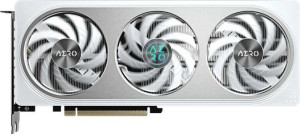
Gigabyte GeForce RTX 5060 Aero OC
Gigabyte GeForce RTX 5070 Ti Gaming OC

Gigabyte GeForce RTX 5060 Aero OC Gigabyte GeForce RTX 5070 Ti Gaming OC

Overview

Welcome to our in-depth specification comparison between the Gigabyte GeForce RTX 5060 Aero OC and the Gigabyte GeForce RTX 5070 Ti Gaming OC. Both cards share the same Blackwell architecture and GDDR7 memory technology, yet they differ significantly across raw computing power, VRAM capacity, and physical footprint. Read on to see how these two Gigabyte GPUs stack up across performance, memory, features, and more.

Common Features

  • Both cards share a GPU memory speed of 1750 MHz.
  • Double Precision Floating Point (DPFP) is supported on both products.
  • Both cards use GDDR7 memory with an effective memory speed of 28000 MHz.
  • ECC memory support is available on both products.
  • Both products support DirectX 12 Ultimate.
  • Both products support OpenGL version 4.6.
  • Both products support OpenCL version 3.
  • Multi-display technology is supported on both products.
  • Ray tracing is supported on both products.
  • 3D support is available on both products.
  • DLSS is supported on both products.
  • XeSS (XMX) support is not available on either product.
  • Both cards feature one HDMI 2.1b output port.
  • Both cards include three DisplayPort outputs.
  • Neither card has USB-C or DVI outputs.
  • Both products are built on the Blackwell GPU architecture.
  • Both cards use a 5 nm semiconductor manufacturing process.
  • Both products connect via PCIe version 5.
  • Air-water cooling is not available on either product.

Main Differences

  • GPU clock speed is 2280 MHz on the Gigabyte GeForce RTX 5060 Aero OC and 2295 MHz on the Gigabyte GeForce RTX 5070 Ti Gaming OC.
  • GPU turbo speed is 2595 MHz on the Gigabyte GeForce RTX 5060 Aero OC and 2588 MHz on the Gigabyte GeForce RTX 5070 Ti Gaming OC.
  • Pixel rate is 124.6 GPixel/s on the Gigabyte GeForce RTX 5060 Aero OC and 248.4 GPixel/s on the Gigabyte GeForce RTX 5070 Ti Gaming OC.
  • Floating-point performance is 19.93 TFLOPS on the Gigabyte GeForce RTX 5060 Aero OC and 46.38 TFLOPS on the Gigabyte GeForce RTX 5070 Ti Gaming OC.
  • Texture rate is 311.4 GTexels/s on the Gigabyte GeForce RTX 5060 Aero OC and 724.6 GTexels/s on the Gigabyte GeForce RTX 5070 Ti Gaming OC.
  • Shading units number 3840 on the Gigabyte GeForce RTX 5060 Aero OC and 8960 on the Gigabyte GeForce RTX 5070 Ti Gaming OC.
  • Texture mapping units (TMUs) total 120 on the Gigabyte GeForce RTX 5060 Aero OC and 280 on the Gigabyte GeForce RTX 5070 Ti Gaming OC.
  • Render output units (ROPs) total 48 on the Gigabyte GeForce RTX 5060 Aero OC and 96 on the Gigabyte GeForce RTX 5070 Ti Gaming OC.
  • Maximum memory bandwidth is 448 GB/s on the Gigabyte GeForce RTX 5060 Aero OC and 896 GB/s on the Gigabyte GeForce RTX 5070 Ti Gaming OC.
  • VRAM is 8GB on the Gigabyte GeForce RTX 5060 Aero OC and 16GB on the Gigabyte GeForce RTX 5070 Ti Gaming OC.
  • Memory bus width is 128-bit on the Gigabyte GeForce RTX 5060 Aero OC and 256-bit on the Gigabyte GeForce RTX 5070 Ti Gaming OC.
  • Thermal Design Power (TDP) is 145W on the Gigabyte GeForce RTX 5060 Aero OC and 300W on the Gigabyte GeForce RTX 5070 Ti Gaming OC.
  • The number of transistors is 21900 million on the Gigabyte GeForce RTX 5060 Aero OC and 45600 million on the Gigabyte GeForce RTX 5070 Ti Gaming OC.
  • Warranty period is 3 years on the Gigabyte GeForce RTX 5060 Aero OC and 4 years on the Gigabyte GeForce RTX 5070 Ti Gaming OC.
  • Card width is 281 mm on the Gigabyte GeForce RTX 5060 Aero OC and 340 mm on the Gigabyte GeForce RTX 5070 Ti Gaming OC.
  • Card height is 117 mm on the Gigabyte GeForce RTX 5060 Aero OC and 140 mm on the Gigabyte GeForce RTX 5070 Ti Gaming OC.
Specs Comparison
Gigabyte GeForce RTX 5060 Aero OC

Gigabyte GeForce RTX 5060 Aero OC

Gigabyte GeForce RTX 5070 Ti Gaming OC

Gigabyte GeForce RTX 5070 Ti Gaming OC

Performance:
GPU clock speed 2280 MHz 2295 MHz
GPU turbo 2595 MHz 2588 MHz
pixel rate 124.6 GPixel/s 248.4 GPixel/s
floating-point performance 19.93 TFLOPS 46.38 TFLOPS
texture rate 311.4 GTexels/s 724.6 GTexels/s
GPU memory speed 1750 MHz 1750 MHz
shading units 3840 8960
texture mapping units (TMUs) 120 280
render output units (ROPs) 48 96
Has Double Precision Floating Point (DPFP)

At first glance, the clock speeds of these two cards are remarkably close — the RTX 5060 Aero OC even edges out a marginally higher GPU turbo at 2595 MHz versus 2588 MHz on the RTX 5070 Ti Gaming OC. However, clock speed alone tells almost nothing about raw performance. What truly separates these GPUs is the scale of their underlying hardware: the 5070 Ti Gaming OC carries 8960 shading units and 280 TMUs compared to just 3840 shading units and 120 TMUs on the 5060 Aero OC — roughly 2.3× more compute resources operating at essentially the same frequency.

This gap translates directly into measurable throughput figures. The 5070 Ti Gaming OC delivers 46.38 TFLOPS of floating-point performance and a texture rate of 724.6 GTexels/s, versus 19.93 TFLOPS and 311.4 GTexels/s on the 5060 Aero OC. In practice, more TFLOPS means the GPU can handle more shader-heavy workloads — complex lighting, ray tracing, and compute tasks — while a higher texture rate means richer, more detailed surfaces rendered at speed. The 5070 Ti Gaming OC also doubles the render output units (96 vs. 48 ROPs), giving it a pixel rate of 248.4 GPixel/s versus 124.6 GPixel/s, which is particularly relevant for high-resolution and high-refresh-rate gaming. Both cards share an identical 1750 MHz memory speed and both support Double Precision Floating Point, so neither has an edge on those fronts.

The performance advantage here belongs decisively to the RTX 5070 Ti Gaming OC. Its compute resources are not marginally larger — they are more than twice the scale of the 5060 Aero OC across nearly every execution metric. The 5060 Aero OC's marginally higher turbo clock is a statistical footnote against this backdrop. Users prioritizing raw rendering throughput, high-resolution workloads, or demanding compute tasks will find the 5070 Ti Gaming OC in a clearly superior tier.

Memory:
effective memory speed 28000 MHz 28000 MHz
maximum memory bandwidth 448 GB/s 896 GB/s
VRAM 8GB 16GB
GDDR version GDDR7 GDDR7
memory bus width 128-bit 256-bit
Supports ECC memory

The memory specifications of the Gigabyte GeForce RTX 5060 Aero OC and Gigabyte GeForce RTX 5070 Ti Gaming OC show some key differences. Both cards use GDDR7 memory, with an effective memory speed of 28000 MHz. However, the maximum memory bandwidth differs significantly, with the RTX 5060 Aero OC offering 448 GB/s, while the RTX 5070 Ti provides 896 GB/s, doubling the bandwidth of the 5060 Aero OC.

In terms of VRAM, the RTX 5070 Ti comes with 16GB of memory, double the 8GB offered by the RTX 5060 Aero OC. This increase in VRAM could have implications for handling more demanding tasks and larger datasets in certain applications.

Both graphics cards share the same memory bus width in terms of the GDDR7 version (128-bit for the 5060 Aero OC and 256-bit for the 5070 Ti). Additionally, both products support ECC (Error-Correcting Code) memory, ensuring data integrity during operations.

Features:
DirectX version DirectX 12 Ultimate DirectX 12 Ultimate
OpenGL version 4.6 4.6
OpenCL version 3 3
Supports multi-display technology
supports ray tracing
Supports 3D
supports DLSS
has XeSS (XMX)
AMD SAM / Intel Resizable BAR Intel Resizable BAR Intel Resizable BAR
has LHR
has RGB lighting
supported displays 4 4

The Gigabyte GeForce RTX 5060 Aero OC and Gigabyte GeForce RTX 5070 Ti Gaming OC share a very similar set of features. Both cards support DirectX 12 Ultimate, OpenGL 4.6, and OpenCL 3. Additionally, they both enable multi-display technology, support ray tracing, and can handle 3D visuals. Furthermore, both cards are equipped with DLSS support and feature Intel Resizable BAR, also known as AMD SAM, for improved performance in certain workloads.

Neither card has XeSS (XMX) support, meaning they do not offer the extra AI-driven upscaling provided by Intel's Xe graphics technology. Both models also come without LHR (Lite Hash Rate) limitations, ensuring they are fully capable for mining tasks if applicable.

Both the RTX 5060 Aero OC and RTX 5070 Ti Gaming OC include RGB lighting for customizable aesthetics and are each capable of supporting up to four displays simultaneously, making them suitable for multi-monitor setups.

Ports:
has an HDMI output
HDMI ports 1 1
HDMI version HDMI 2.1b HDMI 2.1b
DisplayPort outputs 3 3
USB-C ports 0 0
DVI outputs 0 0
mini DisplayPort outputs 0 0

The Gigabyte GeForce RTX 5060 Aero OC and Gigabyte GeForce RTX 5070 Ti Gaming OC share identical port configurations. Both cards include a single HDMI output with HDMI 2.1b support and three DisplayPort outputs. Neither card features any USB-C ports, DVI outputs, or mini DisplayPort outputs.

Thus, the two models are nearly identical in terms of port options, making them equally equipped for modern display connections. The primary difference between them in this category is non-existent, as both products offer the same set of ports.

General info:
GPU architecture Blackwell Blackwell
release date May 2025 January 2025
Thermal Design Power (TDP) 145W 300W
PCI Express (PCIe) version 5 5
semiconductor size 5 nm 5 nm
number of transistors 21900 million 45600 million
warranty period 3 years 4 years
Has air-water cooling
width 281 mm 340 mm
height 117 mm 140 mm

The Gigabyte GeForce RTX 5060 Aero OC and Gigabyte GeForce RTX 5070 Ti Gaming OC share the same GPU architecture, utilizing the Blackwell design, and both cards use a 5 nm semiconductor size. However, there are significant differences in other areas. The RTX 5060 Aero OC has a Thermal Design Power (TDP) of 145W, while the RTX 5070 Ti Gaming OC has a higher TDP of 300W, indicating it requires more power for operation.

Both cards support PCI Express version 5, ensuring compatibility with modern systems, but the number of transistors differs, with the RTX 5060 Aero OC containing 21,900 million transistors, compared to the RTX 5070 Ti’s 45,600 million transistors, reflecting the more complex design of the latter.

In terms of physical dimensions, the RTX 5070 Ti is larger, measuring 340 mm in width and 140 mm in height, compared to the RTX 5060 Aero OC’s 281 mm width and 117 mm height. Additionally, the RTX 5070 Ti offers a longer warranty period of 4 years, while the RTX 5060 Aero OC comes with a 3-year warranty. Neither card includes air-water cooling support, as both are designed with standard air cooling.

Comparison Summary & Verdict

After examining the full specification set, a clear picture emerges for each card. The Gigabyte GeForce RTX 5060 Aero OC stands out as the more accessible option, drawing just 145W TDP while offering a compact 281 mm form factor and 8GB of GDDR7 memory — making it well suited for budget-conscious builders or those with smaller chassis. The Gigabyte GeForce RTX 5070 Ti Gaming OC, on the other hand, brings substantially higher horsepower with 46.38 TFLOPS of floating-point performance, 16GB of VRAM, a 256-bit memory bus delivering 896 GB/s bandwidth, and 8960 shading units — paired with a longer 4-year warranty. Both cards support ray tracing, DLSS, and DirectX 12 Ultimate equally, so the choice comes down to workload demands and power budget.

Gigabyte GeForce RTX 5060 Aero OC
Buy Gigabyte GeForce RTX 5060 Aero OC if...

Buy the Gigabyte GeForce RTX 5060 Aero OC if you want a compact, power-efficient GPU with a lower 145W TDP and a smaller physical footprint that still delivers modern GDDR7 memory and full feature support.

Gigabyte GeForce RTX 5070 Ti Gaming OC
Buy Gigabyte GeForce RTX 5070 Ti Gaming OC if...

Buy the Gigabyte GeForce RTX 5070 Ti Gaming OC if you need maximum GPU horsepower, with 16GB of VRAM, 896 GB/s memory bandwidth, and over double the floating-point performance, backed by a 4-year warranty.