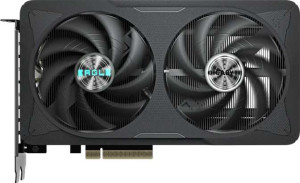
Gigabyte GeForce RTX 5060 Eagle OC
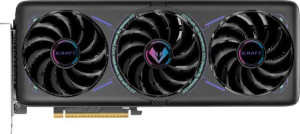
Maxsun GeForce RTX 5060 Ti iCraft OC 16GB

Gigabyte GeForce RTX 5060 Eagle OC Maxsun GeForce RTX 5060 Ti iCraft OC 16GB

Overview

Welcome to our in-depth specification comparison between the Gigabyte GeForce RTX 5060 Eagle OC and the Maxsun GeForce RTX 5060 Ti iCraft OC 16GB. Both cards are built on the modern Blackwell architecture and share a surprising amount of common ground, yet they diverge meaningfully in areas like raw compute performance, VRAM capacity, and physical footprint — making the choice between them far from straightforward. Read on to see how these two GPUs stack up across every key specification.

Common Features

  • GPU memory speed is 1750 MHz on both products.
  • Both products have 48 render output units (ROPs).
  • Double Precision Floating Point (DPFP) is supported on both products.
  • Effective memory speed is 28000 MHz on both products.
  • Maximum memory bandwidth is 448 GB/s on both products.
  • Both products use GDDR7 memory.
  • Memory bus width is 128-bit on both products.
  • ECC memory is supported on both products.
  • Both products support DirectX 12 Ultimate.
  • OpenGL version 4.6 is available on both products.
  • OpenCL version 3 is available on both products.
  • Multi-display technology is supported on both products.
  • Ray tracing is supported on both products.
  • 3D support is available on both products.
  • DLSS is supported on both products.
  • XeSS (XMX) is not available on either product.
  • Both products have one HDMI output running HDMI 2.1b.
  • Both products have 3 DisplayPort outputs.
  • Neither product has USB-C, DVI, or mini DisplayPort outputs.
  • Both products are built on the Blackwell GPU architecture.
  • Both products use PCIe version 5.
  • Both products are manufactured on a 5 nm semiconductor process.
  • Both products feature 21,900 million transistors.
  • Neither product uses air-water cooling.

Main Differences

  • GPU base clock speed is 2280 MHz on Gigabyte GeForce RTX 5060 Eagle OC and 2407 MHz on Maxsun GeForce RTX 5060 Ti iCraft OC 16GB.
  • GPU turbo clock speed is 2550 MHz on Gigabyte GeForce RTX 5060 Eagle OC and 2662 MHz on Maxsun GeForce RTX 5060 Ti iCraft OC 16GB.
  • Pixel rate is 122.4 GPixel/s on Gigabyte GeForce RTX 5060 Eagle OC and 127.8 GPixel/s on Maxsun GeForce RTX 5060 Ti iCraft OC 16GB.
  • Floating-point performance is 19.58 TFLOPS on Gigabyte GeForce RTX 5060 Eagle OC and 24.53 TFLOPS on Maxsun GeForce RTX 5060 Ti iCraft OC 16GB.
  • Texture rate is 306 GTexels/s on Gigabyte GeForce RTX 5060 Eagle OC and 383.3 GTexels/s on Maxsun GeForce RTX 5060 Ti iCraft OC 16GB.
  • Shading units number 3840 on Gigabyte GeForce RTX 5060 Eagle OC and 4608 on Maxsun GeForce RTX 5060 Ti iCraft OC 16GB.
  • Texture mapping units (TMUs) total 120 on Gigabyte GeForce RTX 5060 Eagle OC and 144 on Maxsun GeForce RTX 5060 Ti iCraft OC 16GB.
  • VRAM is 8GB on Gigabyte GeForce RTX 5060 Eagle OC and 16GB on Maxsun GeForce RTX 5060 Ti iCraft OC 16GB.
  • RGB lighting is present on Maxsun GeForce RTX 5060 Ti iCraft OC 16GB but not available on Gigabyte GeForce RTX 5060 Eagle OC.
  • Thermal Design Power (TDP) is 145W on Gigabyte GeForce RTX 5060 Eagle OC and 180W on Maxsun GeForce RTX 5060 Ti iCraft OC 16GB.
  • Card width is 208 mm on Gigabyte GeForce RTX 5060 Eagle OC and 320 mm on Maxsun GeForce RTX 5060 Ti iCraft OC 16GB.
  • Card height is 120 mm on Gigabyte GeForce RTX 5060 Eagle OC and 132 mm on Maxsun GeForce RTX 5060 Ti iCraft OC 16GB.
Specs Comparison
Gigabyte GeForce RTX 5060 Eagle OC

Gigabyte GeForce RTX 5060 Eagle OC

Maxsun GeForce RTX 5060 Ti iCraft OC 16GB

Maxsun GeForce RTX 5060 Ti iCraft OC 16GB

Performance:
GPU clock speed 2280 MHz 2407 MHz
GPU turbo 2550 MHz 2662 MHz
pixel rate 122.4 GPixel/s 127.8 GPixel/s
floating-point performance 19.58 TFLOPS 24.53 TFLOPS
texture rate 306 GTexels/s 383.3 GTexels/s
GPU memory speed 1750 MHz 1750 MHz
shading units 3840 4608
texture mapping units (TMUs) 120 144
render output units (ROPs) 48 48
Has Double Precision Floating Point (DPFP)

The most telling gap between these two cards lies in their raw shader muscle. The Maxsun RTX 5060 Ti iCraft OC packs 4608 shading units and 144 TMUs, versus 3840 shading units and 120 TMUs on the Gigabyte RTX 5060 Eagle OC — a roughly 20% hardware advantage that directly translates into more parallel work per clock cycle. This is compounded by the Ti's higher boost clock of 2662 MHz versus 2550 MHz, meaning the Ti is running more units at a faster speed simultaneously.

The cumulative effect is substantial: the Maxsun delivers 24.53 TFLOPS of floating-point throughput and a texture fill rate of 383.3 GTexels/s, compared to 19.58 TFLOPS and 306 GTexels/s on the Gigabyte. In practical terms, that ~25% TFLOPS lead means the Ti handles geometry-heavy scenes, complex shading workloads, and AI-accelerated features more fluidly — with less risk of hitting a compute bottleneck at higher resolutions or detail settings. One meaningful point of parity is the render output pipeline: both cards share identical 48 ROPs and the same 1750 MHz memory speed, which means pixel write throughput and memory bandwidth are essentially equivalent — neither card has an edge in rasterization output or memory-side performance.

Overall, the Maxsun RTX 5060 Ti iCraft OC holds a clear performance advantage in this group. The higher shader count and clock speeds give it a decisive lead in compute and texture work, which matters most in demanding gaming scenarios and GPU-accelerated tasks. The Gigabyte RTX 5060 Eagle OC is not slow, but its lower unit count and clocks put it in a measurably lower performance tier for workloads that stress the shader and texture pipeline.

Memory:
effective memory speed 28000 MHz 28000 MHz
maximum memory bandwidth 448 GB/s 448 GB/s
VRAM 8GB 16GB
GDDR version GDDR7 GDDR7
memory bus width 128-bit 128-bit
Supports ECC memory

Strip away the identical specs and one differentiator dominates this entire category: VRAM capacity. The Gigabyte RTX 5060 Eagle OC comes with 8GB, while the Maxsun RTX 5060 Ti iCraft OC doubles that with 16GB. Every other memory specification — the GDDR7 standard, the 128-bit bus, the 28000 MHz effective speed, and the resulting 448 GB/s bandwidth — is a perfect match between the two cards. This means the quality and speed of the memory subsystem is equivalent; only the size of the pool differs.

That size difference carries real consequences. At 1080p in most current titles, 8GB is generally sufficient, but it is increasingly a ceiling rather than a comfortable headroom. Games with high-resolution texture packs, ray tracing enabled, or aggressive asset streaming can breach the 8GB threshold, forcing the GPU to spill data to slower system memory — resulting in stutters and frame time spikes that raw benchmark averages often mask. With 16GB, the Maxsun Ti operates with a meaningful buffer, staying well within VRAM limits even as modern titles grow more memory-hungry, and it is significantly better positioned for 1440p gaming or content creation workloads where texture caches and scene data grow rapidly.

On memory, the Maxsun RTX 5060 Ti iCraft OC holds a clear and practical advantage. The shared architecture means neither card wastes its bandwidth or benefits from a faster bus — but the Ti's doubled capacity future-proofs the investment in a way that the Gigabyte's 8GB simply cannot match, particularly as software demands continue to climb.

Features:
DirectX version DirectX 12 Ultimate DirectX 12 Ultimate
OpenGL version 4.6 4.6
OpenCL version 3 3
Supports multi-display technology
supports ray tracing
Supports 3D
supports DLSS
has XeSS (XMX)
AMD SAM / Intel Resizable BAR Intel Resizable BAR Intel Resizable BAR
has LHR
has RGB lighting
supported displays 4 4

Functionally, these two cards are virtually identical in this category. Both support DirectX 12 Ultimate, ray tracing, and DLSS — the trio that defines the modern NVIDIA feature set. Ray tracing enables physically accurate lighting and shadow rendering in supported titles, while DLSS uses AI-driven upscaling to recover frame rates lost to those demanding effects. Intel Resizable BAR support is also shared, allowing the CPU to access the full GPU frame buffer simultaneously, which provides a modest but real performance uplift in compatible systems. With support for up to 4 displays each, neither card has an edge for multi-monitor setups either.

The only differentiator in this entire group is RGB lighting: the Maxsun RTX 5060 Ti iCraft OC includes it, the Gigabyte RTX 5060 Eagle OC does not. For builders focused on aesthetics or those assembling a system around a synchronized lighting ecosystem, this is a genuine distinction. For everyone else, it has no bearing on performance or compatibility whatsoever.

As a result, this group is effectively a tie on all meaningful features. The Maxsun gets a minor cosmetic edge via RGB, but in terms of software capabilities, API support, and gaming features, both cards offer an identical experience — the choice here comes down entirely to personal preference on aesthetics.

Ports:
has an HDMI output
HDMI ports 1 1
HDMI version HDMI 2.1b HDMI 2.1b
DisplayPort outputs 3 3
USB-C ports 0 0
DVI outputs 0 0
mini DisplayPort outputs 0 0

There is nothing to separate these two cards on connectivity — every port specification is identical. Both offer 3 DisplayPort outputs and 1 HDMI 2.1b port, totaling four display outputs that align precisely with their shared maximum display count from the Features group. HDMI 2.1b is the current standard capable of driving 4K at high refresh rates and 8K output, covering virtually all modern display scenarios without compromise.

This is a complete tie. Users of either card will have the same physical connection options and the same display protocol capabilities. Neither offers USB-C, which some may note for VR headsets or monitors that use that interface, but since both cards lack it equally, it is a shared limitation rather than a differentiator. The port layout should factor identically into any purchasing decision.

General info:
GPU architecture Blackwell Blackwell
release date May 2025 May 2025
Thermal Design Power (TDP) 145W 180W
PCI Express (PCIe) version 5 5
semiconductor size 5 nm 5 nm
number of transistors 21900 million 21900 million
Has air-water cooling
width 208 mm 320 mm
height 120 mm 132 mm

Both cards are built on the same Blackwell architecture using a 5nm process with an identical 21,900 million transistors — confirming they share the same foundational silicon generation. PCIe 5.0 support is also common to both, ensuring neither card is bottlenecked by the interface on any modern platform. The shared transistor count is worth noting: despite the Maxsun Ti's higher performance figures seen in the Performance group, it achieves those gains through a higher-enabled shader configuration on the same physical die rather than a fundamentally different chip.

Where this group diverges meaningfully is in TDP and physical size. The Maxsun RTX 5060 Ti iCraft OC draws 180W versus 145W for the Gigabyte RTX 5060 Eagle OC — a 35W gap that has real implications. It means the Ti demands more headroom from the power supply and will generate more heat under sustained load, which matters in compact or thermally constrained builds. The size difference is equally stark: the Maxsun measures 320mm in length compared to the Gigabyte's 208mm, making it a considerably larger card that may not fit in smaller mid-tower or mini-ITX cases without careful clearance checks.

For this group, the Gigabyte RTX 5060 Eagle OC holds a practical advantage in system compatibility. Its lower TDP and significantly more compact footprint make it the easier card to build around — particularly for users with smaller cases or modest power supplies. The Maxsun Ti's higher power draw and larger dimensions are the direct cost of its performance headroom, and buyers should verify both PSU capacity and case clearance before committing to it.

Comparison Summary & Verdict

After examining all the evidence, a clear picture emerges of two GPUs aimed at subtly different users. The Gigabyte GeForce RTX 5060 Eagle OC is the more compact and power-efficient option, drawing only 145W TDP and measuring just 208 mm wide — making it an excellent fit for smaller cases or builds where thermal headroom is limited. The Maxsun GeForce RTX 5060 Ti iCraft OC 16GB, on the other hand, pulls ahead with higher clock speeds, a significantly stronger 24.53 TFLOPS floating-point performance, 4608 shading units, and crucially, 16GB of GDDR7 VRAM — double that of its rival — which gives it a meaningful edge in memory-intensive workloads, high-resolution gaming, and content creation tasks. If budget, size, and efficiency are your priorities, the Gigabyte is a sensible pick; if you want more headroom for demanding applications and future-proofing, the Maxsun is the stronger performer.

Gigabyte GeForce RTX 5060 Eagle OC
Buy Gigabyte GeForce RTX 5060 Eagle OC if...

Buy the Gigabyte GeForce RTX 5060 Eagle OC if you need a compact, power-efficient GPU with a smaller physical footprint and a lower 145W TDP for space-constrained or energy-conscious builds.

Maxsun GeForce RTX 5060 Ti iCraft OC 16GB
Buy Maxsun GeForce RTX 5060 Ti iCraft OC 16GB if...

Buy the Maxsun GeForce RTX 5060 Ti iCraft OC 16GB if you want superior compute performance, more shading units, and double the VRAM at 16GB — ideal for memory-intensive gaming, content creation, or workloads where future-proofing matters.