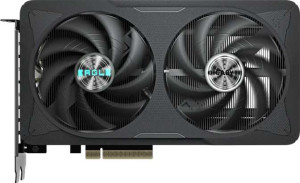
Gigabyte GeForce RTX 5060 Eagle OC
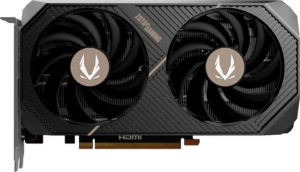
Zotac Gaming GeForce RTX 5060 AMP

Gigabyte GeForce RTX 5060 Eagle OC Zotac Gaming GeForce RTX 5060 AMP

Overview

Welcome to our detailed spec comparison between the Gigabyte GeForce RTX 5060 Eagle OC and the Zotac Gaming GeForce RTX 5060 AMP — two RTX 5060 cards built on the same Blackwell architecture. While both share the same GPU core and memory configuration, the battle here narrows down to physical form factor, making this comparison especially relevant for builders working with tighter cases or specific sizing requirements.

Common Features

  • Both cards have a GPU clock speed of 2280 MHz.
  • Both cards share a GPU turbo speed of 2550 MHz.
  • Both cards deliver a pixel rate of 122.4 GPixel/s.
  • Both cards offer a floating-point performance of 19.58 TFLOPS.
  • Both cards provide a texture rate of 306 GTexels/s.
  • Both cards feature a GPU memory speed of 1750 MHz.
  • Both cards include 3840 shading units.
  • Both cards have 120 texture mapping units (TMUs).
  • Both cards come with 8GB of VRAM.
  • Both cards use GDDR7 memory.
  • Both cards have an effective memory speed of 28000 MHz.
  • Both cards offer a maximum memory bandwidth of 448 GB/s.
  • Both cards use a 128-bit memory bus width.
  • ECC memory support is available on both cards.
  • Both cards support DirectX 12 Ultimate.
  • Both cards support OpenGL version 4.6.
  • Both cards support OpenCL version 3.
  • Multi-display technology is supported on both cards.
  • Ray tracing is supported on both cards.
  • DLSS support is available on both cards.
  • XeSS (XMX) support is not available on either card.
  • Both cards feature one HDMI 2.1b output.
  • Both cards include three DisplayPort outputs.
  • Neither card has USB-C, DVI, or mini DisplayPort outputs.
  • Both cards are based on the Blackwell GPU architecture.
  • Both cards have a Thermal Design Power (TDP) of 145W.
  • Both cards use PCIe version 5.
  • Both cards are built on a 5 nm semiconductor process.
  • Both cards contain 21900 million transistors.
  • Air-water cooling is not available on either card.

Main Differences

  • Width is 208 mm on the Gigabyte GeForce RTX 5060 Eagle OC and 220.5 mm on the Zotac Gaming GeForce RTX 5060 AMP.
  • Height is 120 mm on the Gigabyte GeForce RTX 5060 Eagle OC and 120.25 mm on the Zotac Gaming GeForce RTX 5060 AMP.
Specs Comparison
Gigabyte GeForce RTX 5060 Eagle OC

Gigabyte GeForce RTX 5060 Eagle OC

Zotac Gaming GeForce RTX 5060 AMP

Zotac Gaming GeForce RTX 5060 AMP

Performance:
GPU clock speed 2280 MHz 2280 MHz
GPU turbo 2550 MHz 2550 MHz
pixel rate 122.4 GPixel/s 122.4 GPixel/s
floating-point performance 19.58 TFLOPS 19.58 TFLOPS
texture rate 306 GTexels/s 306 GTexels/s
GPU memory speed 1750 MHz 1750 MHz
shading units 3840 3840
texture mapping units (TMUs) 120 120
render output units (ROPs) 48 48
Has Double Precision Floating Point (DPFP)

In the Performance category, the Gigabyte GeForce RTX 5060 Eagle OC and the Zotac Gaming GeForce RTX 5060 AMP are built on an identical hardware foundation. Both cards share the same 2280 MHz base clock and 2550 MHz turbo clock, meaning neither card boosts higher or sustains a frequency advantage under load. This directly translates to equivalent frame generation potential and compute throughput in real-world gaming and creative workloads.

The parity extends across every computational unit: both GPUs feature 3840 shading units, 120 TMUs, and 48 ROPs, yielding identical 19.58 TFLOPS of floating-point performance, a 306 GTexels/s texture rate, and a 122.4 GPixel/s pixel fill rate. In practice, this means both cards will handle texture-heavy scenes, rasterization workloads, and GPU compute tasks at exactly the same throughput ceiling. The shared 1750 MHz memory speed and support for Double Precision Floating Point further confirm there is no architectural differentiation between the two at the silicon level.

The verdict for this group is a complete tie. Every performance metric is numerically identical, which is expected given that both products are built on the same GPU die with the same factory boost clock. Any real-world performance difference between these two cards would be negligible and attributable only to thermal throttling behavior or board power limits — factors not reflected in this spec group. Buyers should look to other categories such as cooling, memory configuration, or price to differentiate them.

Memory:
effective memory speed 28000 MHz 28000 MHz
maximum memory bandwidth 448 GB/s 448 GB/s
VRAM 8GB 8GB
GDDR version GDDR7 GDDR7
memory bus width 128-bit 128-bit
Supports ECC memory

Both the Gigabyte RTX 5060 Eagle OC and the Zotac Gaming RTX 5060 AMP ship with the same memory configuration from top to bottom. Each card pairs 8GB of GDDR7 VRAM with a 128-bit memory bus, delivering an effective memory speed of 28000 MHz and a peak bandwidth of 448 GB/s. GDDR7 is a meaningful generational step — its higher data rates per pin allow this 128-bit bus to punch above its width, recovering much of the bandwidth that a narrow bus would otherwise sacrifice compared to wider GDDR6X implementations.

That 448 GB/s figure matters most in texture streaming, high-resolution rendering, and memory-intensive compute workloads, where starving the GPU of data causes frame time spikes regardless of raw shader throughput. The 8GB VRAM ceiling is worth noting: at 1440p with high-resolution texture packs or in VRAM-hungry titles, this capacity can become a constraint, though that is a characteristic of the platform itself rather than a differentiator between these two cards. Both also support ECC memory, a feature relevant to users running GPU compute or light professional workloads alongside gaming.

This group is another complete tie. Every memory specification — capacity, type, speed, bus width, bandwidth, and ECC support — is identical. Neither card holds any advantage here, and memory subsystem performance in games or applications will be indistinguishable between the two.

Features:
DirectX version DirectX 12 Ultimate DirectX 12 Ultimate
OpenGL version 4.6 4.6
OpenCL version 3 3
Supports multi-display technology
supports ray tracing
Supports 3D
supports DLSS
has XeSS (XMX)
AMD SAM / Intel Resizable BAR Intel Resizable BAR Intel Resizable BAR
has LHR
has RGB lighting
supported displays 4 4

Feature parity continues across this group. Both the Gigabyte RTX 5060 Eagle OC and the Zotac Gaming RTX 5060 AMP support DirectX 12 Ultimate, which is the most important API flag for modern gaming — it unlocks hardware ray tracing, mesh shaders, variable rate shading, and sampler feedback. Combined with confirmed ray tracing and DLSS support, both cards are fully equipped for the current generation of GPU-accelerated rendering techniques and NVIDIA's AI-driven upscaling pipeline.

On the connectivity side, both cards support up to 4 simultaneous displays and multi-display technology, making either a competent choice for productivity multi-monitor setups without needing supplemental hardware. Intel Resizable BAR support on both cards allows the CPU to access the full GPU framebuffer at once rather than in small chunks, which can yield measurable frame rate improvements in CPU-bound scenarios in supported titles. Neither card carries an LHR limiter, though this is largely irrelevant in today's market context. The absence of RGB lighting on both is simply a cosmetic note for users who care about aesthetics.

With every feature flag matching exactly — including the lack of XeSS support, which is consistent with these being NVIDIA products — this group is a complete tie. Neither card offers a software or feature capability the other lacks, and the decision between them cannot be made on this basis alone.

Ports:
has an HDMI output
HDMI ports 1 1
HDMI version HDMI 2.1b HDMI 2.1b
DisplayPort outputs 3 3
USB-C ports 0 0
DVI outputs 0 0
mini DisplayPort outputs 0 0

The display output configuration is identical on both the Gigabyte RTX 5060 Eagle OC and the Zotac Gaming RTX 5060 AMP. Each card offers 3 DisplayPort outputs and 1 HDMI 2.1b port, totaling four physical connectors — which aligns with the four supported displays noted in the Features group. This layout is well-suited for mixed monitor setups, giving users the flexibility to run a combination of high-refresh-rate DisplayPort gaming monitors alongside an HDMI-connected TV or secondary display without needing adapters.

The HDMI 2.1b version is worth highlighting: it supports up to 10K resolution at high frame rates and includes Enhanced Audio Return Channel (eARC), making it a strong choice for living room or home theater configurations where a single cable carries both high-bandwidth video and audio back to an AV receiver. Neither card includes USB-C or legacy DVI outputs, which reflects the industry's broad move away from those interfaces at this product tier.

As with the previous groups, this is a complete tie. The port layout, counts, and versions are perfectly matched, offering no basis for differentiation. Buyers with specific connectivity requirements — such as needing USB-C for a particular monitor — should note that neither card accommodates that without an adapter.

General info:
GPU architecture Blackwell Blackwell
release date May 2025 May 2025
Thermal Design Power (TDP) 145W 145W
PCI Express (PCIe) version 5 5
semiconductor size 5 nm 5 nm
number of transistors 21900 million 21900 million
Has air-water cooling
width 208 mm 220.5 mm
height 120 mm 120.25 mm

Sharing the same Blackwell architecture, 5nm process node, and 21.9 billion transistors, both the Gigabyte RTX 5060 Eagle OC and the Zotac Gaming RTX 5060 AMP are built on identical silicon. The 145W TDP is the same on both, meaning power supply requirements and expected system heat output are equivalent — a single 16-pin connector will suffice for either card in a typical build. PCIe 5.0 support on both ensures forward compatibility with current and near-future platforms, though it remains backward compatible with PCIe 4.0 and 3.0 slots without meaningful performance impact at this GPU tier.

The one tangible difference in this group is physical size. The Gigabyte Eagle OC measures 208 mm in length, while the Zotac AMP is slightly longer at 220.5 mm. That roughly 12.5mm gap is modest but not irrelevant — in compact Micro-ATX or Mini-ITX cases where clearance between the GPU end and drive bays or front-panel mounts is tight, the Gigabyte's shorter footprint could be the deciding factor for fitment. Both cards share the same 120 mm height, so slot clearance and bracket compatibility are equal.

For most standard mid-tower builds, the size difference is inconsequential, and all other general specifications are tied. However, for small form factor builders, the Gigabyte RTX 5060 Eagle OC holds a narrow but practical edge in this group purely due to its more compact length.

Comparison Summary & Verdict

After a thorough review of the specifications, it is clear that the Gigabyte GeForce RTX 5060 Eagle OC and the Zotac Gaming GeForce RTX 5060 AMP are remarkably evenly matched. Both cards deliver identical 19.58 TFLOPS of floating-point performance, 8GB of GDDR7 memory with 448 GB/s bandwidth, and full support for ray tracing, DLSS, and DirectX 12 Ultimate at a 145W TDP. The only measurable distinction lies in physical size: the Gigabyte card is slightly more compact at 208 mm wide, while the Zotac measures 220.5 mm in width. For the vast majority of builders, the choice will come down to case compatibility and brand preference rather than any performance difference.

Gigabyte GeForce RTX 5060 Eagle OC
Buy Gigabyte GeForce RTX 5060 Eagle OC if...

Buy the Gigabyte GeForce RTX 5060 Eagle OC if you are working with a compact PC case and need the smaller card, as its 208 mm width gives it a slight size advantage over the Zotac.

Zotac Gaming GeForce RTX 5060 AMP
Buy Zotac Gaming GeForce RTX 5060 AMP if...

Buy the Zotac Gaming GeForce RTX 5060 AMP if case space is not a concern and you prefer the Zotac brand, knowing you get the exact same performance in a slightly larger 220.5 mm form factor.