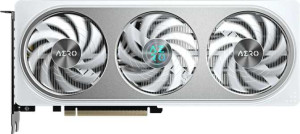
Gigabyte GeForce RTX 5060 Ti Aero OC 16GB
MSI GeForce RTX 5070 Ti Inspire 3X OC Plus

Gigabyte GeForce RTX 5060 Ti Aero OC 16GB MSI GeForce RTX 5070 Ti Inspire 3X OC Plus

Overview

Welcome to our in-depth specification comparison between the Gigabyte GeForce RTX 5060 Ti Aero OC 16GB and the MSI GeForce RTX 5070 Ti Inspire 3X OC Plus. Both cards share the same Blackwell architecture, GDDR7 memory, and a 16GB VRAM pool, yet they diverge sharply on raw compute power, memory bandwidth, and power consumption. Read on as we break down every key battleground — from shading units and texture rates to thermal design and physical dimensions — to help you make the most informed decision.

Common Features

  • GPU memory speed is 1750 MHz on both products.
  • Both products support Double Precision Floating Point (DPFP).
  • Effective memory speed is 28000 MHz on both products.
  • Both cards come with 16GB of VRAM.
  • Both products use GDDR7 memory.
  • ECC memory support is available on both products.
  • Both products support DirectX 12 Ultimate.
  • OpenGL version 4.6 is supported on both products.
  • OpenCL version 3 is supported on both products.
  • Multi-display technology is supported on both products.
  • Ray tracing is supported on both products.
  • 3D technology is supported on both products.
  • DLSS is supported on both products.
  • XeSS (XMX) support is not available on either product.
  • Both products feature one HDMI output running version HDMI 2.1b.
  • Both products offer three DisplayPort outputs.
  • Neither product includes a USB-C port, a DVI output, or a mini DisplayPort output.
  • Both products are built on the Blackwell GPU architecture.
  • Both products use a PCIe version 5 interface.
  • Both products are manufactured on a 5 nm semiconductor process.
  • Air-water cooling is not available on either product.

Main Differences

  • GPU clock speed is 2407 MHz on Gigabyte GeForce RTX 5060 Ti Aero OC 16GB and 2295 MHz on MSI GeForce RTX 5070 Ti Inspire 3X OC Plus.
  • GPU turbo speed is 2647 MHz on Gigabyte GeForce RTX 5060 Ti Aero OC 16GB and 2482 MHz on MSI GeForce RTX 5070 Ti Inspire 3X OC Plus.
  • Pixel rate is 127.1 GPixel/s on Gigabyte GeForce RTX 5060 Ti Aero OC 16GB and 238.3 GPixel/s on MSI GeForce RTX 5070 Ti Inspire 3X OC Plus.
  • Floating-point performance is 24.39 TFLOPS on Gigabyte GeForce RTX 5060 Ti Aero OC 16GB and 44.48 TFLOPS on MSI GeForce RTX 5070 Ti Inspire 3X OC Plus.
  • Texture rate is 381.2 GTexels/s on Gigabyte GeForce RTX 5060 Ti Aero OC 16GB and 695 GTexels/s on MSI GeForce RTX 5070 Ti Inspire 3X OC Plus.
  • Shading units number 4608 on Gigabyte GeForce RTX 5060 Ti Aero OC 16GB and 8960 on MSI GeForce RTX 5070 Ti Inspire 3X OC Plus.
  • Texture mapping units (TMUs) total 144 on Gigabyte GeForce RTX 5060 Ti Aero OC 16GB and 280 on MSI GeForce RTX 5070 Ti Inspire 3X OC Plus.
  • Render output units (ROPs) total 48 on Gigabyte GeForce RTX 5060 Ti Aero OC 16GB and 96 on MSI GeForce RTX 5070 Ti Inspire 3X OC Plus.
  • Maximum memory bandwidth is 448 GB/s on Gigabyte GeForce RTX 5060 Ti Aero OC 16GB and 896 GB/s on MSI GeForce RTX 5070 Ti Inspire 3X OC Plus.
  • Memory bus width is 128-bit on Gigabyte GeForce RTX 5060 Ti Aero OC 16GB and 256-bit on MSI GeForce RTX 5070 Ti Inspire 3X OC Plus.
  • RGB lighting is present on Gigabyte GeForce RTX 5060 Ti Aero OC 16GB but not available on MSI GeForce RTX 5070 Ti Inspire 3X OC Plus.
  • Thermal Design Power (TDP) is 180W on Gigabyte GeForce RTX 5060 Ti Aero OC 16GB and 300W on MSI GeForce RTX 5070 Ti Inspire 3X OC Plus.
  • The number of transistors is 21900 million on Gigabyte GeForce RTX 5060 Ti Aero OC 16GB and 45600 million on MSI GeForce RTX 5070 Ti Inspire 3X OC Plus.
  • Width is 281 mm on Gigabyte GeForce RTX 5060 Ti Aero OC 16GB and 288 mm on MSI GeForce RTX 5070 Ti Inspire 3X OC Plus.
  • Height is 117 mm on Gigabyte GeForce RTX 5060 Ti Aero OC 16GB and 112 mm on MSI GeForce RTX 5070 Ti Inspire 3X OC Plus.
Specs Comparison
Gigabyte GeForce RTX 5060 Ti Aero OC 16GB

Gigabyte GeForce RTX 5060 Ti Aero OC 16GB

MSI GeForce RTX 5070 Ti Inspire 3X OC Plus

MSI GeForce RTX 5070 Ti Inspire 3X OC Plus

Performance:
GPU clock speed 2407 MHz 2295 MHz
GPU turbo 2647 MHz 2482 MHz
pixel rate 127.1 GPixel/s 238.3 GPixel/s
floating-point performance 24.39 TFLOPS 44.48 TFLOPS
texture rate 381.2 GTexels/s 695 GTexels/s
GPU memory speed 1750 MHz 1750 MHz
shading units 4608 8960
texture mapping units (TMUs) 144 280
render output units (ROPs) 48 96
Has Double Precision Floating Point (DPFP)

At first glance, the Gigabyte RTX 5060 Ti Aero OC appears to hold a clock-speed advantage — its base of 2407 MHz and turbo of 2647 MHz comfortably beat the MSI RTX 5070 Ti Inspire's 2295 / 2482 MHz. However, clock speed alone is a poor proxy for GPU performance; what truly drives throughput is the combination of frequency and the number of execution resources behind it. The 5070 Ti fields 8960 shading units against the 5060 Ti's 4608 — nearly double — and that gap cascades through every other compute metric.

The practical outcome is stark. The 5070 Ti delivers 44.48 TFLOPS of floating-point performance versus 24.39 TFLOPS on the 5060 Ti, an advantage of roughly 82%. Its texture rate of 695 GTexels/s (vs. 381.2) and pixel rate of 238.3 GPixel/s (vs. 127.1) tell the same story: the 5070 Ti can push substantially more geometry, shading work, and filled pixels per second, which translates directly into higher sustainable frame rates and headroom for demanding rendering techniques like ray tracing or AI-based upscaling at higher resolutions. The lone shared metric is GPU memory speed at 1750 MHz, meaning neither card has a bandwidth edge at the memory-clock level.

Both cards support Double Precision Floating Point, keeping them on equal footing for compute-adjacent workloads. Overall, the MSI RTX 5070 Ti Inspire holds a decisive and comprehensive performance advantage in this group — not because the 5060 Ti is slow, but because the 5070 Ti operates with a fundamentally larger compute array that no clock-speed delta can compensate for. Buyers prioritizing raw GPU throughput should consider the 5070 Ti the clear winner here.

Memory:
effective memory speed 28000 MHz 28000 MHz
maximum memory bandwidth 448 GB/s 896 GB/s
VRAM 16GB 16GB
GDDR version GDDR7 GDDR7
memory bus width 128-bit 256-bit
Supports ECC memory

On the surface, these two cards look identical in memory terms: both carry 16GB of GDDR7 running at an effective 28000 MHz, and both support ECC memory for error-corrected compute workloads. For a buyer scanning the spec sheet quickly, this might read as a tie — but the underlying architecture tells a very different story.

The decisive variable is the memory bus width. The Gigabyte RTX 5060 Ti Aero OC uses a 128-bit interface, while the MSI RTX 5070 Ti Inspire doubles that to 256-bit. Since maximum memory bandwidth is the product of bus width and memory speed, the outcome is proportional: the 5060 Ti achieves 448 GB/s, and the 5070 Ti reaches 896 GB/s — exactly twice as much. In practice, memory bandwidth is one of the most critical limiters for high-resolution gaming and GPU compute tasks. A wider bandwidth envelope means the GPU can feed its shading units more texture and geometry data per clock, reducing the likelihood of the memory subsystem becoming a bottleneck at 4K or in memory-intensive workloads like generative AI inference.

The MSI RTX 5070 Ti Inspire holds a clear and significant advantage in this group. The equal VRAM capacity and memory speed mean neither card has an edge in how much data can be stored or how fast the chips themselves run — but the 5070 Ti's wider bus ensures that data flows to the GPU at twice the rate. For users pushing high resolutions or large datasets, that bandwidth gap is not a marginal difference; it is a structural one.

Features:
DirectX version DirectX 12 Ultimate DirectX 12 Ultimate
OpenGL version 4.6 4.6
OpenCL version 3 3
Supports multi-display technology
supports ray tracing
Supports 3D
supports DLSS
has XeSS (XMX)
AMD SAM / Intel Resizable BAR Intel Resizable BAR Intel Resizable BAR
has LHR
has RGB lighting
supported displays 4 4

From a software and API standpoint, these two cards are effectively mirror images. Both support DirectX 12 Ultimate, OpenGL 4.6, OpenCL 3, ray tracing, DLSS, and Intel Resizable BAR — and both cap out at 4 simultaneous displays. For gaming, creative, and compute workloads, users will find no meaningful difference in feature access between the two; the software ecosystem they unlock is identical.

The only spec that separates them in this group is RGB lighting. The Gigabyte RTX 5060 Ti Aero OC includes it; the MSI RTX 5070 Ti Inspire does not. This is purely an aesthetic consideration with no impact on performance or compatibility, but it is worth noting for buyers building a visually coordinated system who would otherwise rely on the GPU as part of their lighting setup.

For this group, the verdict is essentially a tie on all functional features. The Gigabyte 5060 Ti earns a marginal cosmetic edge via RGB support, but no substantive capability advantage exists on either side. Buyers should weight this group lightly in their decision — the real differentiators between these two cards lie in performance and memory, not features.

Ports:
has an HDMI output
HDMI ports 1 1
HDMI version HDMI 2.1b HDMI 2.1b
DisplayPort outputs 3 3
USB-C ports 0 0
DVI outputs 0 0
mini DisplayPort outputs 0 0

This is the rare group where the comparison requires almost no analysis: the port configurations of both cards are completely identical. Each offers 1 HDMI 2.1b output and 3 DisplayPort outputs, with no USB-C, DVI, or mini DisplayPort connections on either card. For multi-monitor users, that combination supports up to four simultaneous displays — consistent with what was noted in the Features group.

The presence of HDMI 2.1b on both is worth acknowledging, as it supports high-bandwidth output suitable for high-refresh 4K and even 8K display scenarios. The three DisplayPort outputs similarly provide ample flexibility for mixing monitor types or daisy-chaining compatible displays. Neither card gives up anything to the other here.

This group is a complete tie. Connectivity should play no role in choosing between the Gigabyte RTX 5060 Ti Aero OC and the MSI RTX 5070 Ti Inspire — buyers will get the exact same physical output options regardless of which card they select.

General info:
GPU architecture Blackwell Blackwell
release date April 2025 February 2025
Thermal Design Power (TDP) 180W 300W
PCI Express (PCIe) version 5 5
semiconductor size 5 nm 5 nm
number of transistors 21900 million 45600 million
Has air-water cooling
width 281 mm 288 mm
height 117 mm 112 mm

Both cards share the same generational foundation — the Blackwell architecture, fabricated on a 5nm process node, with a PCIe 5.0 interface. That common ground means neither has a platform-level advantage in terms of manufacturing efficiency or host bus bandwidth. Where they diverge sharply is in die complexity: the MSI RTX 5070 Ti Inspire packs 45,600 million transistors against the Gigabyte RTX 5060 Ti Aero OC's 21,900 million — more than twice as many. This aligns directly with the 5070 Ti's larger compute array seen in the Performance group, and confirms that the performance gap is rooted in silicon scale, not clock tuning.

The transistor count difference has a direct cost: power. The 5070 Ti carries a TDP of 300W, compared to 180W for the 5060 Ti — a 67% increase in thermal envelope. For system builders, this is a meaningful distinction. The 5070 Ti will demand a more capable PSU and generate significantly more heat, requiring better case airflow or a more robust cooling solution. The 5060 Ti's lower TDP makes it a more forgiving fit for compact or thermally constrained builds.

Physical dimensions are nearly equivalent — both are full-size cards with only millimeters of difference in width and height — so slot compatibility is not a differentiator. Overall, this group reinforces the same conclusion drawn from performance data: the 5070 Ti Inspire is the larger, more power-hungry, and more capable chip by design, while the 5060 Ti Aero OC offers a more power-efficient profile that suits builders with tighter thermal or electrical budgets.

Comparison Summary & Verdict

After examining every specification, these two cards serve distinctly different audiences. The Gigabyte GeForce RTX 5060 Ti Aero OC 16GB is the more power-efficient choice at just 180W TDP, and it even adds RGB lighting for build aesthetics — making it an attractive option for users who want a capable, energy-conscious card without breaking the bank on electricity or cooling overhead. The MSI GeForce RTX 5070 Ti Inspire 3X OC Plus, on the other hand, dominates in every performance metric: it offers nearly double the floating-point performance at 44.48 TFLOPS, double the memory bandwidth at 896 GB/s via a 256-bit bus, and significantly more shading units and ROPs. Buyers who demand maximum throughput for demanding workloads, high-resolution gaming, or content creation will find the MSI card a far more powerful investment, provided they can accommodate its 300W power draw.

Gigabyte GeForce RTX 5060 Ti Aero OC 16GB
Buy Gigabyte GeForce RTX 5060 Ti Aero OC 16GB if...

Buy the Gigabyte GeForce RTX 5060 Ti Aero OC 16GB if you want a power-efficient GPU with a 180W TDP and RGB lighting, and your workload does not demand the highest possible compute throughput or memory bandwidth.

MSI GeForce RTX 5070 Ti Inspire 3X OC Plus
Buy MSI GeForce RTX 5070 Ti Inspire 3X OC Plus if...

Buy the MSI GeForce RTX 5070 Ti Inspire 3X OC Plus if you need maximum GPU horsepower, with nearly double the floating-point performance, double the memory bandwidth, and twice the shading units compared to the Gigabyte card.