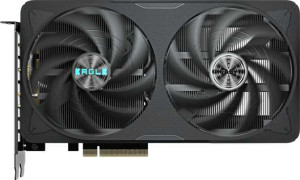
Gigabyte GeForce RTX 5060 Ti Eagle OC 16GB
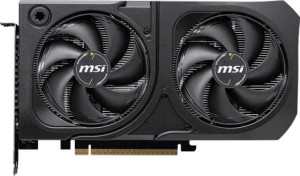
MSI GeForce RTX 5060 Ti Shadow 2X OC Plus 16GB

Gigabyte GeForce RTX 5060 Ti Eagle OC 16GB MSI GeForce RTX 5060 Ti Shadow 2X OC Plus 16GB

Overview

Welcome to our in-depth specification comparison between the Gigabyte GeForce RTX 5060 Ti Eagle OC 16GB and the MSI GeForce RTX 5060 Ti Shadow 2X OC Plus 16GB. Both cards are built on the same Blackwell architecture with identical memory configurations, yet they differ in key areas including boost clock speeds, physical dimensions, and aesthetic features — making the choice between them less obvious than it first appears.

Common Features

  • Both cards share a base GPU clock speed of 2407 MHz.
  • Both cards have a GPU memory speed of 1750 MHz.
  • Both cards feature 4608 shading units.
  • Both cards have 144 texture mapping units (TMUs).
  • Both cards have 48 render output units (ROPs).
  • Double Precision Floating Point (DPFP) is supported on both cards.
  • Both cards have an effective memory speed of 28000 MHz.
  • Both cards offer a maximum memory bandwidth of 448 GB/s.
  • Both cards come with 16GB of VRAM.
  • Both cards use GDDR7 memory.
  • Both cards have a 128-bit memory bus width.
  • ECC memory is supported on both cards.
  • Both cards support DirectX 12 Ultimate.
  • Both cards support OpenGL version 4.6.
  • Both cards support OpenCL version 3.
  • Multi-display technology is supported on both cards.
  • Ray tracing is supported on both cards.
  • 3D support is available on both cards.
  • DLSS is supported on both cards.
  • XeSS (XMX) is not available on either card.
  • Both cards have one HDMI output with HDMI 2.1b.
  • Both cards feature three DisplayPort outputs.
  • Neither card has USB-C or DVI outputs.
  • Both cards are built on the Blackwell GPU architecture.
  • Both cards have a Thermal Design Power (TDP) of 180W.
  • Both cards use PCIe version 5.
  • Both cards are manufactured on a 5 nm semiconductor process.
  • Both cards contain 21900 million transistors.
  • Air-water cooling is not available on either card.

Main Differences

  • GPU turbo clock is 2617 MHz on Gigabyte GeForce RTX 5060 Ti Eagle OC 16GB and 2602 MHz on MSI GeForce RTX 5060 Ti Shadow 2X OC Plus 16GB.
  • Pixel rate is 125.6 GPixel/s on Gigabyte GeForce RTX 5060 Ti Eagle OC 16GB and 124.9 GPixel/s on MSI GeForce RTX 5060 Ti Shadow 2X OC Plus 16GB.
  • Floating-point performance is 24.12 TFLOPS on Gigabyte GeForce RTX 5060 Ti Eagle OC 16GB and 23.98 TFLOPS on MSI GeForce RTX 5060 Ti Shadow 2X OC Plus 16GB.
  • Texture rate is 376.8 GTexels/s on Gigabyte GeForce RTX 5060 Ti Eagle OC 16GB and 374.7 GTexels/s on MSI GeForce RTX 5060 Ti Shadow 2X OC Plus 16GB.
  • RGB lighting is present on Gigabyte GeForce RTX 5060 Ti Eagle OC 16GB but not available on MSI GeForce RTX 5060 Ti Shadow 2X OC Plus 16GB.
  • Width is 215 mm on Gigabyte GeForce RTX 5060 Ti Eagle OC 16GB and 226 mm on MSI GeForce RTX 5060 Ti Shadow 2X OC Plus 16GB.
  • Height is 122 mm on Gigabyte GeForce RTX 5060 Ti Eagle OC 16GB and 126 mm on MSI GeForce RTX 5060 Ti Shadow 2X OC Plus 16GB.
Specs Comparison
Gigabyte GeForce RTX 5060 Ti Eagle OC 16GB

Gigabyte GeForce RTX 5060 Ti Eagle OC 16GB

MSI GeForce RTX 5060 Ti Shadow 2X OC Plus 16GB

MSI GeForce RTX 5060 Ti Shadow 2X OC Plus 16GB

Performance:
GPU clock speed 2407 MHz 2407 MHz
GPU turbo 2617 MHz 2602 MHz
pixel rate 125.6 GPixel/s 124.9 GPixel/s
floating-point performance 24.12 TFLOPS 23.98 TFLOPS
texture rate 376.8 GTexels/s 374.7 GTexels/s
GPU memory speed 1750 MHz 1750 MHz
shading units 4608 4608
texture mapping units (TMUs) 144 144
render output units (ROPs) 48 48
Has Double Precision Floating Point (DPFP)

At their core, both the Gigabyte RTX 5060 Ti Eagle OC and the MSI RTX 5060 Ti Shadow 2X OC Plus are built on identical silicon foundations: the same 4608 shading units, 144 TMUs, 48 ROPs, and a matching base clock of 2407 MHz with memory running at 1750 MHz. This means their theoretical throughput ceilings are determined almost entirely by how aggressively each vendor has tuned the boost clock.

That is precisely where a small but consistent gap emerges. The Gigabyte Eagle OC boosts to 2617 MHz, while the MSI Shadow 2X OC Plus tops out at 2602 MHz — a 15 MHz difference. Modest as that sounds, it cascades uniformly across every derived metric: the Gigabyte edges ahead in floating-point performance (24.12 TFLOPS vs 23.98 TFLOPS), texture throughput (376.8 GTexels/s vs 374.7 GTexels/s), and pixel fill rate (125.6 GPixel/s vs 124.9 GPixel/s). In practice, these deltas translate to roughly a 0.5–0.6% advantage — imperceptible in any real gaming benchmark and well within frame-to-frame variance.

Based strictly on these specs, the Gigabyte RTX 5060 Ti Eagle OC holds a marginal but measurable performance edge courtesy of its slightly higher turbo clock. However, the gap is so slim that it offers no meaningful real-world advantage. For all practical purposes, the two cards are performance equals in this group, and any buying decision should hinge on other factors such as cooling design, price, or board power targets rather than raw compute numbers.
Memory:
effective memory speed 28000 MHz 28000 MHz
maximum memory bandwidth 448 GB/s 448 GB/s
VRAM 16GB 16GB
GDDR version GDDR7 GDDR7
memory bus width 128-bit 128-bit
Supports ECC memory

The memory configurations of the Gigabyte RTX 5060 Ti Eagle OC and the MSI RTX 5060 Ti Shadow 2X OC Plus are, without exception, identical across every measurable dimension. Both carry 16GB of GDDR7 VRAM over a 128-bit bus, running at an effective speed of 28000 MHz for a peak bandwidth of 448 GB/s. There is simply no differentiator to parse here.

What is worth contextualizing is how competitive this memory setup actually is. GDDR7 represents a generational leap in efficiency and raw throughput over GDDR6X, and 448 GB/s over a 128-bit interface is a strong result — historically, achieving that bandwidth on such a narrow bus required either extremely fast memory or architectural improvements to how data is packed and transferred. The 16GB frame buffer is also a meaningful allocation for this GPU tier, providing comfortable headroom for high-resolution textures and modern titles that increasingly push beyond 8GB at 1440p and 4K. ECC memory support is present on both, though it is primarily relevant for compute and workstation workloads rather than gaming.

This group is an unambiguous dead heat. Neither the Eagle OC nor the Shadow 2X OC Plus holds any advantage in memory — buyers can treat this category as a non-factor in their decision.

Features:
DirectX version DirectX 12 Ultimate DirectX 12 Ultimate
OpenGL version 4.6 4.6
OpenCL version 3 3
Supports multi-display technology
supports ray tracing
Supports 3D
supports DLSS
has XeSS (XMX)
AMD SAM / Intel Resizable BAR Intel Resizable BAR Intel Resizable BAR
has LHR
has RGB lighting
supported displays 4 4

Functionally, these two cards are mirror images. Both support DirectX 12 Ultimate, ray tracing, and DLSS — the trifecta that defines a modern NVIDIA gaming GPU. Ray tracing enables real-time lighting and shadow rendering that would otherwise require pre-baked assets, while DLSS uses AI-based upscaling to recover frame rates lost to those demanding workloads. Resizable BAR support on both cards allows the CPU to access the full VRAM pool simultaneously, which can yield modest but tangible performance gains in titles optimized for it. With support for up to 4 displays, both are equally capable multi-monitor setups.

Digging through the full feature list, only one data point separates them: the Gigabyte Eagle OC includes RGB lighting, while the MSI Shadow 2X OC Plus does not. This is purely an aesthetic distinction with zero impact on gaming performance or software capability. For builders who invest in a coordinated lighting ecosystem — synced via Gigabyte's RGB Fusion or compatible motherboard software — the Eagle OC fits more naturally. For those who prefer a cleaner, understated look or simply do not care about lighting effects, the MSI's absence of RGB is not a drawback.

From a features standpoint, the Gigabyte Eagle OC has a narrow edge for users who value RGB integration, but this is a lifestyle preference rather than a technical advantage. Any buyer indifferent to aesthetics should treat this group as a tie — every meaningful capability these cards offer is shared equally.

Ports:
has an HDMI output
HDMI ports 1 1
HDMI version HDMI 2.1b HDMI 2.1b
DisplayPort outputs 3 3
USB-C ports 0 0
DVI outputs 0 0
mini DisplayPort outputs 0 0

Port selection is another area where the Gigabyte Eagle OC and MSI Shadow 2X OC Plus offer no grounds for differentiation. Both present the same bracket layout: one HDMI 2.1b output and three DisplayPort outputs, totaling four simultaneous display connections — consistent with what was noted in the Features group.

The specifications that matter here are the versions. HDMI 2.1b is the latest revision of the standard, supporting up to 4K at high refresh rates and 8K output, along with features like Variable Refresh Rate (VRR) and Auto Low Latency Mode (ALLM) for compatible TVs and monitors. The DisplayPort outputs, while their version is not explicitly specified in the provided data, complement HDMI well for multi-monitor desktop configurations. The absence of USB-C is worth noting for users who own USB-C or Thunderbolt-based displays, as those would require an active adapter — but this applies equally to both cards.

There is no winner to declare here. Every port, every version, every count is identical across both GPUs. Connectivity plays no role in distinguishing these two cards.

General info:
GPU architecture Blackwell Blackwell
release date April 2025 April 2025
Thermal Design Power (TDP) 180W 180W
PCI Express (PCIe) version 5 5
semiconductor size 5 nm 5 nm
number of transistors 21900 million 21900 million
Has air-water cooling
width 215 mm 226 mm
height 122 mm 126 mm

Sharing the same Blackwell architecture, 5nm process node, and 21.9 billion transistors, the Eagle OC and Shadow 2X OC Plus are built from the exact same silicon. A 180W TDP and PCIe 5.0 interface are likewise common to both — meaning power delivery requirements and motherboard compatibility are identical. PCIe 5.0 offers ample bandwidth headroom well beyond what this GPU tier demands, so both cards are equally future-proof on that front.

Physical dimensions are where a subtle but potentially practical difference surfaces. The Gigabyte Eagle OC measures 215 × 122 mm, while the MSI Shadow 2X OC Plus is slightly larger at 226 × 126 mm — an 11mm difference in length and 4mm in height. In most mid-tower and full-tower cases this gap is inconsequential, but in compact or mini-ITX builds where GPU clearance is tight, those extra millimeters can be the deciding factor between a card that fits and one that does not. Prospective buyers with smaller chassis should verify clearance against the MSI's dimensions before committing.

For the overwhelming majority of system builders, this group is effectively a tie — same architecture, same power draw, same platform requirements. The Gigabyte Eagle OC holds a minor edge for space-constrained builds purely by virtue of its more compact footprint, but this only becomes relevant in a narrow set of case configurations.

Comparison Summary & Verdict

After a thorough look at both cards, it is clear that the Gigabyte GeForce RTX 5060 Ti Eagle OC 16GB and the MSI GeForce RTX 5060 Ti Shadow 2X OC Plus 16GB are extremely close competitors sharing identical memory, ports, and core feature sets. The Gigabyte edges ahead with a higher GPU turbo clock of 2617 MHz, marginally better floating-point performance at 24.12 TFLOPS, and the addition of RGB lighting — making it the stronger pick for enthusiasts who value aesthetics and every last bit of peak performance. The MSI, while slightly behind in raw clocks, offers a different physical footprint at 226 mm wide, which may suit specific case layouts, and its no-frills design appeals to builders who prefer a cleaner look. For most users, either card will deliver a near-identical real-world experience.

Gigabyte GeForce RTX 5060 Ti Eagle OC 16GB
Buy Gigabyte GeForce RTX 5060 Ti Eagle OC 16GB if...

Buy the Gigabyte GeForce RTX 5060 Ti Eagle OC 16GB if you want the highest boost clock, marginally better performance figures, and RGB lighting to complement your build aesthetics.

MSI GeForce RTX 5060 Ti Shadow 2X OC Plus 16GB
Buy MSI GeForce RTX 5060 Ti Shadow 2X OC Plus 16GB if...

Buy the MSI GeForce RTX 5060 Ti Shadow 2X OC Plus 16GB if you prefer a clean, no-RGB design and do not mind a slightly larger card footprint in exchange for a subtler aesthetic.