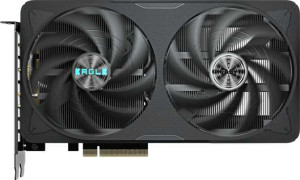
For this specification group, the two cards are remarkably well-matched. Both support DirectX 12 Ultimate, ray tracing, and DLSS, cover the same OpenGL 4.6 and OpenCL 3 versions, and allow up to 4 simultaneous displays — meaning neither card holds any functional advantage in software compatibility, API support, or multi-monitor flexibility. Intel Resizable BAR support is present on both, enabling the CPU to access the full GPU frame buffer at once, which can yield modest performance gains in compatible systems.
Scanning through the full feature set, the only concrete differentiator is RGB lighting: the Gigabyte RTX 5060 Ti Eagle OC includes it, while the MSI RTX 5070 Shadow 3X does not. For builders assembling an aesthetically synchronized rig with RGB-controlled fans, motherboards, and cases, this is a genuine consideration — the 5060 Ti integrates into that ecosystem natively, while the 5070 presents a static appearance. Neither card has LHR mining restrictions or XeSS support, so those points are a wash.
Overall, this group is essentially a tie on all functional features. The sole distinction — RGB lighting on the 5060 Ti Eagle OC — is purely aesthetic and carries no bearing on gaming, compute, or display performance. Users who value a unified lighting setup will find the 5060 Ti marginally more accommodating, but for anyone indifferent to aesthetics, the feature sets of both cards are functionally identical.