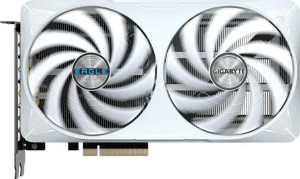
Gigabyte GeForce RTX 5060 Ti Eagle OC Ice 16GB
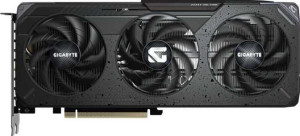
Gigabyte GeForce RTX 5060 Ti Gaming OC 16GB

Gigabyte GeForce RTX 5060 Ti Eagle OC Ice 16GB Gigabyte GeForce RTX 5060 Ti Gaming OC 16GB

Overview

Welcome to our detailed spec comparison between the Gigabyte GeForce RTX 5060 Ti Eagle OC Ice 16GB and the Gigabyte GeForce RTX 5060 Ti Gaming OC 16GB. Both cards share the same Blackwell architecture, 16GB of GDDR7 memory, and a 180W TDP, yet they diverge in key areas worth examining. In this comparison, we put their boost clock speeds, raw compute performance, and physical dimensions under the microscope to help you decide which card fits your needs best.

Common Features

  • Both products have a base GPU clock speed of 2407 MHz.
  • Both products have a GPU memory speed of 1750 MHz.
  • Both products feature 4608 shading units.
  • Both products have 144 texture mapping units (TMUs).
  • Both products have 48 render output units (ROPs).
  • Double Precision Floating Point (DPFP) is supported on both products.
  • Both products have an effective memory speed of 28000 MHz.
  • Both products offer a maximum memory bandwidth of 448 GB/s.
  • Both products come with 16GB of VRAM.
  • Both products use GDDR7 memory.
  • Both products have a 128-bit memory bus width.
  • ECC memory is supported on both products.
  • Both products support DirectX 12 Ultimate.
  • Both products support OpenGL version 4.6.
  • Both products support OpenCL version 3.
  • Multi-display technology is supported on both products.
  • Ray tracing is supported on both products.
  • 3D support is available on both products.
  • DLSS is supported on both products.
  • XeSS (XMX) is not available on either product.
  • Both products have one HDMI output running HDMI version 2.1b.
  • Both products feature three DisplayPort outputs.
  • Neither product has USB-C ports, DVI outputs, or mini DisplayPort outputs.
  • Both products are built on the Blackwell GPU architecture.
  • Both products have a Thermal Design Power (TDP) of 180W.
  • Both products use PCIe version 5.
  • Both products are manufactured on a 5 nm semiconductor process.
  • Both products contain 21900 million transistors.
  • Air-water cooling is not available on either product.

Main Differences

  • GPU turbo clock speed is 2617 MHz on the Gigabyte GeForce RTX 5060 Ti Eagle OC Ice 16GB and 2647 MHz on the Gigabyte GeForce RTX 5060 Ti Gaming OC 16GB.
  • Pixel rate is 125.6 GPixel/s on the Gigabyte GeForce RTX 5060 Ti Eagle OC Ice 16GB and 127.1 GPixel/s on the Gigabyte GeForce RTX 5060 Ti Gaming OC 16GB.
  • Floating-point performance is 24.12 TFLOPS on the Gigabyte GeForce RTX 5060 Ti Eagle OC Ice 16GB and 24.39 TFLOPS on the Gigabyte GeForce RTX 5060 Ti Gaming OC 16GB.
  • Texture rate is 376.8 GTexels/s on the Gigabyte GeForce RTX 5060 Ti Eagle OC Ice 16GB and 381.2 GTexels/s on the Gigabyte GeForce RTX 5060 Ti Gaming OC 16GB.
  • Card width is 215 mm on the Gigabyte GeForce RTX 5060 Ti Eagle OC Ice 16GB and 281 mm on the Gigabyte GeForce RTX 5060 Ti Gaming OC 16GB.
  • Card height is 122 mm on the Gigabyte GeForce RTX 5060 Ti Eagle OC Ice 16GB and 119 mm on the Gigabyte GeForce RTX 5060 Ti Gaming OC 16GB.
Specs Comparison
Gigabyte GeForce RTX 5060 Ti Eagle OC Ice 16GB

Gigabyte GeForce RTX 5060 Ti Eagle OC Ice 16GB

Gigabyte GeForce RTX 5060 Ti Gaming OC 16GB

Gigabyte GeForce RTX 5060 Ti Gaming OC 16GB

Performance:
GPU clock speed 2407 MHz 2407 MHz
GPU turbo 2617 MHz 2647 MHz
pixel rate 125.6 GPixel/s 127.1 GPixel/s
floating-point performance 24.12 TFLOPS 24.39 TFLOPS
texture rate 376.8 GTexels/s 381.2 GTexels/s
GPU memory speed 1750 MHz 1750 MHz
shading units 4608 4608
texture mapping units (TMUs) 144 144
render output units (ROPs) 48 48
Has Double Precision Floating Point (DPFP)

Both cards share an identical foundation: the same 2407 MHz base clock, 4608 shading units, 144 TMUs, 48 ROPs, and 1750 MHz memory speed. This means the two GPUs are built on the exact same silicon configuration, and any performance gap between them comes down entirely to how aggressively each board is factory-overclocked.

The sole differentiator is the GPU turbo (boost) clock: the Gaming OC reaches 2647 MHz versus the Eagle OC Ice's 2617 MHz — a difference of just 30 MHz. This cascades into marginally higher derived metrics: the Gaming OC edges ahead with a pixel rate of 127.1 GPixel/s vs. 125.6 GPixel/s, a texture rate of 381.2 GTexels/s vs. 376.8 GTexels/s, and floating-point throughput of 24.39 TFLOPS vs. 24.12 TFLOPS. In practice, a ~1.1% boost clock advantage translates to an equally slim real-world performance gap — one that would be imperceptible in gaming frame rates and only barely measurable in synthetic benchmarks.

On raw performance metrics alone, the Gaming OC holds a narrow edge by virtue of its slightly higher factory overclock. However, the margin is so thin that thermal conditions, power delivery quality, and silicon lottery variance between individual units could easily close or even reverse it in day-to-day use. For a buyer prioritizing peak compute throughput above all else, the Gaming OC is technically the faster card — but the difference is unlikely to influence any real-world workload outcome.

Memory:
effective memory speed 28000 MHz 28000 MHz
maximum memory bandwidth 448 GB/s 448 GB/s
VRAM 16GB 16GB
GDDR version GDDR7 GDDR7
memory bus width 128-bit 128-bit
Supports ECC memory

When it comes to memory, these two cards are completely identical across every measurable dimension. Both feature 16GB of GDDR7 VRAM riding a 128-bit memory bus, clocked at an effective 28000 MHz and delivering a maximum bandwidth of 448 GB/s. There is simply no differentiator to find here.

The specifications themselves are worth contextualizing. GDDR7 represents the latest generation of graphics memory, and its efficiency gains over GDDR6X mean that the 128-bit bus — narrower than what some competing mid-to-high-range cards use — punches above its width. The 448 GB/s bandwidth figure is the direct result of GDDR7's high data rate compensating for the narrower bus, keeping texture streaming and framebuffer access competitive. The 16GB capacity is generous for this segment, providing ample headroom for high-resolution texture packs, large generative AI workloads, and future game titles with escalating VRAM demands. ECC memory support is also present on both, which adds value for users doing any professional or compute workloads where data integrity matters.

This group is an unambiguous tie. Every memory specification — capacity, type, speed, bandwidth, bus width, and ECC support — is shared identically between the Eagle OC Ice and the Gaming OC. Memory performance will be indistinguishable in any real-world scenario, and buyers should look to other specification groups to differentiate between these two cards.

Features:
DirectX version DirectX 12 Ultimate DirectX 12 Ultimate
OpenGL version 4.6 4.6
OpenCL version 3 3
Supports multi-display technology
supports ray tracing
Supports 3D
supports DLSS
has XeSS (XMX)
AMD SAM / Intel Resizable BAR Intel Resizable BAR Intel Resizable BAR
has LHR
has RGB lighting
supported displays 4 4

Feature parity is total between these two cards. Both support DirectX 12 Ultimate and ray tracing, placing them fully in the current generation of GPU capability — DirectX 12 Ultimate in particular is the unified standard that guarantees hardware-level support for ray tracing, variable-rate shading, mesh shaders, and sampler feedback, all relevant to modern and upcoming game titles. DLSS support is also present on both, which is a meaningful asset: Nvidia's AI-driven upscaling technology can significantly boost effective frame rates while preserving visual quality, making it one of the more impactful real-world features on any RTX card.

Both cards equally support up to 4 simultaneous displays, Intel Resizable BAR for improved CPU-to-GPU data throughput, and carry no LHR (Lite Hash Rate) restrictions — a non-issue for gaming but worth noting for compute users. RGB lighting is present on both as well, which matters for system builders with aesthetics in mind, though it carries no functional weight.

Much like the memory group, this category is a complete tie. The Eagle OC Ice and the Gaming OC are feature-for-feature identical, sharing the same API support levels, software capabilities, display configuration limits, and platform features. Neither card holds any advantage here, and the feature set as a whole is well-suited to modern gaming and light professional workloads alike.

Ports:
has an HDMI output
HDMI ports 1 1
HDMI version HDMI 2.1b HDMI 2.1b
DisplayPort outputs 3 3
USB-C ports 0 0
DVI outputs 0 0
mini DisplayPort outputs 0 0

The port configuration on both cards is identical: one HDMI 2.1b output and three DisplayPort outputs, for a total of four display connections — matching the four-display limit established in the Features group. The absence of USB-C, DVI, or mini DisplayPort outputs is consistent with modern GPU design, where those legacy or niche connectors have largely been phased out in favor of full-size DisplayPort.

The inclusion of HDMI 2.1b is worth highlighting, as it supports up to 4K at high refresh rates and 8K output, making either card a capable pairing for a high-end television or monitor without requiring an adapter. The three DisplayPort outputs give multi-monitor users flexibility to drive a full three-screen setup simultaneously alongside the HDMI port, covering virtually any desktop configuration a gamer or content creator might need.

This group is another complete tie. Every port — type, count, and version — is shared exactly between the Eagle OC Ice and the Gaming OC. Connectivity will play no role in differentiating these two cards for any buyer.

General info:
GPU architecture Blackwell Blackwell
release date April 2025 April 2025
Thermal Design Power (TDP) 180W 180W
PCI Express (PCIe) version 5 5
semiconductor size 5 nm 5 nm
number of transistors 21900 million 21900 million
Has air-water cooling
width 215 mm 281 mm
height 122 mm 119 mm

At the silicon level, these two cards are cut from the same cloth: identical Blackwell architecture, a 5nm manufacturing process, 21.9 billion transistors, and a 180W TDP. The shared power envelope is particularly relevant — it means neither card demands more from a system's PSU or cooling infrastructure than the other, and both will generate equivalent heat under load.

The only meaningful divergence in this group is physical size. The Eagle OC Ice measures 215mm in length, while the Gaming OC stretches to 281mm — a difference of 66mm, which is substantial. That extra length on the Gaming OC typically accommodates a larger cooler with more heatsink surface area and additional fan span, which can translate to lower operating temperatures or quieter fan behavior under sustained load. The Eagle OC Ice's more compact footprint, however, makes it the friendlier option for smaller cases or builds where GPU clearance is tight.

For this group, the deciding factor is entirely about physical fit. The Gaming OC's larger chassis may offer thermal headroom advantages in practice, but the Eagle OC Ice has a clear edge for compact or space-constrained builds. Buyers should measure available GPU clearance in their case before choosing — for standard mid-tower and full-tower builds the Gaming OC's length is unlikely to be an issue, but the Eagle OC Ice's 215mm footprint opens the door to a meaningfully wider range of compatible cases.

Comparison Summary & Verdict

Both cards deliver identical memory configurations with 16GB of GDDR7 at 448 GB/s bandwidth, the same feature set including ray tracing and DLSS, and the same port layout, making them equals in most everyday scenarios. Where they part ways is in peak boost performance: the Gigabyte GeForce RTX 5060 Ti Gaming OC 16GB edges ahead with a 2647 MHz turbo clock, 24.39 TFLOPS of floating-point performance, and a slightly higher texture and pixel rate. However, the Gigabyte GeForce RTX 5060 Ti Eagle OC Ice 16GB is notably more compact at 215 mm wide versus 281 mm, making it the better fit for smaller or more constrained PC builds. Choose based on whether raw performance headroom or physical form factor matters more to you.

Gigabyte GeForce RTX 5060 Ti Eagle OC Ice 16GB
Buy Gigabyte GeForce RTX 5060 Ti Eagle OC Ice 16GB if...

Buy the Gigabyte GeForce RTX 5060 Ti Eagle OC Ice 16GB if you have a compact or small-form-factor build, as its significantly shorter 215 mm width makes it the easier card to fit in tight cases.

Gigabyte GeForce RTX 5060 Ti Gaming OC 16GB
Buy Gigabyte GeForce RTX 5060 Ti Gaming OC 16GB if...

Buy the Gigabyte GeForce RTX 5060 Ti Gaming OC 16GB if you want the highest possible boost clock and slightly better compute performance, with a 2647 MHz turbo and 24.39 TFLOPS of floating-point output.