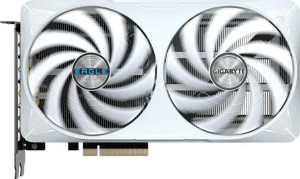
Gigabyte GeForce RTX 5060 Ti Eagle OC Ice 16GB
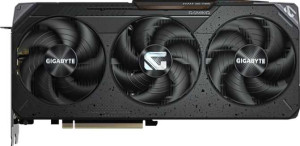
Gigabyte Radeon RX 9070 XT Gaming OC

Gigabyte GeForce RTX 5060 Ti Eagle OC Ice 16GB Gigabyte Radeon RX 9070 XT Gaming OC

Overview

Welcome to our in-depth spec comparison between the Gigabyte GeForce RTX 5060 Ti Eagle OC Ice 16GB and the Gigabyte Radeon RX 9070 XT Gaming OC. These two mid-to-high-end graphics cards take very different approaches to performance, power, and architecture, making the choice between them far from straightforward. We will examine key battlegrounds including raw computational throughput, memory configuration, port connectivity, and thermal design to help you decide which card fits your needs.

Common Features

  • Both products support Double Precision Floating Point (DPFP).
  • Both products come with 16GB of VRAM.
  • Both products support ECC memory.
  • Both products support DirectX 12 Ultimate.
  • Both products support OpenGL version 4.6.
  • Both products support multi-display technology.
  • Both products support ray tracing.
  • Both products support 3D.
  • XeSS (XMX) support is not available on either product.
  • LHR is not present on either product.
  • RGB lighting is available on both products.
  • Both products include an HDMI output with HDMI 2.1b.
  • Neither product has any USB-C ports.
  • Neither product has any DVI outputs.
  • Neither product has any mini DisplayPort outputs.
  • Both products use PCI Express (PCIe) version 5.
  • Air-water cooling is not featured on either product.

Main Differences

  • GPU base clock speed is 2407 MHz on Gigabyte GeForce RTX 5060 Ti Eagle OC Ice 16GB and 1660 MHz on Gigabyte Radeon RX 9070 XT Gaming OC.
  • GPU turbo clock speed is 2617 MHz on Gigabyte GeForce RTX 5060 Ti Eagle OC Ice 16GB and 3060 MHz on Gigabyte Radeon RX 9070 XT Gaming OC.
  • Pixel rate is 125.6 GPixel/s on Gigabyte GeForce RTX 5060 Ti Eagle OC Ice 16GB and 391.7 GPixel/s on Gigabyte Radeon RX 9070 XT Gaming OC.
  • Floating-point performance is 24.12 TFLOPS on Gigabyte GeForce RTX 5060 Ti Eagle OC Ice 16GB and 50.14 TFLOPS on Gigabyte Radeon RX 9070 XT Gaming OC.
  • Texture rate is 376.8 GTexels/s on Gigabyte GeForce RTX 5060 Ti Eagle OC Ice 16GB and 783.4 GTexels/s on Gigabyte Radeon RX 9070 XT Gaming OC.
  • GPU memory speed is 1750 MHz on Gigabyte GeForce RTX 5060 Ti Eagle OC Ice 16GB and 2518 MHz on Gigabyte Radeon RX 9070 XT Gaming OC.
  • Shading units number 4608 on Gigabyte GeForce RTX 5060 Ti Eagle OC Ice 16GB and 4096 on Gigabyte Radeon RX 9070 XT Gaming OC.
  • Texture mapping units (TMUs) total 144 on Gigabyte GeForce RTX 5060 Ti Eagle OC Ice 16GB and 256 on Gigabyte Radeon RX 9070 XT Gaming OC.
  • Render output units (ROPs) total 48 on Gigabyte GeForce RTX 5060 Ti Eagle OC Ice 16GB and 128 on Gigabyte Radeon RX 9070 XT Gaming OC.
  • Effective memory speed is 28000 MHz on Gigabyte GeForce RTX 5060 Ti Eagle OC Ice 16GB and 20000 MHz on Gigabyte Radeon RX 9070 XT Gaming OC.
  • Maximum memory bandwidth is 448 GB/s on Gigabyte GeForce RTX 5060 Ti Eagle OC Ice 16GB and 644.6 GB/s on Gigabyte Radeon RX 9070 XT Gaming OC.
  • The GDDR version is GDDR7 on Gigabyte GeForce RTX 5060 Ti Eagle OC Ice 16GB and GDDR6 on Gigabyte Radeon RX 9070 XT Gaming OC.
  • Memory bus width is 128-bit on Gigabyte GeForce RTX 5060 Ti Eagle OC Ice 16GB and 256-bit on Gigabyte Radeon RX 9070 XT Gaming OC.
  • OpenCL version is 3 on Gigabyte GeForce RTX 5060 Ti Eagle OC Ice 16GB and 2.2 on Gigabyte Radeon RX 9070 XT Gaming OC.
  • DLSS support is present on Gigabyte GeForce RTX 5060 Ti Eagle OC Ice 16GB but not available on Gigabyte Radeon RX 9070 XT Gaming OC.
  • Resizable BAR technology is Intel Resizable BAR on Gigabyte GeForce RTX 5060 Ti Eagle OC Ice 16GB and AMD SAM on Gigabyte Radeon RX 9070 XT Gaming OC.
  • HDMI port count is 1 on Gigabyte GeForce RTX 5060 Ti Eagle OC Ice 16GB and 2 on Gigabyte Radeon RX 9070 XT Gaming OC.
  • DisplayPort output count is 3 on Gigabyte GeForce RTX 5060 Ti Eagle OC Ice 16GB and 2 on Gigabyte Radeon RX 9070 XT Gaming OC.
  • GPU architecture is Blackwell on Gigabyte GeForce RTX 5060 Ti Eagle OC Ice 16GB and RDNA 4.0 on Gigabyte Radeon RX 9070 XT Gaming OC.
  • Thermal Design Power (TDP) is 180W on Gigabyte GeForce RTX 5060 Ti Eagle OC Ice 16GB and 304W on Gigabyte Radeon RX 9070 XT Gaming OC.
  • Semiconductor size is 5 nm on Gigabyte GeForce RTX 5060 Ti Eagle OC Ice 16GB and 4 nm on Gigabyte Radeon RX 9070 XT Gaming OC.
  • Transistor count is 21900 million on Gigabyte GeForce RTX 5060 Ti Eagle OC Ice 16GB and 53900 million on Gigabyte Radeon RX 9070 XT Gaming OC.
  • Card width is 215 mm on Gigabyte GeForce RTX 5060 Ti Eagle OC Ice 16GB and 288 mm on Gigabyte Radeon RX 9070 XT Gaming OC.
  • Card height is 122 mm on Gigabyte GeForce RTX 5060 Ti Eagle OC Ice 16GB and 132 mm on Gigabyte Radeon RX 9070 XT Gaming OC.
Specs Comparison
Gigabyte GeForce RTX 5060 Ti Eagle OC Ice 16GB

Gigabyte GeForce RTX 5060 Ti Eagle OC Ice 16GB

Gigabyte Radeon RX 9070 XT Gaming OC

Gigabyte Radeon RX 9070 XT Gaming OC

Performance:
GPU clock speed 2407 MHz 1660 MHz
GPU turbo 2617 MHz 3060 MHz
pixel rate 125.6 GPixel/s 391.7 GPixel/s
floating-point performance 24.12 TFLOPS 50.14 TFLOPS
texture rate 376.8 GTexels/s 783.4 GTexels/s
GPU memory speed 1750 MHz 2518 MHz
shading units 4608 4096
texture mapping units (TMUs) 144 256
render output units (ROPs) 48 128
Has Double Precision Floating Point (DPFP)

At first glance, the RTX 5060 Ti Eagle OC Ice appears competitive with a higher base clock of 2407 MHz versus the RX 9070 XT's 1660 MHz, and it even edges ahead in raw shading unit count (4608 vs 4096). However, clock speed in isolation is misleading when the underlying architectures differ significantly. The RX 9070 XT's turbo climbs to 3060 MHz versus 2617 MHz on the 5060 Ti, and the downstream throughput numbers tell the real story: the 9070 XT delivers 50.14 TFLOPS of floating-point performance against just 24.12 TFLOPS — more than double — meaning it can process far more shader operations per second in real workloads like ray tracing, rendering, and compute tasks.

The rendering pipeline gap is equally stark. The RX 9070 XT fields 128 ROPs and 256 TMUs compared to 48 ROPs and 144 TMUs on the 5060 Ti. ROPs directly govern how quickly a GPU can write pixels to the framebuffer, which is why the 9070 XT's pixel rate reaches 391.7 GPixel/s versus 125.6 GPixel/s — a 3x advantage that translates to noticeably smoother high-resolution rendering and better headroom at 4K. Similarly, the texture rate gap (783.4 vs 376.8 GTexels/s) means the 9070 XT handles texture-heavy scenes with considerably less strain. The 9070 XT also benefits from faster memory at 2518 MHz vs 1750 MHz, reducing the likelihood of memory bandwidth becoming a bottleneck under demanding loads.

Both GPUs support Double Precision Floating Point (DPFP), which is relevant for professional compute or scientific workloads, so neither holds an exclusive edge there. Overall, the Gigabyte Radeon RX 9070 XT Gaming OC holds a decisive performance advantage in this group across virtually every throughput metric. The 5060 Ti is not without merit, but based strictly on these specs, the 9070 XT is the stronger performer by a substantial margin.

Memory:
effective memory speed 28000 MHz 20000 MHz
maximum memory bandwidth 448 GB/s 644.6 GB/s
VRAM 16GB 16GB
GDDR version GDDR7 GDDR6
memory bus width 128-bit 256-bit
Supports ECC memory

Both cards share an identical 16GB VRAM capacity and both support ECC memory, making them equally capable in workloads that demand error-corrected memory, such as certain professional compute tasks. Where they diverge sharply is in how that memory is architected. The RTX 5060 Ti Eagle OC Ice opts for the newer GDDR7 standard on a 128-bit bus, achieving an effective speed of 28000 MHz. The RX 9070 XT Gaming OC counters with GDDR6 on a much wider 256-bit bus running at 20000 MHz effective. On paper, GDDR7 is the more advanced technology — but memory generation alone does not determine real-world throughput.

The bus width difference is the decisive factor here. A wider memory bus allows more data to flow simultaneously between the GPU and its memory, and the 9070 XT's 256-bit interface more than compensates for its lower per-pin speed. The result is a maximum memory bandwidth of 644.6 GB/s for the 9070 XT versus 448 GB/s for the 5060 Ti — a roughly 44% advantage. In practice, higher memory bandwidth reduces stalls when the GPU needs to rapidly fetch large textures, frame buffer data, or intermediate compute results, which is especially impactful at higher resolutions and in memory-intensive workloads like 4K gaming or AI inference.

The 5060 Ti's use of GDDR7 on a narrow bus is a deliberate efficiency trade-off — it achieves competitive throughput for its tier while keeping power and cost in check. But based strictly on these specs, the RX 9070 XT holds a clear memory bandwidth advantage, and that edge will be felt most in scenarios where the GPU is consistently pushing large amounts of data — making it the stronger option from a memory subsystem perspective.

Features:
DirectX version DirectX 12 Ultimate DirectX 12 Ultimate
OpenGL version 4.6 4.6
OpenCL version 3 2.2
Supports multi-display technology
supports ray tracing
Supports 3D
supports DLSS
has XeSS (XMX)
AMD SAM / Intel Resizable BAR Intel Resizable BAR AMD SAM
has LHR
has RGB lighting
supported displays 4 4

The feature foundations are nearly identical: both cards support DirectX 12 Ultimate, OpenGL 4.6, ray tracing, 3D, multi-display output across up to 4 displays, and RGB lighting. For the vast majority of gaming and general compute use cases, this common ground means neither card is gated out of any mainstream API or display configuration. The one minor technical edge goes to the RTX 5060 Ti Eagle OC Ice with OpenCL 3.0 versus the RX 9070 XT's OpenCL 2.2, which can matter in GPU-accelerated compute applications that leverage newer OpenCL features, though this distinction is niche for most users.

The most consequential differentiator in this group is upscaling support. The 5060 Ti supports DLSS, NVIDIA's AI-driven upscaling technology, while the 9070 XT does not — at least not according to the provided specs. DLSS has become a significant real-world feature for gamers, as it uses neural network processing to reconstruct high-resolution frames from lower-resolution inputs, often delivering substantial frame rate gains with minimal visual quality loss in supported titles. The absence of DLSS on the 9070 XT is a notable gap in this feature group specifically.

On the memory access side, the 5060 Ti lists Intel Resizable BAR while the 9070 XT lists AMD SAM — both are implementations of the same PCIe Resizable BAR standard that allows the CPU to access the full GPU VRAM at once, improving performance in supported games. They are functionally equivalent in practice, so neither card has an edge here. Overall, the RTX 5060 Ti Eagle OC Ice holds a feature advantage in this group, primarily due to its DLSS support, which has broad real-world impact in modern gaming workloads.
Ports:
has an HDMI output
HDMI ports 1 2
HDMI version HDMI 2.1b HDMI 2.1b
DisplayPort outputs 3 2
USB-C ports 0 0
DVI outputs 0 0
mini DisplayPort outputs 0 0

The total display output count is identical at 4 ports per card, and both use HDMI 2.1b — a high-bandwidth standard capable of driving 4K at high refresh rates or even 8K displays. Neither card offers USB-C or DVI outputs, so the comparison comes down entirely to how those four ports are distributed between HDMI and DisplayPort.

The RTX 5060 Ti Eagle OC Ice goes with 1 HDMI and 3 DisplayPort outputs, while the RX 9070 XT Gaming OC flips the balance with 2 HDMI and 2 DisplayPort. In practical terms, this matters depending on your monitor setup. DisplayPort is generally preferred by PC gamers for its support of adaptive sync and high refresh rate monitors, making the 5060 Ti's configuration more appealing for multi-monitor gaming rigs. Conversely, HDMI is the standard connector on TVs and many consumer displays, so the 9070 XT's dual HDMI layout suits users who mix TV and monitor usage or connect to home theater setups alongside a desktop display.

Neither configuration is objectively superior — the right choice depends entirely on the user's display ecosystem. For a gaming-focused desk setup with multiple high-refresh monitors, the RTX 5060 Ti's three DisplayPort outputs offer more flexibility. For anyone blending a TV or secondary HDMI display into their workflow, the RX 9070 XT's two HDMI ports remove the need for adapters. This group is effectively a tie in capability, with the edge shifting based purely on personal connectivity needs.

General info:
GPU architecture Blackwell RDNA 4.0
release date April 2025 March 2025
Thermal Design Power (TDP) 180W 304W
PCI Express (PCIe) version 5 5
semiconductor size 5 nm 4 nm
number of transistors 21900 million 53900 million
Has air-water cooling
width 215 mm 288 mm
height 122 mm 132 mm

Underneath their respective architectures — NVIDIA's Blackwell and AMD's RDNA 4.0 — these two cards represent fundamentally different design philosophies. The RX 9070 XT Gaming OC is built on a 4 nm process and packs a remarkable 53,900 million transistors, compared to the RTX 5060 Ti Eagle OC Ice's 5 nm node and 21,900 million transistors. That transistor count gap is not trivial — it reflects a substantially larger and more complex die on the 9070 XT, which is directly responsible for the raw throughput advantages seen in its performance metrics. Both cards use PCIe 5.0, ensuring neither is bottlenecked by interface bandwidth on modern platforms.

The TDP figures reveal the trade-off the 9070 XT makes for its performance: it draws 304W versus just 180W for the 5060 Ti. That 124W difference has real implications — users will need a more robust power supply, and the card will generate noticeably more heat, placing greater demands on case airflow. Neither card uses liquid cooling, relying purely on air cooling solutions, so adequate chassis ventilation is important for both, but especially for the 9070 XT under sustained load.

Physical size further reinforces this divide. The RX 9070 XT measures 288 mm in length and 132 mm in height, while the RTX 5060 Ti is considerably more compact at 215 mm × 122 mm. The 5060 Ti will fit comfortably in mid-tower and even some smaller form-factor cases where the 9070 XT might not. For builders prioritizing a compact, power-efficient system, the RTX 5060 Ti Eagle OC Ice holds a clear advantage in this group. Those with full-size cases and a capable PSU who want maximum silicon will find the RX 9070 XT's larger, denser chip justifies its footprint.

Comparison Summary & Verdict

After examining all the specifications, both cards share a solid foundation: 16GB of VRAM, PCIe 5 support, ray tracing, DirectX 12 Ultimate, and RGB lighting. However, their strengths diverge significantly. The Gigabyte Radeon RX 9070 XT Gaming OC dominates in raw performance metrics, delivering over double the pixel rate, nearly double the texture rate, and 50.14 TFLOPS of floating-point performance, backed by a wider 256-bit memory bus and higher bandwidth of 644.6 GB/s. It is the clear choice for users who demand maximum rasterization performance. The Gigabyte GeForce RTX 5060 Ti Eagle OC Ice 16GB, on the other hand, operates at a much lower 180W TDP, offers faster effective memory speed with GDDR7, supports DLSS, and has a more compact form factor, making it ideal for power-conscious builds or smaller cases where efficiency and upscaling technology matter.

Gigabyte GeForce RTX 5060 Ti Eagle OC Ice 16GB
Buy Gigabyte GeForce RTX 5060 Ti Eagle OC Ice 16GB if...

Buy the Gigabyte GeForce RTX 5060 Ti Eagle OC Ice 16GB if you want a power-efficient card with a lower 180W TDP, DLSS support, GDDR7 memory, and a compact form factor that fits smaller builds.

Gigabyte Radeon RX 9070 XT Gaming OC
Buy Gigabyte Radeon RX 9070 XT Gaming OC if...

Buy the Gigabyte Radeon RX 9070 XT Gaming OC if you prioritize maximum raw performance, with significantly higher floating-point throughput, a wider 256-bit memory bus, and greater memory bandwidth for demanding workloads.