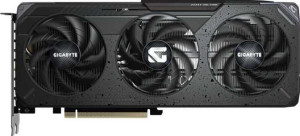
Gigabyte GeForce RTX 5060 Ti Gaming OC 16GB
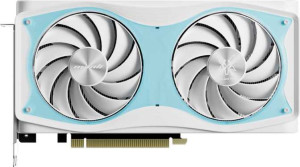
Manli Polar Fox GeForce RTX 5060 Ti OC 16GB

Gigabyte GeForce RTX 5060 Ti Gaming OC 16GB Manli Polar Fox GeForce RTX 5060 Ti OC 16GB

Overview

Welcome to our detailed spec comparison between the Gigabyte GeForce RTX 5060 Ti Gaming OC 16GB and the Manli Polar Fox GeForce RTX 5060 Ti OC 16GB. Both cards share the same Blackwell architecture and 16GB of GDDR7 memory, yet they diverge in areas like boost clock speeds, raw compute performance, and physical dimensions. Read on to discover which card best suits your needs.

Common Features

  • Both cards share a base GPU clock speed of 2407 MHz.
  • Both cards have a GPU memory speed of 1750 MHz.
  • Both cards feature 4608 shading units.
  • Both cards include 144 texture mapping units (TMUs).
  • Both cards have 48 render output units (ROPs).
  • Double Precision Floating Point (DPFP) is supported on both cards.
  • Both cards have an effective memory speed of 28000 MHz.
  • Both cards offer a maximum memory bandwidth of 448 GB/s.
  • Both cards come with 16GB of VRAM.
  • Both cards use GDDR7 memory.
  • Both cards feature a 128-bit memory bus width.
  • ECC memory is supported on both cards.
  • Both cards support DirectX 12 Ultimate.
  • Both cards support OpenGL version 4.6.
  • Both cards support OpenCL version 3.
  • Multi-display technology is supported on both cards.
  • Ray tracing is supported on both cards.
  • 3D support is available on both cards.
  • DLSS is supported on both cards.
  • XeSS (XMX) support is not available on either card.
  • Both cards include one HDMI 2.1b output.
  • Both cards feature three DisplayPort outputs.
  • Neither card includes USB-C or DVI outputs.
  • Both cards are built on the Blackwell GPU architecture.
  • Both cards have a Thermal Design Power (TDP) of 180W.
  • Both cards use PCIe version 5.
  • Both cards are manufactured on a 5 nm semiconductor process.
  • Both cards contain 21900 million transistors.
  • Neither card features air-water cooling.

Main Differences

  • GPU turbo clock speed is 2647 MHz on Gigabyte GeForce RTX 5060 Ti Gaming OC 16GB and 2602 MHz on Manli Polar Fox GeForce RTX 5060 Ti OC 16GB.
  • Pixel rate is 127.1 GPixel/s on Gigabyte GeForce RTX 5060 Ti Gaming OC 16GB and 124.9 GPixel/s on Manli Polar Fox GeForce RTX 5060 Ti OC 16GB.
  • Floating-point performance is 24.39 TFLOPS on Gigabyte GeForce RTX 5060 Ti Gaming OC 16GB and 23.98 TFLOPS on Manli Polar Fox GeForce RTX 5060 Ti OC 16GB.
  • Texture rate is 381.2 GTexels/s on Gigabyte GeForce RTX 5060 Ti Gaming OC 16GB and 374.7 GTexels/s on Manli Polar Fox GeForce RTX 5060 Ti OC 16GB.
  • Card width is 281 mm on Gigabyte GeForce RTX 5060 Ti Gaming OC 16GB and 240 mm on Manli Polar Fox GeForce RTX 5060 Ti OC 16GB.
  • Card height is 119 mm on Gigabyte GeForce RTX 5060 Ti Gaming OC 16GB and 126 mm on Manli Polar Fox GeForce RTX 5060 Ti OC 16GB.
Specs Comparison
Gigabyte GeForce RTX 5060 Ti Gaming OC 16GB

Gigabyte GeForce RTX 5060 Ti Gaming OC 16GB

Manli Polar Fox GeForce RTX 5060 Ti OC 16GB

Manli Polar Fox GeForce RTX 5060 Ti OC 16GB

Performance:
GPU clock speed 2407 MHz 2407 MHz
GPU turbo 2647 MHz 2602 MHz
pixel rate 127.1 GPixel/s 124.9 GPixel/s
floating-point performance 24.39 TFLOPS 23.98 TFLOPS
texture rate 381.2 GTexels/s 374.7 GTexels/s
GPU memory speed 1750 MHz 1750 MHz
shading units 4608 4608
texture mapping units (TMUs) 144 144
render output units (ROPs) 48 48
Has Double Precision Floating Point (DPFP)

Both cards share identical foundations: the same 2407 MHz base clock, 4608 shading units, 144 TMUs, 48 ROPs, and 1750 MHz memory speed. This means any performance gap between them comes down entirely to how aggressively each manufacturer has tuned the boost behavior — not architectural differences.

That gap, while modest, is consistent across every throughput metric. The Gigabyte Gaming OC reaches a 2647 MHz turbo versus 2602 MHz for the Manli Polar Fox — a 45 MHz advantage that flows through to every derived figure. The Gigabyte edges ahead with 24.39 TFLOPS of floating-point performance against 23.98 TFLOPS, and its texture rate of 381.2 GTexels/s versus 374.7 GTexels/s translates to slightly faster texture throughput in complex scenes. In practice these are small margins — roughly 1.7% across the board — meaning the real-world difference in frame rates will be within the margin of noise in most workloads.

The Gigabyte Gaming OC holds a clear, if narrow, performance edge in this group. Its higher boost clock is the sole driver of every metric where it leads, and buyers prioritizing peak theoretical throughput should favor it. The Manli Polar Fox is not meaningfully slower, but it cannot match the Gigabyte's factory overclock, and no spec here compensates for that gap.

Memory:
effective memory speed 28000 MHz 28000 MHz
maximum memory bandwidth 448 GB/s 448 GB/s
VRAM 16GB 16GB
GDDR version GDDR7 GDDR7
memory bus width 128-bit 128-bit
Supports ECC memory

Memory is a complete dead heat. Both cards run 16GB of GDDR7 over a 128-bit bus at an effective speed of 28000 MHz, delivering identical peak bandwidth of 448 GB/s. There is no spec in this group — not a single figure — that separates them.

The configuration itself is worth contextualizing. GDDR7 is a generational leap in memory efficiency, and hitting 448 GB/s through a 128-bit interface would have required a 256-bit bus in the GDDR6 era. That means these cards punch above their bus-width class, keeping up with higher-tier bandwidth figures without the die-area cost of a wider memory interface. The 16GB allocation is also a meaningful real-world advantage for demanding workloads — high-resolution texture packs, large AI inference models, and 4K asset streaming all benefit from headroom that 8GB or 12GB variants cannot offer. Both cards also support ECC memory, which adds error-correction redundancy useful in compute and content-creation scenarios.

This group is an unambiguous tie. Memory subsystem should not factor into a decision between these two cards in any way — every buyer gets the exact same bandwidth, capacity, and memory technology regardless of which model they choose.

Features:
DirectX version DirectX 12 Ultimate DirectX 12 Ultimate
OpenGL version 4.6 4.6
OpenCL version 3 3
Supports multi-display technology
supports ray tracing
Supports 3D
supports DLSS
has XeSS (XMX)
AMD SAM / Intel Resizable BAR Intel Resizable BAR Intel Resizable BAR
has LHR
has RGB lighting
supported displays 4 4

Feature parity is total here — every capability listed is identical across both cards. The shared highlights worth unpacking are DirectX 12 Ultimate support, ray tracing, and DLSS. DirectX 12 Ultimate is the current gold standard for gaming APIs, ensuring compatibility with the full suite of modern rendering features including mesh shaders and variable-rate shading. Ray tracing support means both cards can handle hardware-accelerated lighting, shadow, and reflection calculations rather than relying on costlier software approximations. DLSS — Nvidia's AI-driven upscaling — is arguably the most practically valuable feature on this list, as it allows both cards to render at lower internal resolutions and reconstruct a sharper image, effectively recovering performance in demanding titles.

A few other shared entries carry quiet but real significance. Support for up to 4 simultaneous displays makes either card a capable choice for multi-monitor productivity setups. Intel Resizable BAR support allows the CPU to access the full GPU frame buffer at once rather than in chunks, which can yield modest frame rate gains in compatible systems. Neither card carries an LHR (lite hash rate) limiter, though this is largely irrelevant for most buyers today.

With no differentiating spec anywhere in this group, the feature set comparison is a straight tie. Whatever use case is driving the purchase — gaming, multi-display work, or compute — both cards bring exactly the same toolbox to the table.

Ports:
has an HDMI output
HDMI ports 1 1
HDMI version HDMI 2.1b HDMI 2.1b
DisplayPort outputs 3 3
USB-C ports 0 0
DVI outputs 0 0
mini DisplayPort outputs 0 0

Port selection is identical on both cards: one HDMI 2.1b output and three DisplayPort outputs, totaling four display connections — which aligns with the four-display limit noted in the features group. Neither card offers USB-C or any legacy outputs like DVI or mini DisplayPort.

The version details matter here. HDMI 2.1b is the latest revision of the standard, supporting up to 10K resolution and high refresh rates at 4K and beyond, as well as features like Variable Refresh Rate (VRR) and Auto Low Latency Mode (ALLM) — both directly relevant to modern gaming monitors and TVs. Three full-size DisplayPort outputs give users flexible options for multi-monitor configurations, whether for productivity spanning across several screens or a surround gaming setup, without requiring adapters.

No differentiation exists anywhere in this group. Connectivity is a clean tie, and display setup decisions — whether connecting a single high-end monitor or building out a four-screen array — will play out identically regardless of which card is chosen.

General info:
GPU architecture Blackwell Blackwell
release date April 2025 April 2025
Thermal Design Power (TDP) 180W 180W
PCI Express (PCIe) version 5 5
semiconductor size 5 nm 5 nm
number of transistors 21900 million 21900 million
Has air-water cooling
width 281 mm 240 mm
height 119 mm 126 mm

At the silicon level, these cards are indistinguishable. Both are built on the Blackwell architecture using a 5nm process with 21.9 billion transistors, draw a 180W TDP, and connect via PCIe 5.0. The shared TDP means power supply and cooling requirements are identical — buyers can plan their build around either card without adjustment.

Physical dimensions are where the two diverge, and it is a meaningful difference for case compatibility. The Gigabyte Gaming OC measures 281 mm in length, while the Manli Polar Fox comes in at a more compact 240 mm — a 41mm difference that is significant in tighter mid-tower and mini-ITX builds where clearance near the front panel or drive cages is limited. The Manli is slightly taller at 126 mm versus 119 mm for the Gigabyte, but height differences of this magnitude are rarely a fitment concern in standard cases.

For most full-size builds, neither dimension will pose a problem. However, in space-constrained systems, the Manli Polar Fox holds a practical edge — its shorter length makes it the more versatile option for smaller chassis, and that advantage is entirely independent of performance. Buyers with compact cases should measure available GPU clearance before committing to the longer Gigabyte model.

Comparison Summary & Verdict

Both the Gigabyte GeForce RTX 5060 Ti Gaming OC 16GB and the Manli Polar Fox GeForce RTX 5060 Ti OC 16GB are built on the same Blackwell architecture with identical 16GB GDDR7 memory, 180W TDP, and feature sets including ray tracing and DLSS. The Gigabyte card pulls ahead with a higher GPU turbo clock of 2647 MHz, delivering a floating-point performance of 24.39 TFLOPS and a texture rate of 381.2 GTexels/s, making it the stronger choice for users who want every last frame. The Manli card, while slightly behind on peak performance, offers a notably more compact 240 mm length, making it a better fit for smaller chassis builds where space is at a premium.

Gigabyte GeForce RTX 5060 Ti Gaming OC 16GB
Buy Gigabyte GeForce RTX 5060 Ti Gaming OC 16GB if...

Buy the Gigabyte GeForce RTX 5060 Ti Gaming OC 16GB if you want the highest boost clock and peak compute performance between these two cards, and have a case with enough room for a 281 mm card.

Manli Polar Fox GeForce RTX 5060 Ti OC 16GB
Buy Manli Polar Fox GeForce RTX 5060 Ti OC 16GB if...

Buy the Manli Polar Fox GeForce RTX 5060 Ti OC 16GB if you are building in a compact case that cannot accommodate a longer card, and are comfortable with a marginally lower boost clock in exchange for a smaller 240 mm footprint.