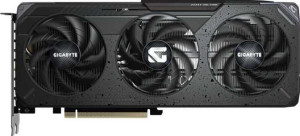
Gigabyte GeForce RTX 5060 Ti Gaming OC 16GB
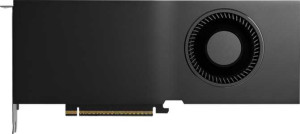
Nvidia RTX Pro 5000 Blackwell

Gigabyte GeForce RTX 5060 Ti Gaming OC 16GB Nvidia RTX Pro 5000 Blackwell

Overview

Welcome to our in-depth spec comparison between the Gigabyte GeForce RTX 5060 Ti Gaming OC 16GB and the Nvidia RTX Pro 5000 Blackwell. Both cards share the same Blackwell architecture and PCIe 5 platform, yet they diverge sharply across raw compute power, memory capacity, and intended use cases. Read on as we break down every specification to help you decide which GPU fits your needs.

Common Features

  • Both products share the same GPU memory speed of 1750 MHz.
  • Double Precision Floating Point (DPFP) is supported on both products.
  • Both products use GDDR7 memory with an effective memory speed of 28000 MHz.
  • ECC memory support is available on both products.
  • Both products support OpenGL version 4.6.
  • Both products support OpenCL version 3.
  • Multi-display technology is supported on both products.
  • Ray tracing is supported on both products.
  • 3D support is available on both products.
  • DLSS is supported on both products.
  • XeSS (XMX) support is not available on either product.
  • Both products support Intel Resizable BAR.
  • Neither product has any USB-C ports.
  • Neither product has any DVI outputs.
  • Neither product has any mini DisplayPort outputs.
  • Both products are built on the Blackwell GPU architecture.
  • Both products use PCIe version 5.
  • Both products are manufactured on a 5 nm semiconductor process.
  • Air-water cooling is not available on either product.

Main Differences

  • GPU clock speed is 2407 MHz on Gigabyte GeForce RTX 5060 Ti Gaming OC 16GB and 1590 MHz on Nvidia RTX Pro 5000 Blackwell.
  • GPU turbo speed is 2647 MHz on Gigabyte GeForce RTX 5060 Ti Gaming OC 16GB and 2617 MHz on Nvidia RTX Pro 5000 Blackwell.
  • Pixel rate is 127.1 GPixel/s on Gigabyte GeForce RTX 5060 Ti Gaming OC 16GB and 460.6 GPixel/s on Nvidia RTX Pro 5000 Blackwell.
  • Floating-point performance is 24.39 TFLOPS on Gigabyte GeForce RTX 5060 Ti Gaming OC 16GB and 73.69 TFLOPS on Nvidia RTX Pro 5000 Blackwell.
  • Texture rate is 381.2 GTexels/s on Gigabyte GeForce RTX 5060 Ti Gaming OC 16GB and 1151 GTexels/s on Nvidia RTX Pro 5000 Blackwell.
  • Shading units number 4608 on Gigabyte GeForce RTX 5060 Ti Gaming OC 16GB and 14080 on Nvidia RTX Pro 5000 Blackwell.
  • Texture mapping units (TMUs) total 144 on Gigabyte GeForce RTX 5060 Ti Gaming OC 16GB and 440 on Nvidia RTX Pro 5000 Blackwell.
  • Render output units (ROPs) number 48 on Gigabyte GeForce RTX 5060 Ti Gaming OC 16GB and 176 on Nvidia RTX Pro 5000 Blackwell.
  • Maximum memory bandwidth is 448 GB/s on Gigabyte GeForce RTX 5060 Ti Gaming OC 16GB and 1344 GB/s on Nvidia RTX Pro 5000 Blackwell.
  • VRAM is 16GB on Gigabyte GeForce RTX 5060 Ti Gaming OC 16GB and 48GB on Nvidia RTX Pro 5000 Blackwell.
  • Memory bus width is 128-bit on Gigabyte GeForce RTX 5060 Ti Gaming OC 16GB and 384-bit on Nvidia RTX Pro 5000 Blackwell.
  • DirectX version is DirectX 12 Ultimate on Gigabyte GeForce RTX 5060 Ti Gaming OC 16GB and DirectX 12 on Nvidia RTX Pro 5000 Blackwell.
  • RGB lighting is present on Gigabyte GeForce RTX 5060 Ti Gaming OC 16GB but not available on Nvidia RTX Pro 5000 Blackwell.
  • An HDMI output is present on Gigabyte GeForce RTX 5060 Ti Gaming OC 16GB but not available on Nvidia RTX Pro 5000 Blackwell.
  • DisplayPort outputs number 3 on Gigabyte GeForce RTX 5060 Ti Gaming OC 16GB and 4 on Nvidia RTX Pro 5000 Blackwell.
  • Thermal Design Power (TDP) is 180W on Gigabyte GeForce RTX 5060 Ti Gaming OC 16GB and 300W on Nvidia RTX Pro 5000 Blackwell.
  • The number of transistors is 21900 million on Gigabyte GeForce RTX 5060 Ti Gaming OC 16GB and 92200 million on Nvidia RTX Pro 5000 Blackwell.
  • Width is 281 mm on Gigabyte GeForce RTX 5060 Ti Gaming OC 16GB and 266.7 mm on Nvidia RTX Pro 5000 Blackwell.
  • Height is 119 mm on Gigabyte GeForce RTX 5060 Ti Gaming OC 16GB and 111.8 mm on Nvidia RTX Pro 5000 Blackwell.
Specs Comparison
Gigabyte GeForce RTX 5060 Ti Gaming OC 16GB

Gigabyte GeForce RTX 5060 Ti Gaming OC 16GB

Nvidia RTX Pro 5000 Blackwell

Nvidia RTX Pro 5000 Blackwell

Performance:
GPU clock speed 2407 MHz 1590 MHz
GPU turbo 2647 MHz 2617 MHz
pixel rate 127.1 GPixel/s 460.6 GPixel/s
floating-point performance 24.39 TFLOPS 73.69 TFLOPS
texture rate 381.2 GTexels/s 1151 GTexels/s
GPU memory speed 1750 MHz 1750 MHz
shading units 4608 14080
texture mapping units (TMUs) 144 440
render output units (ROPs) 48 176
Has Double Precision Floating Point (DPFP)

At first glance, the base clock speed tells an interesting story: the Gigabyte RTX 5060 Ti Gaming OC runs its GPU at a notably higher base frequency (2407 MHz vs. 1590 MHz), and both cards reach near-identical boost clocks around 2647 MHz and 2617 MHz respectively. However, raw clock speed is only meaningful in context of how many execution units are actually running at that speed — and this is where the comparison shifts decisively.

The Nvidia RTX Pro 5000 Blackwell operates on an entirely different scale of silicon. With 14,080 shading units, 440 TMUs, and 176 ROPs, it dwarfs the 5060 Ti's 4,608 shaders, 144 TMUs, and 48 ROPs — roughly a 3× advantage across every parallelism metric. This directly translates into the compute throughput numbers: the RTX Pro 5000 delivers 73.69 TFLOPS of floating-point performance versus 24.39 TFLOPS on the 5060 Ti, and its texture and pixel fill rates (1151 GTexels/s and 460.6 GPixel/s) are approximately 3× higher as well. In practice, this means the RTX Pro 5000 can handle far heavier workloads — dense 3D rendering, large AI model inference, or complex simulation — without the throughput bottlenecks the smaller chip would encounter.

Both cards share identical GPU memory speed (1750 MHz) and both support Double Precision Floating Point, so neither has an edge on those fronts. Overall, the RTX Pro 5000 Blackwell has a commanding and unambiguous performance advantage in this group — the 5060 Ti's higher base clock is a minor footnote against a 3× deficit in every measure of actual compute capacity. The 5060 Ti is a capable consumer gaming GPU, but it is simply not in the same performance class as the Pro 5000 for throughput-intensive tasks.

Memory:
effective memory speed 28000 MHz 28000 MHz
maximum memory bandwidth 448 GB/s 1344 GB/s
VRAM 16GB 48GB
GDDR version GDDR7 GDDR7
memory bus width 128-bit 384-bit
Supports ECC memory

Both cards run on GDDR7 memory at the same 28000 MHz effective speed, and both support ECC memory — a feature important for professional workloads where data integrity is critical. The shared memory standard means neither card has an inherent speed-per-pin advantage; the real divergence comes entirely from how wide the memory interface is.

This is where the gap becomes dramatic. The RTX Pro 5000 Blackwell uses a 384-bit memory bus compared to the 5060 Ti's 128-bit bus — exactly three times wider — which directly produces a 1344 GB/s bandwidth figure versus 448 GB/s. In memory-bound scenarios like high-resolution texture streaming, large dataset processing, or running sizable AI models, bandwidth is often the limiting factor, and a 3× bandwidth advantage translates almost linearly into real-world throughput gains. The RTX Pro 5000 also carries 48GB of VRAM, triple the 5060 Ti's 16GB, which is a decisive differentiator for workloads that simply cannot be partitioned — think training large neural networks, loading full 3D scene assets, or working with high-resolution multi-layer compositions.

The RTX Pro 5000 Blackwell holds a clear and substantial edge in this group. While the 5060 Ti's 16GB and 448 GB/s are respectable for a consumer card, the Pro 5000's combination of triple the VRAM capacity and triple the memory bandwidth positions it in a different league for any task where memory becomes the bottleneck.

Features:
DirectX version DirectX 12 Ultimate DirectX 12
OpenGL version 4.6 4.6
OpenCL version 3 3
Supports multi-display technology
supports ray tracing
Supports 3D
supports DLSS
has XeSS (XMX)
AMD SAM / Intel Resizable BAR Intel Resizable BAR Intel Resizable BAR
has LHR
has RGB lighting
supported displays 4 4

Across most feature checkboxes, these two cards are remarkably aligned — both support ray tracing, DLSS, 3D output, multi-display configurations up to 4 screens, Intel Resizable BAR, and identical OpenGL 4.6 and OpenCL 3 API versions. For the vast majority of supported software, users of either card will have access to the same feature set.

The one technically meaningful distinction is the DirectX version: the 5060 Ti Gaming OC lists DirectX 12 Ultimate, while the RTX Pro 5000 Blackwell lists DirectX 12. In practice, DirectX 12 Ultimate is a certification tier built on top of DX12 that formalizes support for hardware ray tracing, variable rate shading, mesh shaders, and sampler feedback under a unified label. Whether this difference has any practical impact depends entirely on the software being run — titles or tools explicitly targeting DX12 Ultimate features may expose this gap, though many applications do not distinguish between the two at this level. The other differentiator, RGB lighting on the 5060 Ti, is purely aesthetic and carries no functional significance for performance or compatibility.

On balance, this group is essentially a near-tie with a narrow edge to the 5060 Ti Gaming OC on paper, solely due to the DirectX 12 Ultimate designation. However, users buying the RTX Pro 5000 are overwhelmingly targeting professional workloads where this specific certification is rarely a deciding factor. For gaming-oriented feature completeness, the 5060 Ti holds a slight advantage; for professional use cases, the distinction is largely irrelevant.
Ports:
has an HDMI output
DisplayPort outputs 3 4
USB-C ports 0 0
DVI outputs 0 0
mini DisplayPort outputs 0 0

The port configurations here reflect the distinct audiences each card is designed for. The 5060 Ti Gaming OC offers 3 DisplayPort outputs plus HDMI, giving it four total display connections — a practical mix that covers virtually every consumer monitor, TV, or projector without needing an adapter. The RTX Pro 5000 Blackwell, by contrast, provides 4 DisplayPort outputs and no HDMI at all, a layout typical of professional workstation cards where DisplayPort is the dominant standard for high-resolution and high-refresh-rate monitors used in creative and technical environments.

The absence of HDMI on the RTX Pro 5000 is worth flagging for users who need to connect to HDMI-native devices — projectors, capture setups, or consumer displays — as that would require a DisplayPort-to-HDMI adapter. Conversely, the 5060 Ti's lack of a fourth DisplayPort output is unlikely to matter for its target audience. Neither card offers USB-C, DVI, or mini DisplayPort connectivity, so those are non-factors in this comparison.

Neither card holds a clear overall edge here — the advantage depends entirely on the use case. The 5060 Ti Gaming OC is more plug-and-play versatile for mixed consumer setups thanks to its HDMI port, while the RTX Pro 5000 offers one additional DisplayPort output better suited to multi-monitor professional workstation deployments. Users should simply verify their display connectivity requirements against each card's output lineup.

General info:
GPU architecture Blackwell Blackwell
release date April 2025 March 2025
Thermal Design Power (TDP) 180W 300W
PCI Express (PCIe) version 5 5
semiconductor size 5 nm 5 nm
number of transistors 21900 million 92200 million
Has air-water cooling
width 281 mm 266.7 mm
height 119 mm 111.8 mm

Sharing the same Blackwell architecture, 5nm process node, and PCIe 5.0 interface, these two cards are built on the same generational foundation — but the silicon inside them is vastly different in scale. The RTX Pro 5000 Blackwell packs 92,200 million transistors compared to the 5060 Ti's 21,900 million, a more than 4× difference that explains every performance and memory bandwidth gap observed across the other spec groups. More transistors mean more functional units, larger caches, and wider execution pathways — this is the root cause, not a symptom.

That transistor count comes at a direct power cost. The RTX Pro 5000 carries a 300W TDP versus the 5060 Ti's 180W, a 120W delta that has real system-level implications: the Pro 5000 demands a more capable PSU, generates significantly more heat, and requires a case and cooling setup dimensioned for a high-wattage workstation card. The 5060 Ti, at 180W, is comparatively power-efficient and fits comfortably into a wider range of mid-range builds without special provisioning.

Interestingly, physical dimensions tell a slightly counterintuitive story — the 5060 Ti Gaming OC is actually the larger card at 281mm long, compared to 266.7mm for the Pro 5000. This likely reflects Gigabyte's triple-fan cooler design optimized for acoustics and sustained gaming thermals on a consumer card. Neither uses liquid cooling per the provided data. Overall, there is no single winner in this group: the RTX Pro 5000 dominates in raw silicon scale, while the 5060 Ti holds a meaningful advantage in power efficiency — the right trade-off depends entirely on workload requirements and system constraints.

Comparison Summary & Verdict

After examining every specification, it is clear that these two Blackwell-based GPUs serve very different audiences. The Nvidia RTX Pro 5000 Blackwell dominates on pure compute muscle, delivering 73.69 TFLOPS of floating-point performance, 48GB of GDDR7 VRAM on a 384-bit bus, and over three times the shading units — making it the obvious choice for professional workloads, large-scale rendering, and AI-accelerated tasks. The Gigabyte GeForce RTX 5060 Ti Gaming OC 16GB, on the other hand, offers a higher base clock speed, DirectX 12 Ultimate support, RGB lighting, and an HDMI output, all at a much lower 180W TDP — positioning it as a compelling, energy-efficient option for gaming enthusiasts who want modern features without the premium power draw.

Gigabyte GeForce RTX 5060 Ti Gaming OC 16GB
Buy Gigabyte GeForce RTX 5060 Ti Gaming OC 16GB if...

Buy the Gigabyte GeForce RTX 5060 Ti Gaming OC 16GB if you want a gaming-focused GPU with a higher clock speed, DirectX 12 Ultimate support, RGB lighting, and HDMI output at a lower 180W power draw.

Nvidia RTX Pro 5000 Blackwell
Buy Nvidia RTX Pro 5000 Blackwell if...

Buy the Nvidia RTX Pro 5000 Blackwell if you need maximum compute performance, with 48GB of VRAM, a 384-bit memory bus, and vastly more shading units for professional rendering or AI workloads.