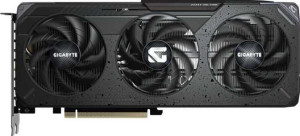
Gigabyte GeForce RTX 5060 Ti Gaming OC 16GB
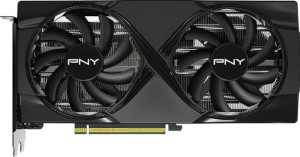
PNY GeForce RTX 5060 Ti Dual Fan 16GB

Gigabyte GeForce RTX 5060 Ti Gaming OC 16GB PNY GeForce RTX 5060 Ti Dual Fan 16GB

Overview

When choosing between the Gigabyte GeForce RTX 5060 Ti Gaming OC 16GB and the PNY GeForce RTX 5060 Ti Dual Fan 16GB, buyers are looking at two cards built on the same Blackwell foundation yet diverging in meaningful ways. This comparison explores the key battlegrounds: GPU boost clock performance, physical dimensions, and feature extras like RGB lighting, to help you decide which card delivers the right balance for your needs.

Common Features

  • Both cards share a base GPU clock speed of 2407 MHz.
  • Both cards have a GPU memory speed of 1750 MHz.
  • Both cards feature 4608 shading units.
  • Both cards have 144 texture mapping units (TMUs).
  • Both cards have 48 render output units (ROPs).
  • Double Precision Floating Point (DPFP) is supported on both cards.
  • Both cards have an effective memory speed of 28000 MHz.
  • Both cards offer a maximum memory bandwidth of 448 GB/s.
  • Both cards come with 16GB of VRAM.
  • Both cards use GDDR7 memory.
  • Both cards have a 128-bit memory bus width.
  • ECC memory is supported on both cards.
  • Both cards support DirectX 12 Ultimate.
  • Both cards support OpenGL version 4.6.
  • Both cards support OpenCL version 3.
  • Multi-display technology is supported on both cards.
  • Ray tracing is supported on both cards.
  • 3D support is available on both cards.
  • DLSS is supported on both cards.
  • XeSS (XMX) support is not available on either card.
  • Both cards include one HDMI 2.1b output.
  • Both cards feature three DisplayPort outputs.
  • Neither card has USB-C or DVI outputs.
  • Both cards are built on the Blackwell GPU architecture.
  • Both cards have a Thermal Design Power (TDP) of 180W.
  • Both cards use PCIe version 5.
  • Both cards are manufactured on a 5 nm semiconductor process.
  • Both cards contain 21900 million transistors.
  • Both cards carry a 3-year warranty.
  • Air-water cooling is not available on either card.

Main Differences

  • GPU turbo clock speed is 2647 MHz on Gigabyte GeForce RTX 5060 Ti Gaming OC 16GB and 2572 MHz on PNY GeForce RTX 5060 Ti Dual Fan 16GB.
  • Pixel rate is 127.1 GPixel/s on Gigabyte GeForce RTX 5060 Ti Gaming OC 16GB and 123.5 GPixel/s on PNY GeForce RTX 5060 Ti Dual Fan 16GB.
  • Floating-point performance is 24.39 TFLOPS on Gigabyte GeForce RTX 5060 Ti Gaming OC 16GB and 23.7 TFLOPS on PNY GeForce RTX 5060 Ti Dual Fan 16GB.
  • Texture rate is 381.2 GTexels/s on Gigabyte GeForce RTX 5060 Ti Gaming OC 16GB and 370.4 GTexels/s on PNY GeForce RTX 5060 Ti Dual Fan 16GB.
  • RGB lighting is present on Gigabyte GeForce RTX 5060 Ti Gaming OC 16GB but not available on PNY GeForce RTX 5060 Ti Dual Fan 16GB.
  • Card width is 281 mm on Gigabyte GeForce RTX 5060 Ti Gaming OC 16GB and 245 mm on PNY GeForce RTX 5060 Ti Dual Fan 16GB.
  • Card height is 119 mm on Gigabyte GeForce RTX 5060 Ti Gaming OC 16GB and 120 mm on PNY GeForce RTX 5060 Ti Dual Fan 16GB.
Specs Comparison
Gigabyte GeForce RTX 5060 Ti Gaming OC 16GB

Gigabyte GeForce RTX 5060 Ti Gaming OC 16GB

PNY GeForce RTX 5060 Ti Dual Fan 16GB

PNY GeForce RTX 5060 Ti Dual Fan 16GB

Performance:
GPU clock speed 2407 MHz 2407 MHz
GPU turbo 2647 MHz 2572 MHz
pixel rate 127.1 GPixel/s 123.5 GPixel/s
floating-point performance 24.39 TFLOPS 23.7 TFLOPS
texture rate 381.2 GTexels/s 370.4 GTexels/s
GPU memory speed 1750 MHz 1750 MHz
shading units 4608 4608
texture mapping units (TMUs) 144 144
render output units (ROPs) 48 48
Has Double Precision Floating Point (DPFP)

At their core, both the Gigabyte Gaming OC and the PNY Dual Fan are built on identical silicon: the same 4608 shading units, 144 TMUs, 48 ROPs, and a matching base clock of 2407 MHz with 1750 MHz memory speed. This means the theoretical throughput ceiling and memory bandwidth are the same out of the box, and neither card holds a structural architectural advantage over the other.

The meaningful separation emerges at boost clock. The Gigabyte Gaming OC reaches a GPU turbo of 2647 MHz versus the PNY's 2572 MHz — a difference of 75 MHz, or roughly 3%. That gap flows directly into every derived metric: the Gaming OC delivers 24.39 TFLOPS of floating-point throughput and a texture rate of 381.2 GTexels/s, while the PNY lands at 23.7 TFLOPS and 370.4 GTexels/s. In practical terms, this translates to a modest but real advantage in shader-heavy workloads, compute tasks, and sustained gaming loads where the GPU frequently operates near its boost ceiling. The pixel rate gap — 127.1 vs 123.5 GPixel/s — is similarly small but consistent.

In summary, the Gigabyte GeForce RTX 5060 Ti Gaming OC holds a clear, if incremental, performance edge in this group solely by virtue of its higher factory boost clock. Both cards share the same shader count, memory configuration, and DPFP support, so the Gigabyte's advantage is not architectural — it is a result of a more aggressive out-of-box overclock. For users who prioritize peak performance without manual tuning, the Gaming OC is the stronger choice here; those indifferent to a ~3% throughput delta will find the PNY functionally equivalent in most real-world scenarios.
Memory:
effective memory speed 28000 MHz 28000 MHz
maximum memory bandwidth 448 GB/s 448 GB/s
VRAM 16GB 16GB
GDDR version GDDR7 GDDR7
memory bus width 128-bit 128-bit
Supports ECC memory

The memory subsystem is a complete dead heat. Both the Gigabyte Gaming OC and the PNY Dual Fan carry 16GB of GDDR7 running at an effective 28000 MHz across a 128-bit bus, yielding identical peak bandwidth of 448 GB/s. There is nothing to separate them here — not a single figure differs.

What is worth appreciating is what these shared numbers represent in context. GDDR7 at 28 Gbps is a significant generational leap in memory efficiency; the 128-bit bus, which would have been a bandwidth bottleneck with older GDDR6, is no longer the constraint it once was at this performance tier. The result is that both cards can feed their shader arrays with texture data and framebuffer reads at a rate competitive well above their market segment. The 16GB capacity also ensures neither card runs into VRAM pressure in current-generation titles at high resolutions or with aggressive texture packs — a practical longevity advantage over 8GB alternatives. ECC memory support on both cards adds a layer of data-integrity assurance relevant to professional or compute workloads.

This group is an unambiguous tie. Whichever card a buyer chooses, they get precisely the same memory configuration, bandwidth ceiling, and VRAM headroom. The memory subsystem should play no role in the decision between these two products.

Features:
DirectX version DirectX 12 Ultimate DirectX 12 Ultimate
OpenGL version 4.6 4.6
OpenCL version 3 3
Supports multi-display technology
supports ray tracing
Supports 3D
supports DLSS
has XeSS (XMX)
AMD SAM / Intel Resizable BAR Intel Resizable BAR Intel Resizable BAR
has LHR
has RGB lighting
supported displays 4 4

Functionally, these two cards are feature-identical where it counts for gaming and compute. Both support DirectX 12 Ultimate, ray tracing, and DLSS — the trio that defines a capable modern GPU for rasterization, real-time lighting, and AI-accelerated upscaling respectively. Intel Resizable BAR support is present on both, enabling the CPU to access the full VRAM pool simultaneously, which can yield meaningful frame rate improvements in CPU-bound scenarios. Up to 4 displays can be driven by either card, and neither carries a hardware limiter (no LHR) that would throttle non-gaming workloads.

The sole differentiator in this group is purely aesthetic: the Gigabyte Gaming OC includes RGB lighting, while the PNY Dual Fan does not. For builders who care about a cohesive lit system inside a windowed case, this is a tangible distinction. For those indifferent to aesthetics — or who prefer a cleaner, understated look — it is irrelevant.

From a features standpoint, the Gigabyte Gaming OC has a narrow edge, but only for buyers who value RGB integration. Every capability that affects actual gaming performance, API compatibility, or multi-monitor flexibility is shared equally between the two. The decision here comes down entirely to whether RGB lighting matters to the buyer.

Ports:
has an HDMI output
HDMI ports 1 1
HDMI version HDMI 2.1b HDMI 2.1b
DisplayPort outputs 3 3
USB-C ports 0 0
DVI outputs 0 0
mini DisplayPort outputs 0 0

Connectivity is a mirror image across both cards. Each offers 3 DisplayPort outputs alongside 1 HDMI 2.1b port, totaling four display outputs — which aligns with the four-display maximum noted in their feature specs. The absence of USB-C, DVI, or mini DisplayPort on either card reflects a deliberate focus on the two dominant modern standards, with no legacy or niche connectors in the mix.

The version details are worth noting for buyers with high-refresh or high-resolution displays. HDMI 2.1b supports up to 10K resolution and uncompressed 4K at 144Hz or 8K at 60Hz, making it well-suited for modern TVs and premium monitors alike. The DisplayPort outputs, shared identically by both cards, similarly accommodate the demands of multi-monitor productivity setups or high-refresh gaming arrays without any compromise.

This is another clean tie — every port, every version, every count is identical. Neither the Gigabyte Gaming OC nor the PNY Dual Fan holds any connectivity advantage, and display setup flexibility will be exactly the same regardless of which card is chosen.

General info:
GPU architecture Blackwell Blackwell
release date April 2025 April 2025
Thermal Design Power (TDP) 180W 180W
PCI Express (PCIe) version 5 5
semiconductor size 5 nm 5 nm
number of transistors 21900 million 21900 million
warranty period 3 years 3 years
Has air-water cooling
width 281 mm 245 mm
height 119 mm 120 mm

Underneath the heatsink, these two cards are built from the same cloth: identical Blackwell architecture on a 5nm process with 21.9 billion transistors, a 180W TDP, and PCIe 5.0 interface. The shared TDP means power supply and cooling requirements are equivalent, and PCIe 5.0 ensures neither card is bottlenecked by interface bandwidth on any current platform. Both also carry a 3-year warranty, so long-term ownership risk is equal.

The one tangible difference in this group is physical footprint. The Gigabyte Gaming OC measures 281 mm in length, while the PNY Dual Fan comes in at a notably more compact 245 mm — a 36mm gap that is far from trivial. In practice, this means the PNY is more likely to fit comfortably in mid-tower and smaller cases without clearance conflicts, whereas the Gigabyte's longer PCB may require buyers to verify case compatibility, particularly in builds with front-mounted radiators or drive cages that encroach on GPU space. Heights are effectively identical at 119 mm vs 120 mm, so slot width is a non-issue.

For general build compatibility, the PNY Dual Fan holds a meaningful advantage thanks to its shorter length, making it the more versatile option for compact or space-constrained systems. Buyers with full-size cases will find both cards equally accommodating, but anyone working within tighter dimensions should factor the Gigabyte's extra length into their planning.

Comparison Summary & Verdict

Both cards share an identical memory configuration with 16GB of GDDR7 VRAM, a 128-bit bus, and 448 GB/s bandwidth, alongside the same 180W TDP and PCIe 5 interface, making them equally matched at the foundational level. The dividing line comes down to performance headroom and form factor. The Gigabyte GeForce RTX 5060 Ti Gaming OC 16GB edges ahead with a higher GPU turbo clock of 2647 MHz, delivering 24.39 TFLOPS versus 23.7 TFLOPS, and adds RGB lighting for aesthetics-conscious builders. However, its 281 mm length makes it noticeably larger. The PNY GeForce RTX 5060 Ti Dual Fan 16GB, at just 245 mm wide, is the smarter pick for compact or mid-tower builds where clearance is tight and RGB is unnecessary.

Gigabyte GeForce RTX 5060 Ti Gaming OC 16GB
Buy Gigabyte GeForce RTX 5060 Ti Gaming OC 16GB if...

Buy the Gigabyte GeForce RTX 5060 Ti Gaming OC 16GB if you want the highest possible boost clock and floating-point performance from this GPU tier, and you appreciate RGB lighting in your build.

PNY GeForce RTX 5060 Ti Dual Fan 16GB
Buy PNY GeForce RTX 5060 Ti Dual Fan 16GB if...

Buy the PNY GeForce RTX 5060 Ti Dual Fan 16GB if you have a compact case with limited GPU clearance and have no need for RGB lighting, while still getting the same core memory and feature set.