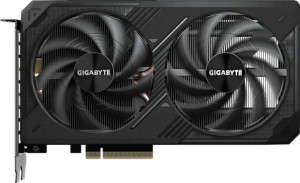
Gigabyte GeForce RTX 5060 Ti WindForce 16GB
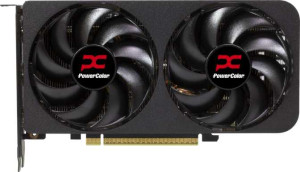
PowerColor Reaper Radeon RX 9060 XT 16GB

Gigabyte GeForce RTX 5060 Ti WindForce 16GB PowerColor Reaper Radeon RX 9060 XT 16GB

Overview

Welcome to our in-depth spec comparison between the Gigabyte GeForce RTX 5060 Ti WindForce 16GB and the PowerColor Reaper Radeon RX 9060 XT 16GB — two mid-range GPUs that share a 16GB VRAM pool and ray tracing support, yet take very different architectural paths to deliver performance. From memory technology and bandwidth to shader counts and display connectivity, these two cards present some fascinating trade-offs worth examining closely before making your decision.

Common Features

  • Both products support Double Precision Floating Point (DPFP).
  • Both cards come with 16GB of VRAM.
  • Both use a 128-bit memory bus width.
  • ECC memory support is available on both products.
  • Both cards support DirectX 12 Ultimate.
  • Both support OpenGL version 4.6.
  • Multi-display technology is supported on both products.
  • Ray tracing support is available on both products.
  • 3D support is present on both products.
  • XeSS (XMX) support is not available on either product.
  • LHR is not present on either product.
  • RGB lighting is not featured on either product.
  • Both cards include one HDMI output.
  • Both use HDMI version 2.1b.
  • Neither product has any USB-C ports.
  • Neither product has any DVI outputs.
  • Neither product has any mini DisplayPort outputs.
  • Both cards use PCI Express (PCIe) version 5.
  • Air-water cooling is not present on either product.
  • Both cards share a height of 120 mm.

Main Differences

  • GPU base clock speed is 2407 MHz on Gigabyte GeForce RTX 5060 Ti WindForce 16GB and 1700 MHz on PowerColor Reaper Radeon RX 9060 XT 16GB.
  • GPU turbo clock speed is 2572 MHz on Gigabyte GeForce RTX 5060 Ti WindForce 16GB and 3230 MHz on PowerColor Reaper Radeon RX 9060 XT 16GB.
  • Pixel rate is 123.5 GPixel/s on Gigabyte GeForce RTX 5060 Ti WindForce 16GB and 206.7 GPixel/s on PowerColor Reaper Radeon RX 9060 XT 16GB.
  • Floating-point performance is 23.7 TFLOPS on Gigabyte GeForce RTX 5060 Ti WindForce 16GB and 26.46 TFLOPS on PowerColor Reaper Radeon RX 9060 XT 16GB.
  • Texture rate is 370.4 GTexels/s on Gigabyte GeForce RTX 5060 Ti WindForce 16GB and 413.4 GTexels/s on PowerColor Reaper Radeon RX 9060 XT 16GB.
  • GPU memory speed is 1750 MHz on Gigabyte GeForce RTX 5060 Ti WindForce 16GB and 2518 MHz on PowerColor Reaper Radeon RX 9060 XT 16GB.
  • Shading units total 4608 on Gigabyte GeForce RTX 5060 Ti WindForce 16GB and 2048 on PowerColor Reaper Radeon RX 9060 XT 16GB.
  • Texture mapping units (TMUs) number 144 on Gigabyte GeForce RTX 5060 Ti WindForce 16GB and 128 on PowerColor Reaper Radeon RX 9060 XT 16GB.
  • Render output units (ROPs) total 48 on Gigabyte GeForce RTX 5060 Ti WindForce 16GB and 64 on PowerColor Reaper Radeon RX 9060 XT 16GB.
  • Effective memory speed is 28000 MHz on Gigabyte GeForce RTX 5060 Ti WindForce 16GB and 20000 MHz on PowerColor Reaper Radeon RX 9060 XT 16GB.
  • Maximum memory bandwidth is 448 GB/s on Gigabyte GeForce RTX 5060 Ti WindForce 16GB and 322.3 GB/s on PowerColor Reaper Radeon RX 9060 XT 16GB.
  • Memory type is GDDR7 on Gigabyte GeForce RTX 5060 Ti WindForce 16GB and GDDR6 on PowerColor Reaper Radeon RX 9060 XT 16GB.
  • OpenCL version is 3 on Gigabyte GeForce RTX 5060 Ti WindForce 16GB and 2.2 on PowerColor Reaper Radeon RX 9060 XT 16GB.
  • DLSS support is present on Gigabyte GeForce RTX 5060 Ti WindForce 16GB but not available on PowerColor Reaper Radeon RX 9060 XT 16GB.
  • Resizable BAR technology is Intel Resizable BAR on Gigabyte GeForce RTX 5060 Ti WindForce 16GB and AMD SAM on PowerColor Reaper Radeon RX 9060 XT 16GB.
  • Supported displays number 4 on Gigabyte GeForce RTX 5060 Ti WindForce 16GB and 3 on PowerColor Reaper Radeon RX 9060 XT 16GB.
  • DisplayPort outputs total 3 on Gigabyte GeForce RTX 5060 Ti WindForce 16GB and 2 on PowerColor Reaper Radeon RX 9060 XT 16GB.
  • GPU architecture is Blackwell on Gigabyte GeForce RTX 5060 Ti WindForce 16GB and RDNA 4.0 on PowerColor Reaper Radeon RX 9060 XT 16GB.
  • Thermal Design Power (TDP) is 180W on Gigabyte GeForce RTX 5060 Ti WindForce 16GB and 160W on PowerColor Reaper Radeon RX 9060 XT 16GB.
  • Semiconductor size is 5 nm on Gigabyte GeForce RTX 5060 Ti WindForce 16GB and 4 nm on PowerColor Reaper Radeon RX 9060 XT 16GB.
  • Number of transistors is 21900 million on Gigabyte GeForce RTX 5060 Ti WindForce 16GB and 29700 million on PowerColor Reaper Radeon RX 9060 XT 16GB.
  • Card width is 208 mm on Gigabyte GeForce RTX 5060 Ti WindForce 16GB and 220 mm on PowerColor Reaper Radeon RX 9060 XT 16GB.
Specs Comparison
Gigabyte GeForce RTX 5060 Ti WindForce 16GB

Gigabyte GeForce RTX 5060 Ti WindForce 16GB

PowerColor Reaper Radeon RX 9060 XT 16GB

PowerColor Reaper Radeon RX 9060 XT 16GB

Performance:
GPU clock speed 2407 MHz 1700 MHz
GPU turbo 2572 MHz 3230 MHz
pixel rate 123.5 GPixel/s 206.7 GPixel/s
floating-point performance 23.7 TFLOPS 26.46 TFLOPS
texture rate 370.4 GTexels/s 413.4 GTexels/s
GPU memory speed 1750 MHz 2518 MHz
shading units 4608 2048
texture mapping units (TMUs) 144 128
render output units (ROPs) 48 64
Has Double Precision Floating Point (DPFP)

The most striking contrast in this group is the clock speed strategy each GPU employs. The Gigabyte RTX 5060 Ti runs a relatively tight range from 2407 MHz base to 2572 MHz turbo — a modest 165 MHz swing — suggesting a consistent, predictable power curve. The PowerColor RX 9060 XT, by contrast, starts at a low 1700 MHz base but rockets to a 3230 MHz turbo, a gap of over 1,500 MHz. This kind of aggressive boost behavior is typical of AMD's RDNA 4 architecture, which is engineered to spend as much time as possible at peak frequencies; in practice, it means the RX 9060 XT can feel snappier in sustained workloads once it reaches its boost state, but the wide base-to-turbo gap also means performance can be more variable under power-constrained conditions.

When looking at raw throughput, the RX 9060 XT holds a clear lead across every computed metric despite having far fewer shading units (2048 vs. 4608). Its pixel fill rate of 206.7 GPixel/s versus 123.5 GPixel/s, texture rate of 413.4 GTexels/s versus 370.4 GTexels/s, and floating-point performance of 26.46 TFLOPS versus 23.7 TFLOPS all point to a more compute-efficient architecture — AMD is squeezing more throughput out of fewer, faster compute units. The RX 9060 XT also carries more ROPs (64 vs. 48) and significantly faster memory speed (2518 MHz vs. 1750 MHz), both of which benefit high-resolution rendering and bandwidth-hungry scenarios directly.

Overall, the PowerColor RX 9060 XT holds a measurable performance edge in this group. Its superior pixel rate, fill rate, memory speed, and floating-point throughput consistently outpace the RTX 5060 Ti on paper, and those advantages translate to meaningful gains in rendering throughput and memory-bandwidth-sensitive tasks. The RTX 5060 Ti's higher shading unit count does not offset the architectural efficiency gap demonstrated by these numbers. Both cards support Double Precision Floating Point, so neither has an advantage there for compute workloads that rely on DPFP.
Memory:
effective memory speed 28000 MHz 20000 MHz
maximum memory bandwidth 448 GB/s 322.3 GB/s
VRAM 16GB 16GB
GDDR version GDDR7 GDDR6
memory bus width 128-bit 128-bit
Supports ECC memory

Both cards ship with 16GB of VRAM over a 128-bit memory bus, so the capacity and bus width story is a clean tie. Where they diverge sharply is the generation of memory each uses. The RTX 5060 Ti WindForce deploys GDDR7, while the RX 9060 XT relies on GDDR6 — and that generational gap carries real consequences for bandwidth.

The numbers make the impact concrete: the RTX 5060 Ti achieves an effective memory speed of 28000 MHz and a peak bandwidth of 448 GB/s, compared to 20000 MHz and 322.3 GB/s on the RX 9060 XT. That is roughly a 39% bandwidth advantage for the Gigabyte card despite both buses being identical in width. In practical terms, higher memory bandwidth reduces the likelihood of the GPU stalling while waiting for texture, frame buffer, or geometry data — it matters most at higher resolutions, with large textures, or in memory-intensive compute workloads where data throughput becomes the bottleneck rather than raw shader performance.

In the memory category, the RTX 5060 Ti WindForce holds a decisive and unambiguous edge. The GDDR7 advantage translates directly into substantially more usable bandwidth, which can offset pressure on the narrower 128-bit bus in demanding scenarios. Both cards support ECC memory, so neither differentiates there. If memory subsystem performance is a priority — particularly for future-proofing at higher resolutions — the RTX 5060 Ti is the stronger option based solely on these specs.

Features:
DirectX version DirectX 12 Ultimate DirectX 12 Ultimate
OpenGL version 4.6 4.6
OpenCL version 3 2.2
Supports multi-display technology
supports ray tracing
Supports 3D
supports DLSS
has XeSS (XMX)
AMD SAM / Intel Resizable BAR Intel Resizable BAR AMD SAM
has LHR
has RGB lighting
supported displays 4 3

At the foundational level, these two cards are well-matched: both carry DirectX 12 Ultimate, OpenGL 4.6, ray tracing support, and multi-display capability. The shared DirectX 12 Ultimate certification is particularly meaningful — it guarantees hardware support for mesh shaders, variable rate shading, and hardware-accelerated ray tracing across both products, so neither has a platform compatibility advantage for modern titles.

The most consequential divergence in this group is upscaling support. The RTX 5060 Ti WindForce supports DLSS, Nvidia's AI-driven upscaling technology, while the RX 9060 XT does not support DLSS — and neither card supports XeSS. For gaming, DLSS is a significant practical asset: it allows the GPU to render at a lower internal resolution and reconstruct a higher-quality image, often delivering substantial frame rate gains with minimal visual compromise. The RX 9060 XT's lack of any listed upscaling feature in this dataset is a notable gap for users who prioritize that capability. A secondary but real difference is the supported display count — the RTX 5060 Ti can drive up to 4 displays versus 3 on the RX 9060 XT, which matters to multi-monitor power users. The OpenCL version is also slightly ahead on the Nvidia card (3 vs. 2.2), which can benefit certain compute and productivity applications.

On features, the RTX 5060 Ti WindForce holds a clear advantage. DLSS support alone is a meaningful differentiator for gamers, and the higher display output count and newer OpenCL version further reinforce its lead in this category. The RX 9060 XT matches it on the core API and ray tracing front, but lacks the upscaling toolset that increasingly defines the modern gaming feature set.

Ports:
has an HDMI output
HDMI ports 1 1
HDMI version HDMI 2.1b HDMI 2.1b
DisplayPort outputs 3 2
USB-C ports 0 0
DVI outputs 0 0
mini DisplayPort outputs 0 0

Connectivity is nearly identical between these two cards, with one exception worth noting. Both feature a single HDMI 2.1b port — a modern standard capable of driving 4K at high refresh rates or even 8K output — and neither offers USB-C or legacy DVI outputs. The meaningful difference comes down to DisplayPort count: the RTX 5060 Ti WindForce provides 3 DisplayPort outputs, while the RX 9060 XT offers 2.

Combined with its HDMI port, the RTX 5060 Ti can therefore drive up to 4 displays simultaneously — consistent with the supported display count noted in its feature specs — whereas the RX 9060 XT tops out at 3. For the vast majority of users running one or two monitors, this distinction is irrelevant. However, for traders, creative professionals, or sim enthusiasts running wide multi-monitor arrays, having that extra DisplayPort output provides genuine flexibility without needing an adapter or a secondary card.

In this group, the RTX 5060 Ti WindForce holds a narrow but clear edge purely by virtue of its additional DisplayPort output. The quality of connectivity is equal — both cards share the same HDMI version and lack USB-C — but the Gigabyte card simply offers more physical options for users who need them.

General info:
GPU architecture Blackwell RDNA 4.0
release date April 2025 June 2025
Thermal Design Power (TDP) 180W 160W
PCI Express (PCIe) version 5 5
semiconductor size 5 nm 4 nm
number of transistors 21900 million 29700 million
Has air-water cooling
width 208 mm 220 mm
height 120 mm 120 mm

Architecturally, these cards come from different generations of silicon. The RTX 5060 Ti WindForce is built on Nvidia's Blackwell architecture using a 5 nm process, while the RX 9060 XT uses AMD's RDNA 4.0 on a tighter 4 nm node. The smaller process node on the AMD card allows for greater transistor density, and the numbers reflect this: the RX 9060 XT packs 29,700 million transistors versus 21,900 million on the RTX 5060 Ti — a roughly 35% higher transistor count. More transistors in a smaller node generally means AMD has more room for logic and efficiency improvements within a compact die, which helps explain how the RX 9060 XT achieves competitive or superior throughput figures despite its lower power envelope.

That power envelope is another key differentiator. The RX 9060 XT carries a TDP of 160W against the RTX 5060 Ti's 180W — a 20W gap that is meaningful in small form factor builds where thermal and PSU headroom is limited, and relevant for users mindful of long-term electricity costs. Both cards share PCIe 5.0 compatibility, so neither has a slot bandwidth advantage in current or near-future platforms. Physical dimensions are nearly identical, with only a 12 mm difference in width (220 mm vs. 208 mm) and the same height, meaning case compatibility will be essentially the same for both.

For general platform specs, the RX 9060 XT has a meaningful edge: its more advanced process node, significantly higher transistor count, and lower TDP collectively suggest a more efficient architecture. For builders working within tight power budgets or compact cases, the AMD card's 160W ceiling is a practical advantage. The RTX 5060 Ti matches it on interface generation and is virtually identical in size, but trails on the silicon efficiency metrics this group exposes.

Comparison Summary & Verdict

Both cards arrive with 16GB of VRAM and ray tracing support, making them competitive options in the same tier. However, their strengths diverge clearly. The Gigabyte GeForce RTX 5060 Ti WindForce 16GB leads on memory bandwidth at 448 GB/s with faster GDDR7 memory, more shading units, DLSS support, and four-display connectivity — making it the stronger pick for NVIDIA-ecosystem users and those who value upscaling technology. The PowerColor Reaper Radeon RX 9060 XT 16GB counters with a higher turbo clock of 3230 MHz, superior pixel rate, more ROPs, a more refined 4nm process, and a lower 160W TDP — advantages that translate to better raw rasterization efficiency and cooler, more power-frugal operation. Choose the Gigabyte card for its memory speed and DLSS pipeline; choose the PowerColor card for its raw throughput efficiency and lower power draw.

Gigabyte GeForce RTX 5060 Ti WindForce 16GB
Buy Gigabyte GeForce RTX 5060 Ti WindForce 16GB if...

Buy the Gigabyte GeForce RTX 5060 Ti WindForce 16GB if you want DLSS support, faster GDDR7 memory with higher bandwidth, and the ability to connect up to four displays simultaneously.

PowerColor Reaper Radeon RX 9060 XT 16GB
Buy PowerColor Reaper Radeon RX 9060 XT 16GB if...

Buy the PowerColor Reaper Radeon RX 9060 XT 16GB if you prioritize a higher turbo clock speed, better pixel rate, more render output units, a more advanced 4nm chip, and lower power consumption at 160W.