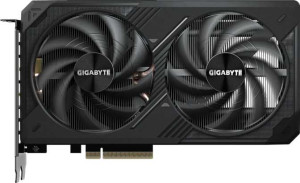
Gigabyte GeForce RTX 5060 Ti WindForce OC 8GB
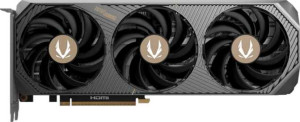
Zotac Gaming GeForce RTX 5070 Solid

Gigabyte GeForce RTX 5060 Ti WindForce OC 8GB Zotac Gaming GeForce RTX 5070 Solid

Overview

Welcome to our detailed spec comparison between the Gigabyte GeForce RTX 5060 Ti WindForce OC 8GB and the Zotac Gaming GeForce RTX 5070 Solid. Both cards share the same Blackwell architecture and GDDR7 memory, yet they diverge in meaningful ways across raw compute power, memory capacity, and physical footprint. Read on to see how these two GPUs stack up across performance, memory bandwidth, and key features.

Common Features

  • Both cards share the same GPU memory speed of 1750 MHz.
  • Double Precision Floating Point (DPFP) is supported on both products.
  • Both cards use GDDR7 memory with an effective memory speed of 28000 MHz.
  • ECC memory support is available on both products.
  • Both products support DirectX 12 Ultimate.
  • Both products support OpenGL version 4.6.
  • Both products support OpenCL version 3.
  • Multi-display technology is supported on both products.
  • Ray tracing is supported on both products.
  • 3D support is available on both products.
  • DLSS support is available on both products.
  • XeSS (XMX) support is not available on either product.
  • Both products include one HDMI output running HDMI version 2.1b.
  • Both products feature three DisplayPort outputs.
  • Neither product includes a USB-C port, a DVI output, or a mini DisplayPort output.
  • Both products are built on the Blackwell GPU architecture.
  • Both products use PCIe version 5.
  • Both products are manufactured with a 5 nm semiconductor process.
  • Neither product uses air-water cooling.

Main Differences

  • GPU clock speed is 2407 MHz on the Gigabyte GeForce RTX 5060 Ti WindForce OC 8GB and 2325 MHz on the Zotac Gaming GeForce RTX 5070 Solid.
  • GPU turbo speed is 2587 MHz on the Gigabyte GeForce RTX 5060 Ti WindForce OC 8GB and 2512 MHz on the Zotac Gaming GeForce RTX 5070 Solid.
  • Pixel rate is 124.2 GPixel/s on the Gigabyte GeForce RTX 5060 Ti WindForce OC 8GB and 201 GPixel/s on the Zotac Gaming GeForce RTX 5070 Solid.
  • Floating-point performance is 23.84 TFLOPS on the Gigabyte GeForce RTX 5060 Ti WindForce OC 8GB and 30.87 TFLOPS on the Zotac Gaming GeForce RTX 5070 Solid.
  • Texture rate is 372.5 GTexels/s on the Gigabyte GeForce RTX 5060 Ti WindForce OC 8GB and 482.3 GTexels/s on the Zotac Gaming GeForce RTX 5070 Solid.
  • Shading units number 4608 on the Gigabyte GeForce RTX 5060 Ti WindForce OC 8GB and 6144 on the Zotac Gaming GeForce RTX 5070 Solid.
  • Texture mapping units (TMUs) total 144 on the Gigabyte GeForce RTX 5060 Ti WindForce OC 8GB and 192 on the Zotac Gaming GeForce RTX 5070 Solid.
  • Render output units (ROPs) number 48 on the Gigabyte GeForce RTX 5060 Ti WindForce OC 8GB and 80 on the Zotac Gaming GeForce RTX 5070 Solid.
  • Maximum memory bandwidth is 448 GB/s on the Gigabyte GeForce RTX 5060 Ti WindForce OC 8GB and 672 GB/s on the Zotac Gaming GeForce RTX 5070 Solid.
  • VRAM is 8GB on the Gigabyte GeForce RTX 5060 Ti WindForce OC 8GB and 12GB on the Zotac Gaming GeForce RTX 5070 Solid.
  • Memory bus width is 128-bit on the Gigabyte GeForce RTX 5060 Ti WindForce OC 8GB and 192-bit on the Zotac Gaming GeForce RTX 5070 Solid.
  • RGB lighting is present on the Zotac Gaming GeForce RTX 5070 Solid but not available on the Gigabyte GeForce RTX 5060 Ti WindForce OC 8GB.
  • Thermal Design Power (TDP) is 180W on the Gigabyte GeForce RTX 5060 Ti WindForce OC 8GB and 250W on the Zotac Gaming GeForce RTX 5070 Solid.
  • The number of transistors is 21900 million on the Gigabyte GeForce RTX 5060 Ti WindForce OC 8GB and 31100 million on the Zotac Gaming GeForce RTX 5070 Solid.
  • Card width is 208 mm on the Gigabyte GeForce RTX 5060 Ti WindForce OC 8GB and 304.4 mm on the Zotac Gaming GeForce RTX 5070 Solid.
  • Card height is 120 mm on the Gigabyte GeForce RTX 5060 Ti WindForce OC 8GB and 115.8 mm on the Zotac Gaming GeForce RTX 5070 Solid.
Specs Comparison
Gigabyte GeForce RTX 5060 Ti WindForce OC 8GB

Gigabyte GeForce RTX 5060 Ti WindForce OC 8GB

Zotac Gaming GeForce RTX 5070 Solid

Zotac Gaming GeForce RTX 5070 Solid

Performance:
GPU clock speed 2407 MHz 2325 MHz
GPU turbo 2587 MHz 2512 MHz
pixel rate 124.2 GPixel/s 201 GPixel/s
floating-point performance 23.84 TFLOPS 30.87 TFLOPS
texture rate 372.5 GTexels/s 482.3 GTexels/s
GPU memory speed 1750 MHz 1750 MHz
shading units 4608 6144
texture mapping units (TMUs) 144 192
render output units (ROPs) 48 80
Has Double Precision Floating Point (DPFP)

At first glance, the Gigabyte RTX 5060 Ti WindForce OC 8GB appears clock-speed competitive, running a higher base of 2407 MHz and turbo of 2587 MHz versus the Zotac RTX 5070 Solid's 2325 MHz / 2512 MHz. However, raw clock speed tells only a fraction of the performance story — what matters equally, or more, is how many execution units are doing work at those frequencies. The RTX 5070 Solid fields 6144 shading units, 192 TMUs, and 80 ROPs, compared to the 5060 Ti's 4608 / 144 / 48 — representing roughly a 33% wider shader array and a 67% advantage in rasterization throughput via ROPs.

That architectural gap translates directly into the derived metrics. The RTX 5070 Solid delivers 30.87 TFLOPS of floating-point performance versus 23.84 TFLOPS on the 5060 Ti — roughly a 29% lead in raw compute, which maps closely to gains in GPU-accelerated workloads and gaming frame rates. The pixel fill rate gap is even wider: 201 GPixel/s versus 124.2 GPixel/s, a ~62% advantage that directly benefits high-resolution rendering. Texture throughput follows the same pattern at 482.3 vs 372.5 GTexels/s. One area where both cards are perfectly matched is GPU memory speed at 1750 MHz, and both support Double Precision Floating Point — though for gaming workloads, DPFP parity is largely irrelevant.

The performance edge in this group belongs clearly to the Zotac RTX 5070 Solid. Despite the 5060 Ti's modest clock-speed advantage, it is outpaced on every compute and throughput metric by a meaningful margin. The 5070 Solid's broader shader and ROP configuration means it can handle heavier rendering workloads — particularly at higher resolutions — far more capably than the 5060 Ti, whose clock-speed lead is insufficient to close the gap created by 33% fewer execution units.

Memory:
effective memory speed 28000 MHz 28000 MHz
maximum memory bandwidth 448 GB/s 672 GB/s
VRAM 8GB 12GB
GDDR version GDDR7 GDDR7
memory bus width 128-bit 192-bit
Supports ECC memory

Both cards share the same GDDR7 memory type and an identical effective memory speed of 28000 MHz, so the differentiation here comes entirely from bus width and capacity. The RTX 5060 Ti WindForce OC uses a 128-bit bus, while the RTX 5070 Solid steps up to a 192-bit bus — and that 50% wider pipeline is the single biggest factor in this group. Bandwidth is not merely a benchmark number; it determines how quickly the GPU can feed its shader array with texture data, framebuffer writes, and intermediate render targets. Starving a fast GPU of memory bandwidth is one of the most common real-world bottlenecks at higher resolutions.

The bandwidth consequence of that bus difference is stark: the RTX 5070 Solid achieves 672 GB/s versus 448 GB/s on the 5060 Ti — a ~50% advantage that directly amplifies the performance gap already seen in the shader count. Paired with 12 GB of VRAM against the 5060 Ti's 8 GB, the 5070 Solid is also meaningfully better positioned for VRAM-hungry scenarios: high-resolution texture packs, large AI model inference on-device, and future titles pushing beyond the 8 GB threshold that is already proving tight in some modern games at 1440p and above.

The memory edge belongs unambiguously to the Zotac RTX 5070 Solid. The shared GDDR7 standard and ECC support are welcome common ground, but the 5070 Solid's wider bus, higher bandwidth, and larger VRAM pool collectively make it a more capable card — both today and with an eye toward longevity — compared to the capacity- and bandwidth-constrained configuration of the 5060 Ti WindForce OC.

Features:
DirectX version DirectX 12 Ultimate DirectX 12 Ultimate
OpenGL version 4.6 4.6
OpenCL version 3 3
Supports multi-display technology
supports ray tracing
Supports 3D
supports DLSS
has XeSS (XMX)
AMD SAM / Intel Resizable BAR Intel Resizable BAR Intel Resizable BAR
has LHR
has RGB lighting
supported displays 4 4

From a software and API feature standpoint, these two cards are essentially clones of each other. Both support DirectX 12 Ultimate, OpenGL 4.6, OpenCL 3, ray tracing, DLSS, and Intel Resizable BAR — and both cap out at 4 simultaneous displays. For gamers and creative professionals, this parity means neither card offers a meaningful platform advantage; any title or application leveraging these APIs will behave identically in terms of feature availability across both GPUs.

The only functional differentiator in this group is RGB lighting: the Zotac RTX 5070 Solid includes it, while the Gigabyte RTX 5060 Ti WindForce OC does not. For users building aesthetically themed systems where case lighting and component synchronization matter, this is a genuine, if minor, distinction. For everyone else, it has zero impact on performance or compatibility.

As a features group, this is effectively a tie on every specification that carries functional weight. The 5070 Solid's RGB lighting is the sole differentiator, and whether that constitutes an ″edge″ depends entirely on whether aesthetics factor into the buyer's decision. No advantage exists here on software capability, API support, or display output flexibility.

Ports:
has an HDMI output
HDMI ports 1 1
HDMI version HDMI 2.1b HDMI 2.1b
DisplayPort outputs 3 3
USB-C ports 0 0
DVI outputs 0 0
mini DisplayPort outputs 0 0

Port configuration is an area where these two cards offer absolutely no differentiation. Both carry 1 HDMI 2.1b output and 3 DisplayPort outputs, with no USB-C, DVI, or mini-DisplayPort connections on either card. The practical upshot is that both support up to four simultaneous displays — consistent with what was already established in the Features group — and both can drive the latest high-bandwidth display standards, including 4K at high refresh rates and 8K output, courtesy of HDMI 2.1b.

This is a complete and unambiguous tie. Buyers with specific connectivity requirements — such as needing a USB-C output for a portable display or a particular multi-monitor arrangement — will find neither card advantaged nor disadvantaged relative to the other. Both are equally well-suited, or equally limited, depending on the use case.

General info:
GPU architecture Blackwell Blackwell
release date April 2025 March 2025
Thermal Design Power (TDP) 180W 250W
PCI Express (PCIe) version 5 5
semiconductor size 5 nm 5 nm
number of transistors 21900 million 31100 million
Has air-water cooling
width 208 mm 304.4 mm
height 120 mm 115.8 mm

Sharing the same Blackwell architecture, 5nm process node, and PCIe 5.0 interface, these two cards come from the same generational platform — but the silicon underneath is meaningfully different in scale. The RTX 5070 Solid packs 31,100 million transistors against the 5060 Ti WindForce OC's 21,900 million, a ~42% larger die that directly accounts for the wider shader and ROP counts seen in the Performance group. More transistors at the same node means more functional units, not more efficiency per se — and that larger die comes with a corresponding power cost.

That cost is substantial: the RTX 5070 Solid carries a 250W TDP versus 180W for the 5060 Ti — a 70W delta that has real system implications. Builders will need to ensure their power supply has adequate headroom and that case airflow can handle the additional heat load. The 5060 Ti is the more power-frugal option, which may matter in compact builds or systems with modest PSUs. Physical size reinforces this distinction: the 5070 Solid is considerably longer at 304.4 mm compared to the 5060 Ti's 208 mm, making chassis compatibility a genuine consideration for the larger card — particularly in mid-tower or smaller cases.

Neither card holds a blanket advantage in this group — the verdict depends on the buyer's priorities. The Gigabyte RTX 5060 Ti WindForce OC is the clear winner for space-constrained or power-limited builds, with its smaller footprint and lower TDP offering meaningfully easier integration. The Zotac RTX 5070 Solid, by contrast, demands more from the system around it, but that larger, more complex die is precisely what enables its performance lead established in earlier groups.

Comparison Summary & Verdict

After examining the full spec sheet, both cards are clearly capable Blackwell-generation GPUs with shared strengths like GDDR7 memory, ray tracing, DLSS support, and PCIe 5 connectivity. However, the Zotac Gaming GeForce RTX 5070 Solid pulls ahead in nearly every performance metric, offering more shading units, a wider 192-bit memory bus, 12GB of VRAM, 672 GB/s bandwidth, and a higher floating-point throughput of 30.87 TFLOPS. The Gigabyte GeForce RTX 5060 Ti WindForce OC 8GB, on the other hand, runs at a lower 180W TDP, has a more compact 208 mm width, and slightly higher base and turbo clock speeds. It is the smarter pick for budget-conscious or space-constrained builders, while the Zotac RTX 5070 Solid is the stronger choice for users demanding higher resolution performance and greater memory headroom.

Gigabyte GeForce RTX 5060 Ti WindForce OC 8GB
Buy Gigabyte GeForce RTX 5060 Ti WindForce OC 8GB if...

Buy the Gigabyte GeForce RTX 5060 Ti WindForce OC 8GB if you want a more compact, power-efficient GPU with a lower 180W TDP and a smaller 208 mm form factor that still delivers solid Blackwell-generation performance.

Zotac Gaming GeForce RTX 5070 Solid
Buy Zotac Gaming GeForce RTX 5070 Solid if...

Buy the Zotac Gaming GeForce RTX 5070 Solid if you need more raw GPU power, with 12GB of VRAM, a 192-bit memory bus, 672 GB/s bandwidth, and significantly higher floating-point performance of 30.87 TFLOPS for demanding workloads.