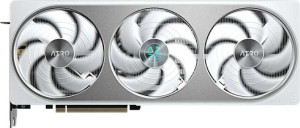
Gigabyte GeForce RTX 5070 Aero OC
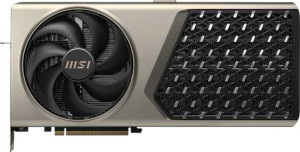
MSI GeForce RTX 5080 Expert OC

Gigabyte GeForce RTX 5070 Aero OC MSI GeForce RTX 5080 Expert OC

Overview

Welcome to our in-depth specification comparison between the Gigabyte GeForce RTX 5070 Aero OC and the MSI GeForce RTX 5080 Expert OC. Both cards share the same Blackwell architecture and GDDR7 memory, yet they diverge significantly across raw compute performance, memory capacity, and power consumption. Whether you are chasing maximum throughput or a more balanced efficiency profile, this comparison will help you navigate the key battlegrounds.

Common Features

  • Both products support Double Precision Floating Point (DPFP).
  • Both products use GDDR7 memory.
  • Both products support ECC memory.
  • Both products are built on the Blackwell GPU architecture.
  • Both products use a 5 nm semiconductor manufacturing process.
  • Both products use PCIe version 5.
  • Both products support DirectX 12 Ultimate.
  • Both products support OpenGL version 4.6.
  • Both products support OpenCL version 3.
  • Both products support multi-display technology.
  • Both products support ray tracing.
  • Both products support 3D.
  • Both products support DLSS.
  • XeSS (XMX) support is not available on either product.
  • Both products include one HDMI output running HDMI version 2.1b.
  • Both products include three DisplayPort outputs.
  • Neither product includes USB-C ports, DVI outputs, or mini DisplayPort outputs.
  • Air-water cooling is not available on either product.

Main Differences

  • Base GPU clock speed is 2325 MHz on the Gigabyte GeForce RTX 5070 Aero OC and 2295 MHz on the MSI GeForce RTX 5080 Expert OC.
  • GPU turbo clock speed is 2625 MHz on the Gigabyte GeForce RTX 5070 Aero OC and 2715 MHz on the MSI GeForce RTX 5080 Expert OC.
  • Pixel rate is 210 GPixel/s on the Gigabyte GeForce RTX 5070 Aero OC and 304.1 GPixel/s on the MSI GeForce RTX 5080 Expert OC.
  • Floating-point performance is 32.26 TFLOPS on the Gigabyte GeForce RTX 5070 Aero OC and 58.38 TFLOPS on the MSI GeForce RTX 5080 Expert OC.
  • Texture rate is 504 GTexels/s on the Gigabyte GeForce RTX 5070 Aero OC and 912.2 GTexels/s on the MSI GeForce RTX 5080 Expert OC.
  • GPU memory speed is 1750 MHz on the Gigabyte GeForce RTX 5070 Aero OC and 1875 MHz on the MSI GeForce RTX 5080 Expert OC.
  • Shading units number 6144 on the Gigabyte GeForce RTX 5070 Aero OC and 10752 on the MSI GeForce RTX 5080 Expert OC.
  • Texture mapping units (TMUs) number 192 on the Gigabyte GeForce RTX 5070 Aero OC and 336 on the MSI GeForce RTX 5080 Expert OC.
  • Render output units (ROPs) number 80 on the Gigabyte GeForce RTX 5070 Aero OC and 112 on the MSI GeForce RTX 5080 Expert OC.
  • Effective memory speed is 28000 MHz on the Gigabyte GeForce RTX 5070 Aero OC and 30000 MHz on the MSI GeForce RTX 5080 Expert OC.
  • Maximum memory bandwidth is 672 GB/s on the Gigabyte GeForce RTX 5070 Aero OC and 960 GB/s on the MSI GeForce RTX 5080 Expert OC.
  • VRAM is 12 GB on the Gigabyte GeForce RTX 5070 Aero OC and 16 GB on the MSI GeForce RTX 5080 Expert OC.
  • Memory bus width is 192-bit on the Gigabyte GeForce RTX 5070 Aero OC and 256-bit on the MSI GeForce RTX 5080 Expert OC.
  • RGB lighting is present on the Gigabyte GeForce RTX 5070 Aero OC but not available on the MSI GeForce RTX 5080 Expert OC.
  • Thermal Design Power (TDP) is 250W on the Gigabyte GeForce RTX 5070 Aero OC and 360W on the MSI GeForce RTX 5080 Expert OC.
  • The number of transistors is 31100 million on the Gigabyte GeForce RTX 5070 Aero OC and 45600 million on the MSI GeForce RTX 5080 Expert OC.
  • Width is 324 mm on the Gigabyte GeForce RTX 5070 Aero OC and 319 mm on the MSI GeForce RTX 5080 Expert OC.
  • Height is 130 mm on the Gigabyte GeForce RTX 5070 Aero OC and 150 mm on the MSI GeForce RTX 5080 Expert OC.
Specs Comparison
Gigabyte GeForce RTX 5070 Aero OC

Gigabyte GeForce RTX 5070 Aero OC

MSI GeForce RTX 5080 Expert OC

MSI GeForce RTX 5080 Expert OC

Performance:
GPU clock speed 2325 MHz 2295 MHz
GPU turbo 2625 MHz 2715 MHz
pixel rate 210 GPixel/s 304.1 GPixel/s
floating-point performance 32.26 TFLOPS 58.38 TFLOPS
texture rate 504 GTexels/s 912.2 GTexels/s
GPU memory speed 1750 MHz 1875 MHz
shading units 6144 10752
texture mapping units (TMUs) 192 336
render output units (ROPs) 80 112
Has Double Precision Floating Point (DPFP)

The most telling performance gap between these two cards lies in their raw compute and rasterization hardware. The MSI RTX 5080 Expert OC fields 10,752 shading units against the Gigabyte RTX 5070 Aero OC's 6,144 — a 75% advantage — and this scales directly into floating-point throughput: 58.38 TFLOPS versus 32.26 TFLOPS. In practice, that gap translates to meaningfully higher frame rates in GPU-bound scenarios, faster shader-heavy effects like ray tracing and volumetric lighting, and greater headroom for high-resolution workloads. The 5080 also leads in texture throughput (912.2 GTexels/s vs 504 GTexels/s) and pixel fill rate (304.1 GPixel/s vs 210 GPixel/s), meaning it can push more textured geometry and resolve more pixels per second — advantages that become increasingly visible at 4K or with anti-aliasing enabled.

Clock speeds tell a more nuanced story. The 5070 Aero OC holds a marginally higher base clock (2325 MHz vs 2295 MHz), but the 5080 Expert OC pulls ahead at boost (2715 MHz vs 2625 MHz), which is the frequency that matters most under sustained gaming or rendering loads. The 5080 also runs faster memory at 1875 MHz versus 1750 MHz, which feeds its wider and more numerous execution units with data more efficiently. Both cards support Double Precision Floating Point, making them usable for mixed-precision compute tasks beyond gaming.

The RTX 5080 Expert OC holds a decisive performance advantage in every meaningful compute and rasterization metric. The 5070 Aero OC is not a slow card — its ~32 TFLOPS and 504 GTexels/s still represent strong mid-to-high-end throughput — but for users targeting maximum frame rates at 4K, heavy ray tracing, or GPU-accelerated creative workloads, the 5080's nearly 2× compute lead makes it the clear winner in this category.
Memory:
effective memory speed 28000 MHz 30000 MHz
maximum memory bandwidth 672 GB/s 960 GB/s
VRAM 12GB 16GB
GDDR version GDDR7 GDDR7
memory bus width 192-bit 256-bit
Supports ECC memory

The Gigabyte GeForce RTX 5070 Aero OC and MSI GeForce RTX 5080 Expert OC differ in their memory specifications. The Gigabyte card features an effective memory speed of 28000 MHz, while the MSI card offers a slightly higher 30000 MHz.

In terms of memory bandwidth, the MSI GeForce RTX 5080 Expert OC outperforms the Gigabyte card with a maximum of 960 GB/s compared to the 5070's 672 GB/s. The MSI card also has more VRAM, with 16GB of memory versus the 12GB on the Gigabyte card. Both cards use GDDR7 memory and support ECC (Error-Correcting Code) memory, which is a feature common to both models.

The memory bus width is wider on the MSI card at 256-bit, compared to the 192-bit bus on the Gigabyte card.

Features:
DirectX version DirectX 12 Ultimate DirectX 12 Ultimate
OpenGL version 4.6 4.6
OpenCL version 3 3
Supports multi-display technology
supports ray tracing
Supports 3D
supports DLSS
has XeSS (XMX)
AMD SAM / Intel Resizable BAR Intel Resizable BAR Intel Resizable BAR
has LHR
has RGB lighting
supported displays 4 4

The Gigabyte GeForce RTX 5070 Aero OC and MSI GeForce RTX 5080 Expert OC both feature DirectX 12 Ultimate, OpenGL 4.6, and OpenCL 3. These specifications are the same for both products, ensuring compatibility with the latest gaming and professional applications. Both cards support multi-display technology, ray tracing, 3D, and DLSS, providing a robust feature set for modern gaming and graphics tasks.

One key difference is in the RGB lighting. The Gigabyte GeForce RTX 5070 Aero OC comes with RGB lighting, while the MSI GeForce RTX 5080 Expert OC lacks this feature. Another notable difference is that the Gigabyte card supports 4 displays, while the MSI card also supports 4 displays, meaning their multi-display capabilities are identical.

Both cards support Intel Resizable BAR (AMD SAM is not mentioned for either), have no LHR (Lite Hash Rate) limitations, and do not support XeSS (XMX) technology.

Ports:
has an HDMI output
HDMI ports 1 1
HDMI version HDMI 2.1b HDMI 2.1b
DisplayPort outputs 3 3
USB-C ports 0 0
DVI outputs 0 0
mini DisplayPort outputs 0 0

The Gigabyte GeForce RTX 5070 Aero OC and MSI GeForce RTX 5080 Expert OC have identical port configurations. Both cards feature one HDMI output with HDMI 2.1b support, three DisplayPort outputs, and no USB-C, DVI, or mini DisplayPort outputs.

There is no difference in the number or type of ports between the two products, as both offer the same connectivity options for display output.

In summary, both cards provide the same HDMI and DisplayPort setup, with no additional unique ports on either model.

General info:
GPU architecture Blackwell Blackwell
release date January 2025 August 2025
Thermal Design Power (TDP) 250W 360W
PCI Express (PCIe) version 5 5
semiconductor size 5 nm 5 nm
number of transistors 31100 million 45600 million
Has air-water cooling
width 324 mm 319 mm
height 130 mm 150 mm

Both the Gigabyte GeForce RTX 5070 Aero OC and MSI GeForce RTX 5080 Expert OC share the same GPU architecture, Blackwell, and use a 5 nm semiconductor size. The PCI Express version is 5 for both products. However, they differ in a few key areas. The MSI card has a higher Thermal Design Power (TDP) of 360W compared to the 250W TDP of the Gigabyte card.

In terms of transistor count, the MSI GeForce RTX 5080 Expert OC has 45,600 million transistors, significantly more than the 31,100 million transistors found in the Gigabyte card. Both cards do not feature air-water cooling systems.

Regarding size, the Gigabyte card measures 324 mm in width and 130 mm in height, while the MSI card is slightly smaller in width at 319 mm but taller at 150 mm.

Comparison Summary & Verdict

After examining all the evidence, these two cards occupy distinct positions in the GPU landscape. The MSI GeForce RTX 5080 Expert OC dominates in sheer horsepower, delivering 58.38 TFLOPS of floating-point performance, a 960 GB/s memory bandwidth, and 16 GB of VRAM — making it the clear choice for demanding workloads, high-resolution gaming, and compute-intensive tasks. The Gigabyte GeForce RTX 5070 Aero OC, on the other hand, offers a more power-efficient profile at 250W TDP, a slightly more compact form factor, and the added flair of RGB lighting, making it the smarter pick for users who want strong next-generation performance without the premium price and power draw of the 5080 tier. Both cards share the same modern feature set — including ray tracing, DLSS, and DirectX 12 Ultimate — so the decision ultimately comes down to how much performance headroom and VRAM capacity your workload demands.

Gigabyte GeForce RTX 5070 Aero OC
Buy Gigabyte GeForce RTX 5070 Aero OC if...

Buy the Gigabyte GeForce RTX 5070 Aero OC if you want strong next-generation GPU performance with a lower 250W power draw, a more compact build, and RGB lighting at a less demanding price and power tier.

MSI GeForce RTX 5080 Expert OC
Buy MSI GeForce RTX 5080 Expert OC if...

Buy the MSI GeForce RTX 5080 Expert OC if you need maximum raw performance, with 58.38 TFLOPS, 16 GB of VRAM, and 960 GB/s memory bandwidth for high-resolution gaming or demanding compute workloads.