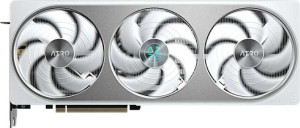
Gigabyte GeForce RTX 5070 Aero OC
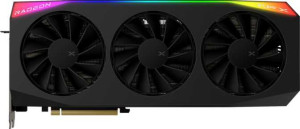
XFX Mercury Radeon RX 9070 XT OC Gaming Edition

Gigabyte GeForce RTX 5070 Aero OC XFX Mercury Radeon RX 9070 XT OC Gaming Edition

Overview

Welcome to our in-depth specification face-off between the Gigabyte GeForce RTX 5070 Aero OC and the XFX Mercury Radeon RX 9070 XT OC Gaming Edition — two ambitious graphics cards built on rival GPU architectures from Nvidia and AMD. In this comparison, we explore how they stack up across key battlegrounds including raw computational performance, memory configuration, feature support, power consumption, and physical design, to help you determine which card best suits your needs.

Common Features

  • Both products support Double Precision Floating Point (DPFP).
  • Both products support ECC memory.
  • Both products run on DirectX 12 Ultimate.
  • Both products support OpenGL version 4.6.
  • Both products support multi-display technology.
  • Both products support ray tracing.
  • Both products support 3D.
  • XeSS (XMX) support is not available on either product.
  • LHR is not present on either product.
  • RGB lighting is featured on both products.
  • Both products have one HDMI output.
  • Both products use HDMI version 2.1b.
  • Both products include 3 DisplayPort outputs.
  • Neither product has USB-C ports.
  • Neither product has DVI outputs.
  • Neither product has mini DisplayPort outputs.
  • Both products use PCI Express (PCIe) version 5.
  • Neither product uses air-water cooling.

Main Differences

  • GPU base clock speed is 2325 MHz on Gigabyte GeForce RTX 5070 Aero OC and 1870 MHz on XFX Mercury Radeon RX 9070 XT OC Gaming Edition.
  • GPU turbo clock speed is 2625 MHz on Gigabyte GeForce RTX 5070 Aero OC and 3100 MHz on XFX Mercury Radeon RX 9070 XT OC Gaming Edition.
  • Pixel rate is 210 GPixel/s on Gigabyte GeForce RTX 5070 Aero OC and 396.8 GPixel/s on XFX Mercury Radeon RX 9070 XT OC Gaming Edition.
  • Floating-point performance is 32.26 TFLOPS on Gigabyte GeForce RTX 5070 Aero OC and 50.79 TFLOPS on XFX Mercury Radeon RX 9070 XT OC Gaming Edition.
  • Texture rate is 504 GTexels/s on Gigabyte GeForce RTX 5070 Aero OC and 793.6 GTexels/s on XFX Mercury Radeon RX 9070 XT OC Gaming Edition.
  • GPU memory speed is 1750 MHz on Gigabyte GeForce RTX 5070 Aero OC and 2518 MHz on XFX Mercury Radeon RX 9070 XT OC Gaming Edition.
  • Shading units number 6144 on Gigabyte GeForce RTX 5070 Aero OC and 4096 on XFX Mercury Radeon RX 9070 XT OC Gaming Edition.
  • Texture mapping units (TMUs) total 192 on Gigabyte GeForce RTX 5070 Aero OC and 256 on XFX Mercury Radeon RX 9070 XT OC Gaming Edition.
  • Render output units (ROPs) total 80 on Gigabyte GeForce RTX 5070 Aero OC and 128 on XFX Mercury Radeon RX 9070 XT OC Gaming Edition.
  • Effective memory speed is 28000 MHz on Gigabyte GeForce RTX 5070 Aero OC and 20000 MHz on XFX Mercury Radeon RX 9070 XT OC Gaming Edition.
  • Maximum memory bandwidth is 672 GB/s on Gigabyte GeForce RTX 5070 Aero OC and 640 GB/s on XFX Mercury Radeon RX 9070 XT OC Gaming Edition.
  • VRAM is 12GB on Gigabyte GeForce RTX 5070 Aero OC and 16GB on XFX Mercury Radeon RX 9070 XT OC Gaming Edition.
  • Gigabyte GeForce RTX 5070 Aero OC uses GDDR7 memory, while XFX Mercury Radeon RX 9070 XT OC Gaming Edition uses GDDR6 memory.
  • Memory bus width is 192-bit on Gigabyte GeForce RTX 5070 Aero OC and 256-bit on XFX Mercury Radeon RX 9070 XT OC Gaming Edition.
  • OpenCL version is 3 on Gigabyte GeForce RTX 5070 Aero OC and 2.2 on XFX Mercury Radeon RX 9070 XT OC Gaming Edition.
  • DLSS support is present on Gigabyte GeForce RTX 5070 Aero OC but not available on XFX Mercury Radeon RX 9070 XT OC Gaming Edition.
  • Gigabyte GeForce RTX 5070 Aero OC uses Intel Resizable BAR, while XFX Mercury Radeon RX 9070 XT OC Gaming Edition uses AMD SAM.
  • GPU architecture is Blackwell on Gigabyte GeForce RTX 5070 Aero OC and RDNA 4.0 on XFX Mercury Radeon RX 9070 XT OC Gaming Edition.
  • Thermal Design Power (TDP) is 250W on Gigabyte GeForce RTX 5070 Aero OC and 304W on XFX Mercury Radeon RX 9070 XT OC Gaming Edition.
  • Semiconductor size is 5 nm on Gigabyte GeForce RTX 5070 Aero OC and 4 nm on XFX Mercury Radeon RX 9070 XT OC Gaming Edition.
  • Number of transistors is 31100 million on Gigabyte GeForce RTX 5070 Aero OC and 53900 million on XFX Mercury Radeon RX 9070 XT OC Gaming Edition.
  • Warranty period is 4 years on Gigabyte GeForce RTX 5070 Aero OC and 3 years on XFX Mercury Radeon RX 9070 XT OC Gaming Edition.
  • Width is 324 mm on Gigabyte GeForce RTX 5070 Aero OC and 360 mm on XFX Mercury Radeon RX 9070 XT OC Gaming Edition.
  • Height is 130 mm on Gigabyte GeForce RTX 5070 Aero OC and 155 mm on XFX Mercury Radeon RX 9070 XT OC Gaming Edition.
Specs Comparison
Gigabyte GeForce RTX 5070 Aero OC

Gigabyte GeForce RTX 5070 Aero OC

XFX Mercury Radeon RX 9070 XT OC Gaming Edition

XFX Mercury Radeon RX 9070 XT OC Gaming Edition

Performance:
GPU clock speed 2325 MHz 1870 MHz
GPU turbo 2625 MHz 3100 MHz
pixel rate 210 GPixel/s 396.8 GPixel/s
floating-point performance 32.26 TFLOPS 50.79 TFLOPS
texture rate 504 GTexels/s 793.6 GTexels/s
GPU memory speed 1750 MHz 2518 MHz
shading units 6144 4096
texture mapping units (TMUs) 192 256
render output units (ROPs) 80 128
Has Double Precision Floating Point (DPFP)

At first glance, the Gigabyte RTX 5070 Aero OC appears to hold the clock speed advantage at its base frequency of 2325 MHz versus the XFX RX 9070 XT's 1870 MHz. However, this picture inverts dramatically under boost conditions: the RX 9070 XT surges to 3100 MHz compared to the RTX 5070's 2625 MHz. Since GPUs spend most of their workload time near their boost clocks, the AMD card's higher sustained ceiling translates into a real-world throughput advantage that the Gigabyte card cannot match on raw frequency alone.

The throughput numbers tell an even clearer story. The RX 9070 XT delivers 50.79 TFLOPS of floating-point performance versus 32.26 TFLOPS for the RTX 5070 — a gap of roughly 57%. This is reinforced by its 396.8 GPixel/s pixel fill rate and 793.6 GTexels/s texture rate, both nearly double the Gigabyte card's figures. Despite having fewer shading units (4096 vs 6144), the RX 9070 XT compensates decisively with more ROPs (128 vs 80) and more TMUs (256 vs 192), which directly impact rendering output throughput and texture sampling respectively. Its GPU memory also runs significantly faster at 2518 MHz versus 1750 MHz, reducing memory bottlenecks in bandwidth-intensive scenarios like high-resolution textures and compute workloads.

Based strictly on the provided performance specs, the XFX RX 9070 XT OC Gaming Edition holds a clear and substantial advantage across every major throughput metric — floating-point performance, pixel rate, texture rate, and memory speed. Both cards support Double Precision Floating Point, so that feature offers no differentiation. The RTX 5070 Aero OC's higher shader count is not enough to offset the AMD card's superior architecture-level throughput in this comparison; the RX 9070 XT is the stronger performer in this group by a wide margin.

Memory:
effective memory speed 28000 MHz 20000 MHz
maximum memory bandwidth 672 GB/s 640 GB/s
VRAM 12GB 16GB
GDDR version GDDR7 GDDR6
memory bus width 192-bit 256-bit
Supports ECC memory

The Gigabyte GeForce RTX 5070 Aero OC and the XFX Mercury Radeon RX 9070 XT OC Gaming Edition show distinct differences in their memory specifications. The RTX 5070 is equipped with 12GB of VRAM, while the RX 9070 XT has 16GB, providing the Radeon card with more memory capacity. Additionally, the RTX 5070 uses GDDR7 memory, which is a newer version compared to the GDDR6 memory used in the RX 9070 XT.

In terms of effective memory speed, the RTX 5070 runs at a higher 28000 MHz, whereas the RX 9070 XT operates at 20000 MHz, making the RTX 5070's memory speed faster. When it comes to maximum memory bandwidth, the RTX 5070 supports 672 GB/s, slightly outperforming the RX 9070 XT, which has a bandwidth of 640 GB/s.

Both graphics cards support ECC (Error-Correcting Code) memory, ensuring reliability in memory operations. As for the memory bus width, the RTX 5070 features a 192-bit bus, while the RX 9070 XT has a wider 256-bit bus, which can help improve memory throughput under certain workloads.

Features:
DirectX version DirectX 12 Ultimate DirectX 12 Ultimate
OpenGL version 4.6 4.6
OpenCL version 3 2.2
Supports multi-display technology
supports ray tracing
Supports 3D
supports DLSS
has XeSS (XMX)
AMD SAM / Intel Resizable BAR Intel Resizable BAR AMD SAM
has LHR
has RGB lighting
supported displays 4 4

When comparing the features of the Gigabyte GeForce RTX 5070 Aero OC and the XFX Mercury Radeon RX 9070 XT OC Gaming Edition, both graphics cards offer robust capabilities, but there are some differences in support and functionality. Both products support DirectX 12 Ultimate, OpenGL 4.6, and multi-display technology, making them well-suited for modern gaming and productivity setups. The RTX 5070 supports OpenCL 3, while the RX 9070 XT supports an earlier version, OpenCL 2.2.

Both cards are capable of ray tracing and 3D rendering, but there is a notable difference when it comes to DLSS support. The RTX 5070 supports DLSS (Deep Learning Super Sampling), whereas the RX 9070 XT does not. Additionally, the RTX 5070 uses Intel Resizable BAR, while the RX 9070 XT supports AMD SAM (Smart Access Memory), indicating some differences in platform optimization.

Neither product has XeSS (XMX), but both feature RGB lighting for aesthetic customization. The supported displays for both cards are identical at 4. Both the RTX 5070 and RX 9070 XT do not feature LHR (Lite Hash Rate), so they are equally free from restrictions on cryptocurrency mining.

Ports:
has an HDMI output
HDMI ports 1 1
HDMI version HDMI 2.1b HDMI 2.1b
DisplayPort outputs 3 3
USB-C ports 0 0
DVI outputs 0 0
mini DisplayPort outputs 0 0

The Gigabyte GeForce RTX 5070 Aero OC and the XFX Mercury Radeon RX 9070 XT OC Gaming Edition share identical port configurations in several key areas. Both graphics cards have one HDMI output, supporting HDMI 2.1b. They also feature three DisplayPort outputs each. Neither card includes any USB-C, DVI, or mini DisplayPort outputs.

Given that the port configurations are the same, users will experience similar display connectivity options across both models. The key differences that might arise would depend on other features of the cards, but in terms of port availability, they are virtually identical.

General info:
GPU architecture Blackwell RDNA 4.0
release date January 2025 March 2025
Thermal Design Power (TDP) 250W 304W
PCI Express (PCIe) version 5 5
semiconductor size 5 nm 4 nm
number of transistors 31100 million 53900 million
warranty period 4 years 3 years
Has air-water cooling
width 324 mm 360 mm
height 130 mm 155 mm

The Gigabyte GeForce RTX 5070 Aero OC and the XFX Mercury Radeon RX 9070 XT OC Gaming Edition differ in several general specifications. The RTX 5070 is based on the Blackwell GPU architecture, while the RX 9070 XT uses the RDNA 4.0 architecture. The TDP of the RTX 5070 is 250W, whereas the RX 9070 XT has a higher TDP of 304W, indicating greater power consumption. Both cards support PCI Express 5.0, ensuring fast data transfer speeds.

In terms of semiconductor size, the RTX 5070 is built on a 5 nm process, while the RX 9070 XT uses a more advanced 4 nm process. The number of transistors also differs, with the RTX 5070 having 31,100 million transistors and the RX 9070 XT housing 53,900 million transistors, suggesting the RX 9070 XT has more complex processing capabilities.

The warranty period for the RTX 5070 is 4 years, compared to 3 years for the RX 9070 XT. Both cards do not feature air-water cooling. The dimensions of the two cards also vary, with the RTX 5070 measuring 324 mm in width and 130 mm in height, while the RX 9070 XT is slightly larger at 360 mm wide and 155 mm high.

Comparison Summary & Verdict

Having examined every specification across both cards, a clear picture emerges. The XFX Mercury Radeon RX 9070 XT OC Gaming Edition leads in outright rasterization muscle, offering a commanding 50.79 TFLOPS of floating-point performance, higher pixel and texture rates, more ROPs and TMUs, and a larger 16GB GDDR6 frame buffer — making it ideal for users who want maximum raw throughput and generous memory headroom for demanding workloads and high-resolution gaming. The Gigabyte GeForce RTX 5070 Aero OC answers with DLSS support, faster effective memory speed at 28000 MHz, a more frugal 250W TDP, a more compact physical footprint, and an additional year of warranty coverage. Gamers who rely on AI-driven upscaling, prefer a power-efficient build, or work within tighter case constraints will find it a compelling proposition.

Gigabyte GeForce RTX 5070 Aero OC
Buy Gigabyte GeForce RTX 5070 Aero OC if...

Buy the Gigabyte GeForce RTX 5070 Aero OC if you prioritize DLSS support, a lower 250W power draw, a more compact build, and the added security of a 4-year warranty.

XFX Mercury Radeon RX 9070 XT OC Gaming Edition
Buy XFX Mercury Radeon RX 9070 XT OC Gaming Edition if...

Buy the XFX Mercury Radeon RX 9070 XT OC Gaming Edition if you want superior raw performance with 50.79 TFLOPS, a higher turbo clock, and 16GB of VRAM for demanding, memory-intensive gaming.