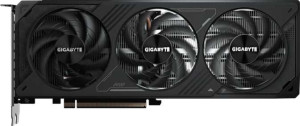
Gigabyte GeForce RTX 5070 WindForce OC SFF
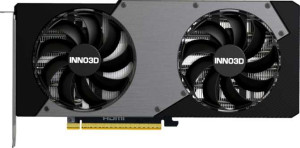
Inno3D GeForce RTX 5070 Twin X2 OC

Gigabyte GeForce RTX 5070 WindForce OC SFF Inno3D GeForce RTX 5070 Twin X2 OC

Overview

Welcome to this detailed specification face-off between the Gigabyte GeForce RTX 5070 WindForce OC SFF and the Inno3D GeForce RTX 5070 Twin X2 OC. Both cards are built on the same Blackwell architecture and share an extensive list of features, making this a fascinating comparison that ultimately narrows down to physical form factor and how each card fits into your specific build.

Common Features

  • Both cards have a base GPU clock speed of 2325 MHz.
  • Both cards reach a GPU turbo speed of 2542 MHz.
  • Both cards deliver a pixel rate of 203.4 GPixel/s.
  • Both cards offer 31.24 TFLOPS of floating-point performance.
  • Both cards provide a texture rate of 488.1 GTexels/s.
  • Both cards use a GPU memory speed of 1750 MHz.
  • Both cards feature 6144 shading units.
  • Both cards include 192 texture mapping units (TMUs).
  • Both cards have an effective memory speed of 28000 MHz.
  • Both cards deliver a maximum memory bandwidth of 672 GB/s.
  • Both cards come with 12 GB of VRAM.
  • Both cards use GDDR7 memory.
  • Both cards use a 192-bit memory bus width.
  • ECC memory support is available on both cards.
  • Both cards support DirectX 12 Ultimate.
  • Both cards support OpenGL version 4.6.
  • Both cards support OpenCL version 3.
  • Multi-display technology is supported on both cards.
  • Ray tracing is supported on both cards.
  • 3D support is available on both cards.
  • DLSS support is available on both cards.
  • XeSS (XMX) support is not available on either card.
  • Both cards include one HDMI output.
  • Both cards use HDMI version 2.1b.
  • Both cards feature three DisplayPort outputs.
  • Neither card includes a USB-C port.
  • Neither card includes a DVI output.
  • Neither card includes a mini DisplayPort output.
  • Both cards are built on the Blackwell GPU architecture.
  • Both cards have a Thermal Design Power (TDP) of 250W.
  • Both cards use PCIe version 5.
  • Both cards are manufactured on a 5 nm semiconductor process.
  • Both cards contain 31,100 million transistors.
  • Air-water cooling is not present on either card.

Main Differences

  • Width is 282 mm on the Gigabyte GeForce RTX 5070 WindForce OC SFF and 250 mm on the Inno3D GeForce RTX 5070 Twin X2 OC.
  • Height is 110 mm on the Gigabyte GeForce RTX 5070 WindForce OC SFF and 116 mm on the Inno3D GeForce RTX 5070 Twin X2 OC.
Specs Comparison
Gigabyte GeForce RTX 5070 WindForce OC SFF

Gigabyte GeForce RTX 5070 WindForce OC SFF

Inno3D GeForce RTX 5070 Twin X2 OC

Inno3D GeForce RTX 5070 Twin X2 OC

Performance:
GPU clock speed 2325 MHz 2325 MHz
GPU turbo 2542 MHz 2542 MHz
pixel rate 203.4 GPixel/s 203.4 GPixel/s
floating-point performance 31.24 TFLOPS 31.24 TFLOPS
texture rate 488.1 GTexels/s 488.1 GTexels/s
GPU memory speed 1750 MHz 1750 MHz
shading units 6144 6144
texture mapping units (TMUs) 192 192
render output units (ROPs) 80 80
Has Double Precision Floating Point (DPFP)

In terms of raw performance, the Gigabyte GeForce RTX 5070 WindForce OC SFF and the Inno3D GeForce RTX 5070 Twin X2 OC are in complete lockstep. Both cards share identical core specifications: a base clock of 2325 MHz, a turbo boost of 2542 MHz, 6144 shading units, 192 TMUs, and 80 ROPs, yielding the exact same 31.24 TFLOPS of floating-point throughput, 488.1 GTexels/s texture rate, and 203.4 GPixel/s pixel fill rate. Memory bandwidth potential is also equal, with both running at 1750 MHz GPU memory speed.

What do these numbers mean in practice? The 2542 MHz turbo and 31.24 TFLOPS figure place both cards firmly in the high-performance tier for their generation, capable of handling demanding workloads in rasterization, ray tracing, and GPU-accelerated compute tasks. The 80 ROPs are particularly relevant for high-resolution output, as render output units directly govern how quickly the GPU can write pixels to the framebuffer — a bottleneck that becomes visible at 4K. Both cards also support Double Precision Floating Point (DPFP), which, while less critical for gaming, matters for users running scientific or professional compute workloads on consumer hardware.

This group results in a dead tie. Every single performance metric is numerically identical across both products. Neither card holds any advantage in compute throughput, memory speed, or shader resources based on the provided data. The decision between these two cards will therefore hinge entirely on other factors — such as cooling design, form factor, power delivery, or price — rather than GPU performance.
Memory:
effective memory speed 28000 MHz 28000 MHz
maximum memory bandwidth 672 GB/s 672 GB/s
VRAM 12GB 12GB
GDDR version GDDR7 GDDR7
memory bus width 192-bit 192-bit
Supports ECC memory

The Gigabyte GeForce RTX 5070 WindForce OC SFF and the Inno3D GeForce RTX 5070 Twin X2 OC have identical memory specifications across all listed categories. Both products feature an effective memory speed of 28000 MHz, ensuring fast data transfer rates. They also share the same maximum memory bandwidth of 672 GB/s, allowing for quick access to data stored in memory.

Both cards come with 12GB of VRAM, offering substantial memory capacity for handling demanding workloads and high-resolution textures. Additionally, both products use the same GDDR7 memory type, providing efficient power consumption and high performance.

The memory bus width on both cards is 192-bit, which strikes a balance between performance and cost. Lastly, both the Gigabyte and Inno3D cards support ECC memory, which helps maintain data integrity during computation-heavy tasks. In conclusion, there are no differences between the two products in the memory specifications.

Features:
DirectX version DirectX 12 Ultimate DirectX 12 Ultimate
OpenGL version 4.6 4.6
OpenCL version 3 3
Supports multi-display technology
supports ray tracing
Supports 3D
supports DLSS
has XeSS (XMX)
AMD SAM / Intel Resizable BAR Intel Resizable BAR Intel Resizable BAR
has LHR
has RGB lighting
supported displays 4 4

The Gigabyte GeForce RTX 5070 WindForce OC SFF and the Inno3D GeForce RTX 5070 Twin X2 OC both feature the same set of advanced capabilities. Both cards support DirectX 12 Ultimate, OpenGL 4.6, and OpenCL 3, ensuring compatibility with the latest gaming and professional applications. They also support multi-display technology, ray tracing, and 3D, making them well-suited for immersive gaming experiences and graphical tasks.

In terms of additional features, both cards support DLSS, enabling AI-powered performance boosts in supported games. Neither card includes XeSS (XMX) support, which means they do not leverage Intel's advanced upscaling technology. Both also support Intel Resizable BAR, a feature that optimizes data access between the CPU and GPU.

Both the Gigabyte and Inno3D cards do not have LHR (Lite Hash Rate) limitations, so they are equally unrestricted in terms of mining performance. Additionally, both cards come with RGB lighting, allowing for customizable aesthetics, and they both support up to four displays for multi-monitor setups. Overall, the two products are identical in terms of features.

Ports:
has an HDMI output
HDMI ports 1 1
HDMI version HDMI 2.1b HDMI 2.1b
DisplayPort outputs 3 3
USB-C ports 0 0
DVI outputs 0 0
mini DisplayPort outputs 0 0

The Gigabyte GeForce RTX 5070 WindForce OC SFF and the Inno3D GeForce RTX 5070 Twin X2 OC are identical in terms of their port configurations. Both cards feature one HDMI output, which supports HDMI 2.1b. They also offer three DisplayPort outputs for connecting additional monitors or displays.

Neither product includes USB-C ports, DVI outputs, or mini DisplayPort outputs, so their connectivity options are quite similar in this regard.

Overall, the two cards have the same port setup, offering the same HDMI and DisplayPort options for display connectivity.

General info:
GPU architecture Blackwell Blackwell
release date January 2025 March 2025
Thermal Design Power (TDP) 250W 250W
PCI Express (PCIe) version 5 5
semiconductor size 5 nm 5 nm
number of transistors 31100 million 31100 million
Has air-water cooling
width 282 mm 250 mm
height 110 mm 116 mm

Both the Gigabyte GeForce RTX 5070 WindForce OC SFF and the Inno3D GeForce RTX 5070 Twin X2 OC share the same GPU architecture, utilizing the Blackwell architecture. They both have a Thermal Design Power (TDP) of 250W, indicating similar power consumption under load. The PCI Express (PCIe) version for both products is 5, providing high-speed data transfer capabilities, and they both feature a 5 nm semiconductor size with 31,100 million transistors, offering efficient performance.

Neither product includes air-water cooling, meaning both rely on traditional air cooling methods for heat dissipation. In terms of physical dimensions, the Gigabyte card is slightly wider at 282 mm in width compared to the Inno3D card, which is 250 mm wide. The Inno3D card is also slightly taller at 116 mm, while the Gigabyte card stands at 110 mm in height.

In summary, while the two products are nearly identical in terms of core specifications, the Inno3D GeForce RTX 5070 Twin X2 OC is a bit more compact in width, but slightly taller than the Gigabyte GeForce RTX 5070 WindForce OC SFF.

Comparison Summary & Verdict

After examining every specification, the Gigabyte GeForce RTX 5070 WindForce OC SFF and the Inno3D GeForce RTX 5070 Twin X2 OC are virtually identical in all performance metrics, memory configuration, feature support, and connectivity. Both deliver the same 31.24 TFLOPS of floating-point performance, 12 GB of GDDR7 memory, and a full suite of modern features including ray tracing and DLSS. The only measurable distinction lies in their physical dimensions: the Gigabyte card is wider at 282 mm while the Inno3D is taller at 116 mm. Your choice should therefore be guided entirely by the internal layout and clearance of your PC case.

Gigabyte GeForce RTX 5070 WindForce OC SFF
Buy Gigabyte GeForce RTX 5070 WindForce OC SFF if...

Choose the Gigabyte GeForce RTX 5070 WindForce OC SFF if your case offers ample width but limited vertical card height, as its shorter 110 mm profile gives you more clearance in tighter builds.

Inno3D GeForce RTX 5070 Twin X2 OC
Buy Inno3D GeForce RTX 5070 Twin X2 OC if...

Choose the Inno3D GeForce RTX 5070 Twin X2 OC if your case has limited horizontal space but more vertical room, since its more compact 250 mm length fits better in narrower enclosures.