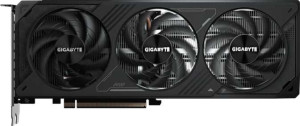
Gigabyte GeForce RTX 5070 WindForce OC SFF
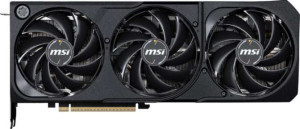
MSI GeForce RTX 5070 Shadow 3X OC

Gigabyte GeForce RTX 5070 WindForce OC SFF MSI GeForce RTX 5070 Shadow 3X OC

Overview

Welcome to our in-depth comparison between the Gigabyte GeForce RTX 5070 WindForce OC SFF and the MSI GeForce RTX 5070 Shadow 3X OC — two RTX 5070 cards built on the same Blackwell foundation. While their core performance and feature sets are remarkably aligned, this comparison zeroes in on physical dimensions and aesthetic differences to help you choose the right card for your specific build requirements.

Common Features

  • Both products have a GPU clock speed of 2325 MHz.
  • Both products have a GPU turbo speed of 2542 MHz.
  • Both products deliver a pixel rate of 203.4 GPixel/s.
  • Both products offer 31.24 TFLOPS of floating-point performance.
  • Both products have a texture rate of 488.1 GTexels/s.
  • Both products feature 6144 shading units.
  • Both products include 192 texture mapping units (TMUs).
  • Both products have a GPU memory speed of 1750 MHz.
  • Both products have an effective memory speed of 28000 MHz.
  • Both products provide a maximum memory bandwidth of 672 GB/s.
  • Both products come with 12GB of VRAM.
  • Both products use GDDR7 memory.
  • Both products feature a 192-bit memory bus width.
  • ECC memory support is available on both products.
  • Both products support DirectX 12 Ultimate.
  • Both products support OpenGL version 4.6.
  • Both products support OpenCL version 3.
  • Multi-display technology is supported on both products.
  • Ray tracing is supported on both products.
  • DLSS support is available on both products.
  • XeSS (XMX) support is not available on either product.
  • Both products include 1 HDMI port with HDMI 2.1b.
  • Both products offer 3 DisplayPort outputs.
  • Neither product includes USB-C, DVI, or mini DisplayPort outputs.
  • Both products are built on the Blackwell GPU architecture.
  • Both products have a Thermal Design Power (TDP) of 250W.
  • Both products use PCI Express version 5.
  • Both products are manufactured on a 5 nm semiconductor process.
  • Both products feature 31,100 million transistors.
  • Air-water cooling is not present on either product.

Main Differences

  • RGB lighting is present on the Gigabyte GeForce RTX 5070 WindForce OC SFF but not available on the MSI GeForce RTX 5070 Shadow 3X OC.
  • Width is 282 mm on the Gigabyte GeForce RTX 5070 WindForce OC SFF and 303 mm on the MSI GeForce RTX 5070 Shadow 3X OC.
  • Height is 110 mm on the Gigabyte GeForce RTX 5070 WindForce OC SFF and 121 mm on the MSI GeForce RTX 5070 Shadow 3X OC.
Specs Comparison
Gigabyte GeForce RTX 5070 WindForce OC SFF

Gigabyte GeForce RTX 5070 WindForce OC SFF

MSI GeForce RTX 5070 Shadow 3X OC

MSI GeForce RTX 5070 Shadow 3X OC

Performance:
GPU clock speed 2325 MHz 2325 MHz
GPU turbo 2542 MHz 2542 MHz
pixel rate 203.4 GPixel/s 203.4 GPixel/s
floating-point performance 31.24 TFLOPS 31.24 TFLOPS
texture rate 488.1 GTexels/s 488.1 GTexels/s
GPU memory speed 1750 MHz 1750 MHz
shading units 6144 6144
texture mapping units (TMUs) 192 192
render output units (ROPs) 80 80
Has Double Precision Floating Point (DPFP)

In terms of raw GPU performance, the Gigabyte RTX 5070 WindForce OC SFF and the MSI RTX 5070 Shadow 3X OC are an exact match across every measurable metric. Both cards share a base clock of 2325 MHz and a boost clock of 2542 MHz, which directly governs how fast the GPU executes instructions under load. Neither vendor has pushed the silicon beyond reference boost targets, meaning real-world gaming and rendering performance will be indistinguishable at the GPU execution level.

The parity extends to every downstream throughput figure: both deliver 31.24 TFLOPS of floating-point performance, a 488.1 GTexels/s texture fill rate, and a 203.4 GPixel/s pixel output rate. These numbers translate directly to how many textured polygons and final pixels each card can push per second — figures that govern frame rates in complex 3D scenes. With identical 6144 shading units, 192 TMUs, and 80 ROPs, the rendering pipeline is architecturally and operationally the same on both boards. Memory bandwidth potential is also equal, with both running at 1750 MHz GPU memory speed.

On performance alone, this comparison is a dead tie. There is no measurable GPU throughput advantage on either side. A buyer choosing between these two cards should look entirely to other spec groups — such as cooling design, power delivery, physical dimensions, or acoustics — to find meaningful differentiators, as performance will not be a deciding factor.
Memory:
effective memory speed 28000 MHz 28000 MHz
maximum memory bandwidth 672 GB/s 672 GB/s
VRAM 12GB 12GB
GDDR version GDDR7 GDDR7
memory bus width 192-bit 192-bit
Supports ECC memory

The memory specifications for the Gigabyte GeForce RTX 5070 WindForce OC SFF and MSI GeForce RTX 5070 Shadow 3X OC are identical across all key metrics. Both products feature an effective memory speed of 28000 MHz, a maximum memory bandwidth of 672 GB/s, and 12GB of VRAM. Additionally, both use GDDR7 memory and have a memory bus width of 192-bit. Both cards also support ECC memory, ensuring data integrity during high-performance computing tasks.

Since the memory configurations are exactly the same between the two models, there is no differentiation in terms of memory performance or architecture.

In conclusion, the memory specifications of the Gigabyte GeForce RTX 5070 WindForce OC SFF and the MSI GeForce RTX 5070 Shadow 3X OC are identical, offering the same memory speed, bandwidth, VRAM, and support for ECC memory.

Features:
DirectX version DirectX 12 Ultimate DirectX 12 Ultimate
OpenGL version 4.6 4.6
OpenCL version 3 3
Supports multi-display technology
supports ray tracing
Supports 3D
supports DLSS
has XeSS (XMX)
AMD SAM / Intel Resizable BAR Intel Resizable BAR Intel Resizable BAR
has LHR
has RGB lighting
supported displays 4 4

The features of the Gigabyte GeForce RTX 5070 WindForce OC SFF and MSI GeForce RTX 5070 Shadow 3X OC are nearly identical, with only a few differences. Both products support DirectX 12 Ultimate, OpenGL 4.6, and OpenCL 3. They also both support multi-display technology, ray tracing, 3D, and DLSS. In addition, both have Intel Resizable BAR support, and neither has an LHR (Lite Hash Rate) limiter. Both cards also support up to four displays, making them suitable for multi-monitor setups.

The primary difference between the two products is that the Gigabyte card has RGB lighting, while the MSI card does not. Additionally, both cards lack support for XeSS (XMX), which is another feature that both share in common.

Overall, the Gigabyte GeForce RTX 5070 WindForce OC SFF and MSI GeForce RTX 5070 Shadow 3X OC are very similar in terms of features, with the only notable difference being the inclusion of RGB lighting on the Gigabyte model.

Ports:
has an HDMI output
HDMI ports 1 1
HDMI version HDMI 2.1b HDMI 2.1b
DisplayPort outputs 3 3
USB-C ports 0 0
DVI outputs 0 0
mini DisplayPort outputs 0 0

The port configurations of the Gigabyte GeForce RTX 5070 WindForce OC SFF and MSI GeForce RTX 5070 Shadow 3X OC are identical. Both models feature one HDMI output with an HDMI 2.1b version, and three DisplayPort outputs. Neither product includes USB-C, DVI, or mini DisplayPort outputs.

As a result, there is no difference in the number or type of ports between the two cards, offering the same connectivity options for displays.

In conclusion, the port specifications for both the Gigabyte GeForce RTX 5070 WindForce OC SFF and the MSI GeForce RTX 5070 Shadow 3X OC are the same, providing one HDMI port and three DisplayPort outputs each.

General info:
GPU architecture Blackwell Blackwell
release date January 2025 March 2025
Thermal Design Power (TDP) 250W 250W
PCI Express (PCIe) version 5 5
semiconductor size 5 nm 5 nm
number of transistors 31100 million 31100 million
Has air-water cooling
width 282 mm 303 mm
height 110 mm 121 mm

The general specifications for the Gigabyte GeForce RTX 5070 WindForce OC SFF and MSI GeForce RTX 5070 Shadow 3X OC are almost identical. Both cards feature the same GPU architecture, Blackwell, and have the same thermal design power (TDP) of 250W. They both support PCI Express (PCIe) version 5 and are built on a 5 nm semiconductor size, with each card having 31,100 million transistors.

The key difference between the two models lies in their physical dimensions. The Gigabyte card has a width of 282 mm and a height of 110 mm, while the MSI model is slightly larger, with a width of 303 mm and a height of 121 mm. Both models lack air-water cooling systems.

In summary, the Gigabyte GeForce RTX 5070 WindForce OC SFF and the MSI GeForce RTX 5070 Shadow 3X OC share nearly identical general specs, with the only difference being the size of the cards, with the MSI version being a bit larger.

Comparison Summary & Verdict

Having examined every available specification, the Gigabyte GeForce RTX 5070 WindForce OC SFF and the MSI GeForce RTX 5070 Shadow 3X OC are effectively tied across all performance metrics, memory configurations, port layouts, and software feature support. The meaningful differences lie in size and style: the Gigabyte card is the more compact option at 282 mm wide and 110 mm tall, making it the natural choice for small form factor cases where space is at a premium. It also includes RGB lighting, which appeals to builders focused on visual customization. The MSI card, measuring 303 mm by 121 mm, is larger and omits RGB entirely, giving it a cleaner, no-frills appearance that suits minimalist or professional builds. Neither card holds a raw performance advantage — your decision should rest entirely on case compatibility and aesthetic preference.

Gigabyte GeForce RTX 5070 WindForce OC SFF
Buy Gigabyte GeForce RTX 5070 WindForce OC SFF if...

Buy the Gigabyte GeForce RTX 5070 WindForce OC SFF if you are building in a compact or small form factor case and want a card with RGB lighting to complement your setup.

MSI GeForce RTX 5070 Shadow 3X OC
Buy MSI GeForce RTX 5070 Shadow 3X OC if...

Choose the MSI GeForce RTX 5070 Shadow 3X OC if you have a standard-sized case and prefer a larger card with a clean, understated look without RGB lighting.