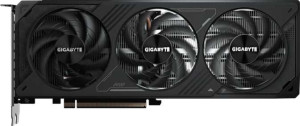
Gigabyte GeForce RTX 5070 WindForce OC SFF
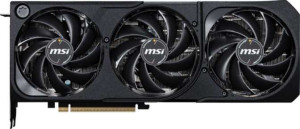
MSI GeForce RTX 5070 Ti Shadow 3X OC

Gigabyte GeForce RTX 5070 WindForce OC SFF MSI GeForce RTX 5070 Ti Shadow 3X OC

Overview

Welcome to our in-depth spec showdown between the Gigabyte GeForce RTX 5070 WindForce OC SFF and the MSI GeForce RTX 5070 Ti Shadow 3X OC. Both cards are built on the same Blackwell architecture and share a strong foundation of modern features, yet they diverge sharply when it comes to raw compute power, memory capacity, and physical footprint. Read on to see how every specification stacks up between these two Nvidia-based contenders.

Common Features

  • GPU memory speed is 1750 MHz on both Gigabyte GeForce RTX 5070 WindForce OC SFF and MSI GeForce RTX 5070 Ti Shadow 3X OC.
  • Double Precision Floating Point (DPFP) support is available on both products.
  • Effective memory speed is 28000 MHz on both Gigabyte GeForce RTX 5070 WindForce OC SFF and MSI GeForce RTX 5070 Ti Shadow 3X OC.
  • Both products use GDDR7 memory.
  • ECC memory support is available on both products.
  • Both products support DirectX 12 Ultimate.
  • OpenGL version is 4.6 on both Gigabyte GeForce RTX 5070 WindForce OC SFF and MSI GeForce RTX 5070 Ti Shadow 3X OC.
  • OpenCL version is 3 on both products.
  • Multi-display technology is supported on both products.
  • Ray tracing is supported on both products.
  • 3D support is available on both products.
  • DLSS is supported on both products.
  • XeSS (XMX) support is not available on either product.
  • Both products have one HDMI output running HDMI 2.1b.
  • Both products feature 3 DisplayPort outputs.
  • Neither product includes USB-C, DVI, or mini DisplayPort outputs.
  • Both products are built on the Blackwell GPU architecture.
  • Both products use PCIe version 5.
  • Both products are manufactured on a 5 nm semiconductor process.
  • Neither product uses air-water cooling.

Main Differences

  • GPU clock speed is 2325 MHz on Gigabyte GeForce RTX 5070 WindForce OC SFF and 2295 MHz on MSI GeForce RTX 5070 Ti Shadow 3X OC.
  • GPU turbo clock is 2542 MHz on Gigabyte GeForce RTX 5070 WindForce OC SFF and 2482 MHz on MSI GeForce RTX 5070 Ti Shadow 3X OC.
  • Pixel rate is 203.4 GPixel/s on Gigabyte GeForce RTX 5070 WindForce OC SFF and 238.3 GPixel/s on MSI GeForce RTX 5070 Ti Shadow 3X OC.
  • Floating-point performance is 31.24 TFLOPS on Gigabyte GeForce RTX 5070 WindForce OC SFF and 44.48 TFLOPS on MSI GeForce RTX 5070 Ti Shadow 3X OC.
  • Texture rate is 488.1 GTexels/s on Gigabyte GeForce RTX 5070 WindForce OC SFF and 695 GTexels/s on MSI GeForce RTX 5070 Ti Shadow 3X OC.
  • Shading units count is 6144 on Gigabyte GeForce RTX 5070 WindForce OC SFF and 8960 on MSI GeForce RTX 5070 Ti Shadow 3X OC.
  • Texture mapping units (TMUs) number 192 on Gigabyte GeForce RTX 5070 WindForce OC SFF and 280 on MSI GeForce RTX 5070 Ti Shadow 3X OC.
  • Render output units (ROPs) total 80 on Gigabyte GeForce RTX 5070 WindForce OC SFF and 96 on MSI GeForce RTX 5070 Ti Shadow 3X OC.
  • Maximum memory bandwidth is 672 GB/s on Gigabyte GeForce RTX 5070 WindForce OC SFF and 896 GB/s on MSI GeForce RTX 5070 Ti Shadow 3X OC.
  • VRAM is 12 GB on Gigabyte GeForce RTX 5070 WindForce OC SFF and 16 GB on MSI GeForce RTX 5070 Ti Shadow 3X OC.
  • Memory bus width is 192-bit on Gigabyte GeForce RTX 5070 WindForce OC SFF and 256-bit on MSI GeForce RTX 5070 Ti Shadow 3X OC.
  • RGB lighting is present on Gigabyte GeForce RTX 5070 WindForce OC SFF but not available on MSI GeForce RTX 5070 Ti Shadow 3X OC.
  • Thermal Design Power (TDP) is 250W on Gigabyte GeForce RTX 5070 WindForce OC SFF and 300W on MSI GeForce RTX 5070 Ti Shadow 3X OC.
  • Transistor count is 31,100 million on Gigabyte GeForce RTX 5070 WindForce OC SFF and 45,600 million on MSI GeForce RTX 5070 Ti Shadow 3X OC.
  • Width is 282 mm on Gigabyte GeForce RTX 5070 WindForce OC SFF and 303 mm on MSI GeForce RTX 5070 Ti Shadow 3X OC.
  • Height is 110 mm on Gigabyte GeForce RTX 5070 WindForce OC SFF and 121 mm on MSI GeForce RTX 5070 Ti Shadow 3X OC.
Specs Comparison
Gigabyte GeForce RTX 5070 WindForce OC SFF

Gigabyte GeForce RTX 5070 WindForce OC SFF

MSI GeForce RTX 5070 Ti Shadow 3X OC

MSI GeForce RTX 5070 Ti Shadow 3X OC

Performance:
GPU clock speed 2325 MHz 2295 MHz
GPU turbo 2542 MHz 2482 MHz
pixel rate 203.4 GPixel/s 238.3 GPixel/s
floating-point performance 31.24 TFLOPS 44.48 TFLOPS
texture rate 488.1 GTexels/s 695 GTexels/s
GPU memory speed 1750 MHz 1750 MHz
shading units 6144 8960
texture mapping units (TMUs) 192 280
render output units (ROPs) 80 96
Has Double Precision Floating Point (DPFP)

At first glance, the Gigabyte RTX 5070 WindForce OC SFF appears competitive on clock speeds, actually edging out the MSI RTX 5070 Ti Shadow 3X OC with a base of 2325 MHz vs. 2295 MHz and a turbo of 2542 MHz vs. 2482 MHz. However, raw clock speed is only part of the performance equation — the number of execution units doing the work at those speeds matters far more, and this is where the two cards fundamentally diverge.

The RTX 5070 Ti Shadow 3X OC carries significantly more silicon: 8960 shading units against the WindForce's 6144, 280 TMUs vs. 192, and 96 ROPs vs. 80. These translate directly into the throughput figures: the Ti delivers 44.48 TFLOPS of floating-point performance versus 31.24 TFLOPS — a roughly 42% compute advantage — and a texture rate of 695 GTexels/s vs. 488.1 GTexels/s. In practice, this means the Ti can push higher frame rates at demanding resolutions, handle more complex shading in ray-traced scenes, and sustain performance more comfortably under heavy GPU loads. The pixel rate gap (238.3 vs. 203.4 GPixel/s) further reinforces this, pointing to a meaningfully higher ceiling for 4K rasterization throughput.

The one area where the two cards are identical is GPU memory speed at 1750 MHz, and both support Double Precision Floating Point, making neither card uniquely advantaged for general-purpose compute workloads on that metric alone. Overall, the MSI RTX 5070 Ti Shadow 3X OC holds a clear and substantial performance edge in this group — the WindForce's slightly higher clocks are a modest tuning advantage that cannot offset the Ti′s much larger pool of compute resources.
Memory:
effective memory speed 28000 MHz 28000 MHz
maximum memory bandwidth 672 GB/s 896 GB/s
VRAM 12GB 16GB
GDDR version GDDR7 GDDR7
memory bus width 192-bit 256-bit
Supports ECC memory

The Gigabyte GeForce RTX 5070 WindForce OC SFF and the MSI GeForce RTX 5070 Ti Shadow 3X OC both feature an effective memory speed of 28000 MHz, ensuring fast data transfer rates for both cards. However, when it comes to memory bandwidth, the MSI card has a higher maximum bandwidth of 896 GB/s, compared to the Gigabyte’s 672 GB/s.

In terms of VRAM, the MSI card also offers 16GB of memory, which is 4GB more than the Gigabyte’s 12GB. Both cards use GDDR7 memory, ensuring a high-performance memory standard. The Gigabyte card has a 192-bit memory bus width, while the MSI model has a wider 256-bit memory bus, contributing to its greater memory bandwidth.

Both products support ECC memory, ensuring error-correcting capabilities for stable and reliable performance.

Features:
DirectX version DirectX 12 Ultimate DirectX 12 Ultimate
OpenGL version 4.6 4.6
OpenCL version 3 3
Supports multi-display technology
supports ray tracing
Supports 3D
supports DLSS
has XeSS (XMX)
AMD SAM / Intel Resizable BAR Intel Resizable BAR Intel Resizable BAR
has LHR
has RGB lighting
supported displays 4 4

Both the Gigabyte GeForce RTX 5070 WindForce OC SFF and the MSI GeForce RTX 5070 Ti Shadow 3X OC support the latest DirectX 12 Ultimate, OpenGL 4.6, and OpenCL 3, ensuring compatibility with the latest graphics technologies. They also both support multi-display technology, ray tracing, and 3D, offering a high level of visual immersion and flexibility.

In terms of additional features, both cards support DLSS (Deep Learning Super Sampling) and Intel Resizable BAR. The Gigabyte model, however, includes RGB lighting, while the MSI model lacks this feature.

Both cards also have no LHR (Lite Hash Rate) limitations and support up to 4 displays, ensuring versatile and high-quality display options for users.

Ports:
has an HDMI output
HDMI ports 1 1
HDMI version HDMI 2.1b HDMI 2.1b
DisplayPort outputs 3 3
USB-C ports 0 0
DVI outputs 0 0
mini DisplayPort outputs 0 0

Both the Gigabyte GeForce RTX 5070 WindForce OC SFF and the MSI GeForce RTX 5070 Ti Shadow 3X OC feature an HDMI output with 1 HDMI port, and both support HDMI version 2.1b. They are also identical in terms of DisplayPort outputs, offering 3 DisplayPort connections. Neither card includes USB-C, DVI, or mini DisplayPort outputs, so there are no differences in these areas.

Overall, the port configurations for both cards are identical, providing the same set of display output options.

General info:
GPU architecture Blackwell Blackwell
release date January 2025 February 2025
Thermal Design Power (TDP) 250W 300W
PCI Express (PCIe) version 5 5
semiconductor size 5 nm 5 nm
number of transistors 31100 million 45600 million
Has air-water cooling
width 282 mm 303 mm
height 110 mm 121 mm

Both the Gigabyte GeForce RTX 5070 WindForce OC SFF and the MSI GeForce RTX 5070 Ti Shadow 3X OC feature the same GPU architecture, Blackwell, and both use a 5 nm semiconductor size. The number of transistors, however, differs between the two cards. The Gigabyte model has 31,100 million transistors, while the MSI card contains 45,600 million transistors.

The Thermal Design Power (TDP) also differs, with the Gigabyte card having a TDP of 250W, while the MSI card has a higher TDP of 300W. Both cards support PCI Express (PCIe) version 5.

In terms of physical dimensions, the Gigabyte model measures 282 mm in width and 110 mm in height, whereas the MSI card is slightly larger, measuring 303 mm in width and 121 mm in height. Neither card features air-water cooling.

Comparison Summary & Verdict

After examining every spec, a clear picture emerges for each card. The Gigabyte GeForce RTX 5070 WindForce OC SFF stands out with its lower 250W TDP, more compact dimensions (282 mm x 110 mm), and the bonus of RGB lighting, making it the smarter pick for small-form-factor builds or systems with tighter power budgets. The MSI GeForce RTX 5070 Ti Shadow 3X OC, on the other hand, pulls ahead decisively in pure performance: its 44.48 TFLOPS of floating-point power, 16 GB of GDDR7 VRAM on a 256-bit bus, 8960 shading units, and 896 GB/s memory bandwidth make it the superior choice for demanding workloads, high-resolution gaming, and content creation where headroom matters most. Choose the Gigabyte for efficiency and compact convenience; choose the MSI when maximum GPU horsepower is the priority.

Gigabyte GeForce RTX 5070 WindForce OC SFF
Buy Gigabyte GeForce RTX 5070 WindForce OC SFF if...

Buy the Gigabyte GeForce RTX 5070 WindForce OC SFF if you need a compact, power-efficient GPU that fits small-form-factor cases and you want RGB lighting without sacrificing modern feature support.

MSI GeForce RTX 5070 Ti Shadow 3X OC
Buy MSI GeForce RTX 5070 Ti Shadow 3X OC if...

Buy the MSI GeForce RTX 5070 Ti Shadow 3X OC if you demand maximum graphics performance, with significantly higher TFLOPS, more VRAM, a wider memory bus, and greater memory bandwidth for demanding gaming or creative workloads.