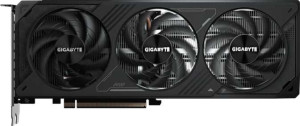
Gigabyte GeForce RTX 5070 WindForce OC SFF
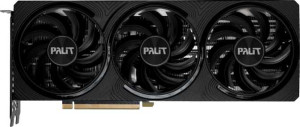
Palit GeForce RTX 4070 Ti Super Infinity 3 OC

Gigabyte GeForce RTX 5070 WindForce OC SFF Palit GeForce RTX 4070 Ti Super Infinity 3 OC

Overview

Welcome to our in-depth specification comparison between the Gigabyte GeForce RTX 5070 WindForce OC SFF and the Palit GeForce RTX 4070 Ti Super Infinity 3 OC. These two cards occupy fascinating positions in the GPU market, pitting NVIDIA's next-generation Blackwell architecture against the proven Ada Lovelace platform. Key battlegrounds include raw compute performance, memory configuration, power efficiency, and physical footprint — making this a compelling matchup for builders weighing cutting-edge architecture against sheer throughput.

Common Features

  • Both cards support Double Precision Floating Point (DPFP).
  • Both cards share an identical maximum memory bandwidth of 672 GB/s.
  • Both cards support ECC memory.
  • Both cards are built on a 5 nm semiconductor process.
  • Both cards support DirectX 12 Ultimate.
  • Both cards support OpenGL version 4.6.
  • Both cards support OpenCL version 3.
  • Both cards support multi-display technology.
  • Both cards support ray tracing.
  • Both cards support 3D output.
  • Both cards support DLSS.
  • XeSS (XMX) support is not available on either card.
  • Both cards include one HDMI output and three DisplayPort outputs.
  • Neither card includes USB-C, DVI, or mini DisplayPort outputs.
  • Air-water cooling is not featured on either card.

Main Differences

  • GPU base clock speed is 2325 MHz on the Gigabyte GeForce RTX 5070 WindForce OC SFF and 2340 MHz on the Palit GeForce RTX 4070 Ti Super Infinity 3 OC.
  • GPU turbo clock speed is 2542 MHz on the Gigabyte GeForce RTX 5070 WindForce OC SFF and 2640 MHz on the Palit GeForce RTX 4070 Ti Super Infinity 3 OC.
  • Pixel rate is 203.4 GPixel/s on the Gigabyte GeForce RTX 5070 WindForce OC SFF and 253.4 GPixel/s on the Palit GeForce RTX 4070 Ti Super Infinity 3 OC.
  • Floating-point performance is 31.24 TFLOPS on the Gigabyte GeForce RTX 5070 WindForce OC SFF and 44.61 TFLOPS on the Palit GeForce RTX 4070 Ti Super Infinity 3 OC.
  • Texture rate is 488.1 GTexels/s on the Gigabyte GeForce RTX 5070 WindForce OC SFF and 697 GTexels/s on the Palit GeForce RTX 4070 Ti Super Infinity 3 OC.
  • GPU memory speed is 1750 MHz on the Gigabyte GeForce RTX 5070 WindForce OC SFF and 1313 MHz on the Palit GeForce RTX 4070 Ti Super Infinity 3 OC.
  • Shading units number 6144 on the Gigabyte GeForce RTX 5070 WindForce OC SFF and 8448 on the Palit GeForce RTX 4070 Ti Super Infinity 3 OC.
  • Texture mapping units (TMUs) total 192 on the Gigabyte GeForce RTX 5070 WindForce OC SFF and 264 on the Palit GeForce RTX 4070 Ti Super Infinity 3 OC.
  • Render output units (ROPs) total 80 on the Gigabyte GeForce RTX 5070 WindForce OC SFF and 96 on the Palit GeForce RTX 4070 Ti Super Infinity 3 OC.
  • Effective memory speed is 28000 MHz on the Gigabyte GeForce RTX 5070 WindForce OC SFF and 21000 MHz on the Palit GeForce RTX 4070 Ti Super Infinity 3 OC.
  • VRAM is 12 GB on the Gigabyte GeForce RTX 5070 WindForce OC SFF and 16 GB on the Palit GeForce RTX 4070 Ti Super Infinity 3 OC.
  • The Gigabyte GeForce RTX 5070 WindForce OC SFF uses GDDR7 memory, while the Palit GeForce RTX 4070 Ti Super Infinity 3 OC uses GDDR6X.
  • Memory bus width is 192-bit on the Gigabyte GeForce RTX 5070 WindForce OC SFF and 256-bit on the Palit GeForce RTX 4070 Ti Super Infinity 3 OC.
  • RGB lighting is present on the Gigabyte GeForce RTX 5070 WindForce OC SFF but not available on the Palit GeForce RTX 4070 Ti Super Infinity 3 OC.
  • HDMI version is 2.1b on the Gigabyte GeForce RTX 5070 WindForce OC SFF and 2.1a on the Palit GeForce RTX 4070 Ti Super Infinity 3 OC.
  • GPU architecture is Blackwell on the Gigabyte GeForce RTX 5070 WindForce OC SFF and Ada Lovelace on the Palit GeForce RTX 4070 Ti Super Infinity 3 OC.
  • Thermal Design Power (TDP) is 250W on the Gigabyte GeForce RTX 5070 WindForce OC SFF and 285W on the Palit GeForce RTX 4070 Ti Super Infinity 3 OC.
  • PCIe version is 5 on the Gigabyte GeForce RTX 5070 WindForce OC SFF and 4 on the Palit GeForce RTX 4070 Ti Super Infinity 3 OC.
  • Number of transistors is 31,100 million on the Gigabyte GeForce RTX 5070 WindForce OC SFF and 76,300 million on the Palit GeForce RTX 4070 Ti Super Infinity 3 OC.
  • Physical dimensions are 282 mm × 110 mm on the Gigabyte GeForce RTX 5070 WindForce OC SFF and 294 mm × 116 mm on the Palit GeForce RTX 4070 Ti Super Infinity 3 OC.
Specs Comparison
Gigabyte GeForce RTX 5070 WindForce OC SFF

Gigabyte GeForce RTX 5070 WindForce OC SFF

Palit GeForce RTX 4070 Ti Super Infinity 3 OC

Palit GeForce RTX 4070 Ti Super Infinity 3 OC

Performance:
GPU clock speed 2325 MHz 2340 MHz
GPU turbo 2542 MHz 2640 MHz
pixel rate 203.4 GPixel/s 253.4 GPixel/s
floating-point performance 31.24 TFLOPS 44.61 TFLOPS
texture rate 488.1 GTexels/s 697 GTexels/s
GPU memory speed 1750 MHz 1313 MHz
shading units 6144 8448
texture mapping units (TMUs) 192 264
render output units (ROPs) 80 96
Has Double Precision Floating Point (DPFP)

Looking at raw compute muscle, the Palit RTX 4070 Ti Super holds a commanding lead over the Gigabyte RTX 5070 WindForce OC SFF. Its 44.61 TFLOPS of floating-point performance dwarfs the 5070's 31.24 TFLOPS — a gap of over 40% — which translates directly into more compute headroom for demanding rasterization workloads, shader-heavy scenes, and GPU compute tasks. This advantage is structural: the 4070 Ti Super fields 8,448 shading units against the 5070's 6,144, meaning it can process substantially more parallel workloads per clock cycle.

The texture and pixel throughput numbers reinforce the same story. With 697 GTexels/s versus 488.1 GTexels/s, the 4070 Ti Super handles texture-heavy environments noticeably faster, while its higher ROP count (96 vs. 80) gives it an edge in pixel fill rate — relevant for high-resolution rendering and anti-aliasing. The 5070 does recoup some ground in memory speed, running its GDDR7 at 1,750 MHz versus the 4070 Ti Super's 1,313 MHz GDDR6X, which can benefit bandwidth-sensitive workloads, though this alone does not offset the shader deficit. Clock speeds are close enough (2,542 MHz vs. 2,640 MHz boost) to be a non-factor in the broader picture.

On pure Performance group metrics, the Palit RTX 4070 Ti Super Infinity 3 OC has a clear advantage. Its larger shader array and superior throughput figures outclass the 5070 SFF across nearly every compute dimension. The 5070's higher memory clock is a genuine plus for bandwidth-constrained scenarios, but it does not change the overall balance: buyers prioritizing raw GPU horsepower, as measured by these specs, will find more of it in the 4070 Ti Super.
Memory:
effective memory speed 28000 MHz 21000 MHz
maximum memory bandwidth 672 GB/s 672 GB/s
VRAM 12GB 16GB
GDDR version GDDR7 GDDR6X
memory bus width 192-bit 256-bit
Supports ECC memory

The memory specifications of the Gigabyte GeForce RTX 5070 WindForce OC SFF and the Palit GeForce RTX 4070 Ti Super Infinity 3 OC show some key differences. The RTX 5070 uses GDDR7 memory, with an effective memory speed of 28000 MHz, while the RTX 4070 Ti uses GDDR6X memory with a lower effective memory speed of 21000 MHz. Despite the difference in memory speed, both cards have the same maximum memory bandwidth of 672 GB/s, indicating they are equally capable of handling large amounts of data transfer.

In terms of VRAM, the RTX 5070 is equipped with 12GB of memory, whereas the RTX 4070 Ti features a larger 16GB of VRAM, offering more capacity for handling higher-resolution textures and complex workloads. The memory bus width also differs, with the RTX 5070 having a 192-bit bus width, while the RTX 4070 Ti is equipped with a wider 256-bit memory bus. This wider bus on the RTX 4070 Ti allows for more data to be transferred between the GPU and memory, which could have an impact on performance in some tasks.

Both products support ECC memory, ensuring that errors in data storage are corrected automatically, which can be important for stability and accuracy in long-running tasks.

Features:
DirectX version DirectX 12 Ultimate DirectX 12 Ultimate
OpenGL version 4.6 4.6
OpenCL version 3 3
Supports multi-display technology
supports ray tracing
Supports 3D
supports DLSS
has XeSS (XMX)
AMD SAM / Intel Resizable BAR Intel Resizable BAR Intel Resizable BAR
has LHR
has RGB lighting
supported displays 4 4

The Gigabyte GeForce RTX 5070 WindForce OC SFF and the Palit GeForce RTX 4070 Ti Super Infinity 3 OC share many key features. Both products support DirectX 12 Ultimate, OpenGL 4.6, and OpenCL 3, ensuring compatibility with a wide range of modern games and applications. They also support multi-display technology, ray tracing, and 3D, offering enhanced visual experiences. Additionally, both cards support DLSS (Deep Learning Super Sampling), providing improved performance and image quality in supported games.

When it comes to extra features, the two cards differ in a few areas. The RTX 5070 has RGB lighting, which adds a customizable aesthetic element, while the RTX 4070 Ti does not feature RGB lighting. Both cards also support Intel Resizable BAR (part of AMD SAM/Intel Resizable BAR technology), and neither has LHR (Lite Hash Rate) support, meaning both are capable of higher performance in cryptocurrency mining. Both products are capable of driving up to 4 supported displays, allowing for expansive multi-monitor setups.

Both cards also lack XeSS (XMX) support, so they don’t offer Intel’s Xe Super Sampling technology for enhanced graphics. Despite some differences in additional features, the core capabilities of both the RTX 5070 and the RTX 4070 Ti align closely, with the most notable difference being the presence of RGB lighting on the RTX 5070.

Ports:
has an HDMI output
HDMI ports 1 1
HDMI version HDMI 2.1b HDMI 2.1a
DisplayPort outputs 3 3
USB-C ports 0 0
DVI outputs 0 0
mini DisplayPort outputs 0 0

The port configurations of the Gigabyte GeForce RTX 5070 WindForce OC SFF and the Palit GeForce RTX 4070 Ti Super Infinity 3 OC are very similar, with both cards offering one HDMI output. The HDMI version differs slightly, with the RTX 5070 using HDMI 2.1b and the RTX 4070 Ti using HDMI 2.1a. Both cards also provide three DisplayPort outputs, but neither offers USB-C, DVI, or mini DisplayPort outputs.

Overall, both cards have the same number of HDMI and DisplayPort outputs, making them equally capable in terms of multi-display support. The only notable difference is the HDMI version, with the RTX 5070 supporting HDMI 2.1b and the RTX 4070 Ti using HDMI 2.1a. The significance of this difference is minimal for most users, as both versions are similar in their support for high-quality video and gaming resolutions.

Neither card includes USB-C, DVI, or mini DisplayPort outputs, meaning users interested in these specific connections will need additional adapters or alternative solutions. Both products are well-equipped for modern display setups with their HDMI and DisplayPort options.

General info:
GPU architecture Blackwell Ada Lovelace
release date January 2025 September 2025
Thermal Design Power (TDP) 250W 285W
PCI Express (PCIe) version 5 4
semiconductor size 5 nm 5 nm
number of transistors 31100 million 76300 million
Has air-water cooling
width 282 mm 294 mm
height 110 mm 116 mm

The Gigabyte GeForce RTX 5070 WindForce OC SFF and the Palit GeForce RTX 4070 Ti Super Infinity 3 OC differ in several general specifications. The RTX 5070 uses the Blackwell GPU architecture, while the RTX 4070 Ti is based on the Ada Lovelace architecture. Both cards use a 5 nm semiconductor size, ensuring they are built on advanced and efficient processes. The RTX 4070 Ti features a significantly higher number of transistors, with 76,300 million compared to the 31,100 million found in the RTX 5070.

In terms of power requirements, the RTX 5070 has a Thermal Design Power (TDP) of 250W, while the RTX 4070 Ti has a higher TDP of 285W. This indicates the RTX 4070 Ti may require more power to run, reflecting its higher performance potential. Both cards use PCI Express (PCIe) version 5, which supports fast data transfer between the GPU and the rest of the system.

Regarding physical dimensions, the RTX 5070 measures 282 mm in width and 110 mm in height, while the RTX 4070 Ti is slightly larger at 294 mm in width and 116 mm in height. Despite the difference in size, neither card includes air-water cooling, both relying on standard cooling solutions for heat dissipation.

Comparison Summary & Verdict

After examining the full specification set, both cards serve distinct audiences. The Gigabyte GeForce RTX 5070 WindForce OC SFF stands out with its next-generation Blackwell architecture, PCIe 5.0 interface, faster GDDR7 memory at 28000 MHz effective speed, a lower 250W TDP, and a more compact 282 mm × 110 mm footprint — making it the stronger choice for builders prioritizing efficiency, future-proofing, and smaller-form-factor builds. The Palit GeForce RTX 4070 Ti Super Infinity 3 OC, on the other hand, delivers a clear advantage in raw compute muscle, boasting 44.61 TFLOPS of floating-point performance, 8448 shading units, a wider 256-bit memory bus, and 16 GB of VRAM — giving it a decisive edge in memory-intensive workloads and heavy 4K gaming tasks. Both cards share the same 672 GB/s maximum memory bandwidth, ray tracing support, and DirectX 12 Ultimate compatibility, so the decision ultimately comes down to architectural modernity versus raw throughput.

Gigabyte GeForce RTX 5070 WindForce OC SFF
Buy Gigabyte GeForce RTX 5070 WindForce OC SFF if...

Buy the Gigabyte GeForce RTX 5070 WindForce OC SFF if you want a more power-efficient card built on the latest Blackwell architecture with faster GDDR7 memory and a compact form factor ideal for smaller builds.

Palit GeForce RTX 4070 Ti Super Infinity 3 OC
Buy Palit GeForce RTX 4070 Ti Super Infinity 3 OC if...

Buy the Palit GeForce RTX 4070 Ti Super Infinity 3 OC if you need maximum raw compute performance, more VRAM at 16 GB, and a wider 256-bit memory bus for memory-intensive gaming or creative workloads.