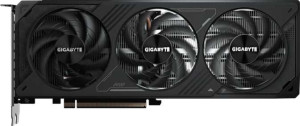
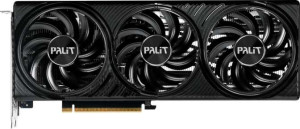
At first glance, the clock speed gap between these two cards appears modest — the Palit RTX 5060 Ti runs a slightly higher base clock of 2407 MHz versus 2325 MHz on the Gigabyte RTX 5070, and both boost to nearly identical turbo frequencies (~2572 MHz vs. ~2542 MHz). However, clock speed alone is a poor predictor of GPU performance; what truly matters is how many execution units are doing work at those frequencies. This is where the 5070 WindForce OC SFF pulls decisively ahead.
The Gigabyte RTX 5070 houses 6144 shading units, 192 TMUs, and 80 ROPs, compared to the 5060 Ti's 4608 shading units, 144 TMUs, and just 48 ROPs. In practice, those extra shading units translate directly into more parallel compute work per clock — critical for ray tracing, rasterization, and AI workloads. The ROP count gap is especially significant: with 80 versus 48 ROPs, the 5070 can write pixels to the framebuffer at a much higher rate, which is why its pixel fill rate reaches 203.4 GPixel/s against the 5060 Ti's 123.5 GPixel/s — a roughly 65% advantage. Similarly, the 5070's floating-point throughput of 31.24 TFLOPS comfortably outpaces the 5060 Ti's 23.7 TFLOPS, a lead that matters most in GPU-accelerated tasks like AI inference, video encoding, and complex shading pipelines. Both cards share an identical memory clock of 1750 MHz and both support Double Precision Floating Point, so neither has an edge on those fronts.
The conclusion is clear: while the 5060 Ti's marginally higher clock speeds are a cosmetic win, the Gigabyte RTX 5070 WindForce OC SFF holds a substantial overall performance advantage in this group. Its wider GPU architecture — more shaders, more texture units, and critically more ROPs — delivers meaningfully greater compute and rendering throughput across virtually every workload. The 5060 Ti is not a weak card, but buyers prioritizing raw GPU performance should recognize the 5070 as the stronger option by a considerable margin.