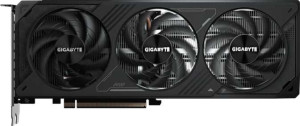
Gigabyte GeForce RTX 5070 WindForce OC SFF
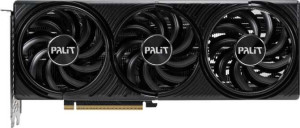
Palit GeForce RTX 5070 Infinity 3

Gigabyte GeForce RTX 5070 WindForce OC SFF Palit GeForce RTX 5070 Infinity 3

Overview

Welcome to our in-depth spec comparison between the Gigabyte GeForce RTX 5070 WindForce OC SFF and the Palit GeForce RTX 5070 Infinity 3. Both cards are built on the same Blackwell architecture and share an identical memory configuration, yet they diverge in boosted clock speeds and physical dimensions — factors that could matter depending on your build. Read on to see how every spec stacks up between these two RTX 5070 contenders.

Common Features

  • Both cards share the same base GPU clock speed of 2325 MHz.
  • Both cards have a GPU memory speed of 1750 MHz.
  • Both cards feature 6144 shading units.
  • Both cards have 192 texture mapping units (TMUs).
  • Both cards have 80 render output units (ROPs).
  • Double Precision Floating Point (DPFP) is supported on both cards.
  • Both cards have an effective memory speed of 28000 MHz.
  • Both cards offer a maximum memory bandwidth of 672 GB/s.
  • Both cards come with 12GB of VRAM.
  • Both cards use GDDR7 memory.
  • Both cards have a 192-bit memory bus width.
  • ECC memory is supported on both cards.
  • Both cards support DirectX 12 Ultimate.
  • Both cards support OpenGL 4.6.
  • Both cards support OpenCL 3.
  • Multi-display technology is supported on both cards.
  • Ray tracing is supported on both cards.
  • 3D support is available on both cards.
  • DLSS is supported on both cards.
  • XeSS (XMX) is not available on either card.
  • Both cards include one HDMI 2.1b port and three DisplayPort outputs.
  • Neither card has USB-C or DVI outputs.
  • Both cards are based on the Blackwell GPU architecture.
  • Both cards have a Thermal Design Power (TDP) of 250W.
  • Both cards use PCIe version 5.
  • Both cards are built on a 5 nm semiconductor process.
  • Both cards feature 31100 million transistors.
  • Air-water cooling is not available on either card.

Main Differences

  • GPU turbo clock speed is 2542 MHz on Gigabyte GeForce RTX 5070 WindForce OC SFF and 2512 MHz on Palit GeForce RTX 5070 Infinity 3.
  • Pixel rate is 203.4 GPixel/s on Gigabyte GeForce RTX 5070 WindForce OC SFF and 201 GPixel/s on Palit GeForce RTX 5070 Infinity 3.
  • Floating-point performance is 31.24 TFLOPS on Gigabyte GeForce RTX 5070 WindForce OC SFF and 30.87 TFLOPS on Palit GeForce RTX 5070 Infinity 3.
  • Texture rate is 488.1 GTexels/s on Gigabyte GeForce RTX 5070 WindForce OC SFF and 482.3 GTexels/s on Palit GeForce RTX 5070 Infinity 3.
  • Width is 282 mm on Gigabyte GeForce RTX 5070 WindForce OC SFF and 291.9 mm on Palit GeForce RTX 5070 Infinity 3.
  • Height is 110 mm on Gigabyte GeForce RTX 5070 WindForce OC SFF and 116.6 mm on Palit GeForce RTX 5070 Infinity 3.
Specs Comparison
Gigabyte GeForce RTX 5070 WindForce OC SFF

Gigabyte GeForce RTX 5070 WindForce OC SFF

Palit GeForce RTX 5070 Infinity 3

Palit GeForce RTX 5070 Infinity 3

Performance:
GPU clock speed 2325 MHz 2325 MHz
GPU turbo 2542 MHz 2512 MHz
pixel rate 203.4 GPixel/s 201 GPixel/s
floating-point performance 31.24 TFLOPS 30.87 TFLOPS
texture rate 488.1 GTexels/s 482.3 GTexels/s
GPU memory speed 1750 MHz 1750 MHz
shading units 6144 6144
texture mapping units (TMUs) 192 192
render output units (ROPs) 80 80
Has Double Precision Floating Point (DPFP)

At the core, both GPUs share the same fundamental silicon configuration: identical 6144 shading units, 192 TMUs, 80 ROPs, and a matching base clock of 2325 MHz — confirming they are built on the same RTX 5070 die with no architectural shortcuts on either side. The memory subsystem is also a dead tie at 1750 MHz, meaning bandwidth-related workloads like texture streaming or framebuffer throughput will be indistinguishable between the two.

The only meaningful performance divergence comes from the boost clock. The Gigabyte WindForce OC SFF is factory-overclocked to 2542 MHz, while the Palit Infinity 3 targets 2512 MHz — a 30 MHz gap that cascades into small but consistent leads across every throughput metric: 31.24 TFLOPS vs 30.87 TFLOPS in floating-point, 203.4 GPixel/s vs 201 GPixel/s in pixel rate, and 488.1 vs 482.3 GTexels/s in texture throughput. In practice, this translates to roughly a 1% performance delta — noticeable only in synthetic benchmarks, not in real gaming frame rates.

Both cards support Double Precision Floating Point, which matters for compute and professional workloads rather than gaming. Overall, the Gigabyte WindForce OC SFF holds a marginal but factual performance edge in this group, driven entirely by its higher factory boost clock. For a pure performance-on-paper decision, it wins — but the gap is narrow enough that thermal behavior, power delivery, and cooling efficiency (factors outside this group) will likely have a greater real-world impact than the 30 MHz difference.
Memory:
effective memory speed 28000 MHz 28000 MHz
maximum memory bandwidth 672 GB/s 672 GB/s
VRAM 12GB 12GB
GDDR version GDDR7 GDDR7
memory bus width 192-bit 192-bit
Supports ECC memory

The memory specifications for the Gigabyte GeForce RTX 5070 WindForce OC SFF and the Palit GeForce RTX 5070 Infinity 3 are identical across all key aspects. Both cards feature an effective memory speed of 28000 MHz and maximum memory bandwidth of 672 GB/s. Additionally, both come equipped with 12GB of VRAM, utilizing the GDDR7 memory standard, which ensures high-speed data transfer.

Both products also share the same memory bus width of 192-bit, allowing for efficient data handling between the GPU and memory. Furthermore, both the Gigabyte and Palit cards support ECC memory, which provides error-correction to enhance stability during intensive workloads.

Overall, when it comes to memory specs, there are no differences between the two models; they are fully matched across all categories.

Features:
DirectX version DirectX 12 Ultimate DirectX 12 Ultimate
OpenGL version 4.6 4.6
OpenCL version 3 3
Supports multi-display technology
supports ray tracing
Supports 3D
supports DLSS
has XeSS (XMX)
AMD SAM / Intel Resizable BAR Intel Resizable BAR Intel Resizable BAR
has LHR
has RGB lighting
supported displays 4 4

The Gigabyte GeForce RTX 5070 WindForce OC SFF and the Palit GeForce RTX 5070 Infinity 3 are identical in terms of features, with both products supporting the same set of technologies and capabilities. Both cards are compatible with DirectX 12 Ultimate, OpenGL 4.6, and OpenCL 3, ensuring broad software support for modern applications and games.

Additionally, both models support multi-display technology, ray tracing, and 3D rendering, making them suitable for immersive gaming and creative tasks. They also both support DLSS, which enhances performance through AI-driven upscaling, and they do not feature XeSS (XMX) support.

Other shared features include Intel Resizable BAR support, no LHR (Lite Hash Rate), RGB lighting, and the ability to drive up to four displays simultaneously. In terms of features, there is no distinction between the Gigabyte and Palit cards—they are fully matched across the board.

Ports:
has an HDMI output
HDMI ports 1 1
HDMI version HDMI 2.1b HDMI 2.1b
DisplayPort outputs 3 3
USB-C ports 0 0
DVI outputs 0 0
mini DisplayPort outputs 0 0

The port configurations of the Gigabyte GeForce RTX 5070 WindForce OC SFF and the Palit GeForce RTX 5070 Infinity 3 are identical in every aspect. Both cards feature one HDMI output, supporting the HDMI 2.1b version. They also offer three DisplayPort outputs, allowing for multiple high-definition display connections.

Neither card includes USB-C ports, DVI outputs, or mini DisplayPort outputs, which means their connectivity options are limited to HDMI and DisplayPort only.

Overall, the port setups for both the Gigabyte and Palit models are exactly the same, with no differences in available output options.

General info:
GPU architecture Blackwell Blackwell
release date January 2025 March 2025
Thermal Design Power (TDP) 250W 250W
PCI Express (PCIe) version 5 5
semiconductor size 5 nm 5 nm
number of transistors 31100 million 31100 million
Has air-water cooling
width 282 mm 291.9 mm
height 110 mm 116.6 mm

The Gigabyte GeForce RTX 5070 WindForce OC SFF and the Palit GeForce RTX 5070 Infinity 3 share identical specifications in most aspects. Both cards feature the Blackwell GPU architecture, a Thermal Design Power (TDP) of 250W, and PCI Express (PCIe) version 5 support, ensuring they both deliver high performance and are compatible with the latest motherboards.

In terms of manufacturing process, both cards are built using a 5 nm semiconductor size and have the same number of transistors, with 31,100 million transistors in each. Neither card includes air-water cooling, which means they rely on traditional cooling solutions.

The only difference between the two models lies in their physical dimensions. The Gigabyte card has a width of 282 mm and a height of 110 mm, while the Palit card is slightly larger, measuring 291.9 mm in width and 116.6 mm in height.

Comparison Summary & Verdict

After examining all available specifications, both cards share a strong foundation: identical 12GB GDDR7 memory, a 250W TDP, PCIe 5 support, and the full Blackwell feature set including ray tracing and DLSS. Where they diverge is in boosted performance headroom and physical size. The Gigabyte GeForce RTX 5070 WindForce OC SFF edges ahead with a higher turbo clock of 2542 MHz, delivering marginally better pixel rate, texture rate, and floating-point performance. It is also the more compact card at 282 x 110 mm. The Palit GeForce RTX 5070 Infinity 3, while slightly larger at 291.9 x 116.6 mm, offers a competitive 2512 MHz turbo and nearly identical output — making it a solid choice where physical clearance is less of a concern.

Gigabyte GeForce RTX 5070 WindForce OC SFF
Buy Gigabyte GeForce RTX 5070 WindForce OC SFF if...

Buy the Gigabyte GeForce RTX 5070 WindForce OC SFF if you want the higher turbo clock speed and better overall compute performance, or if you need a more compact card that fits in tighter small-form-factor builds.

Palit GeForce RTX 5070 Infinity 3
Buy Palit GeForce RTX 5070 Infinity 3 if...

Buy the Palit GeForce RTX 5070 Infinity 3 if physical size is not a constraint in your build and you are comfortable trading a slightly lower turbo clock for what this card offers at its price point.