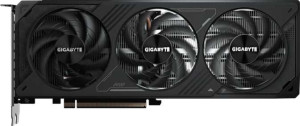
Gigabyte GeForce RTX 5070 WindForce OC SFF
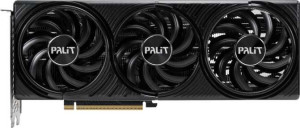
Palit GeForce RTX 5070 Infinity 3 OC

Gigabyte GeForce RTX 5070 WindForce OC SFF Palit GeForce RTX 5070 Infinity 3 OC

Overview

Welcome to our in-depth specification comparison between the Gigabyte GeForce RTX 5070 WindForce OC SFF and the Palit GeForce RTX 5070 Infinity 3 OC. Both cards are built on the same Blackwell architecture and share an identical feature set, making this a uniquely focused contest. The key battleground comes down to physical form factor — and whether those dimensional differences matter for your specific build.

Common Features

  • Both cards have a GPU clock speed of 2325 MHz.
  • Both cards have a GPU turbo speed of 2542 MHz.
  • Both cards deliver a pixel rate of 203.4 GPixel/s.
  • Both cards offer 31.24 TFLOPS of floating-point performance.
  • Both cards have a texture rate of 488.1 GTexels/s.
  • Both cards have a GPU memory speed of 1750 MHz.
  • Both cards feature 6144 shading units.
  • Both cards have 192 texture mapping units (TMUs).
  • Both cards have an effective memory speed of 28000 MHz.
  • Both cards offer a maximum memory bandwidth of 672 GB/s.
  • Both cards come with 12GB of VRAM.
  • Both cards use GDDR7 memory.
  • Both cards have a 192-bit memory bus width.
  • ECC memory is supported on both cards.
  • Both cards support DirectX 12 Ultimate.
  • Both cards support OpenGL version 4.6.
  • Both cards support OpenCL version 3.
  • Multi-display technology is supported on both cards.
  • Ray tracing is supported on both cards.
  • 3D support is available on both cards.
  • DLSS is supported on both cards.
  • XeSS (XMX) support is not available on either card.
  • Both cards include an HDMI output running HDMI 2.1b.
  • Both cards have 1 HDMI port.
  • Both cards have 3 DisplayPort outputs.
  • Neither card has USB-C ports.
  • Neither card has DVI outputs.
  • Neither card has mini DisplayPort outputs.
  • Both cards are based on the Blackwell GPU architecture.
  • Both cards have a Thermal Design Power (TDP) of 250W.
  • Both cards use PCIe version 5.
  • Both cards are manufactured on a 5 nm semiconductor process.
  • Both cards contain 31100 million transistors.
  • Air-water cooling is not available on either card.

Main Differences

  • Width is 282 mm on the Gigabyte GeForce RTX 5070 WindForce OC SFF and 291.9 mm on the Palit GeForce RTX 5070 Infinity 3 OC.
  • Height is 110 mm on the Gigabyte GeForce RTX 5070 WindForce OC SFF and 116.6 mm on the Palit GeForce RTX 5070 Infinity 3 OC.
Specs Comparison
Gigabyte GeForce RTX 5070 WindForce OC SFF

Gigabyte GeForce RTX 5070 WindForce OC SFF

Palit GeForce RTX 5070 Infinity 3 OC

Palit GeForce RTX 5070 Infinity 3 OC

Performance:
GPU clock speed 2325 MHz 2325 MHz
GPU turbo 2542 MHz 2542 MHz
pixel rate 203.4 GPixel/s 203.4 GPixel/s
floating-point performance 31.24 TFLOPS 31.24 TFLOPS
texture rate 488.1 GTexels/s 488.1 GTexels/s
GPU memory speed 1750 MHz 1750 MHz
shading units 6144 6144
texture mapping units (TMUs) 192 192
render output units (ROPs) 80 80
Has Double Precision Floating Point (DPFP)

When comparing the Performance specs of the Gigabyte GeForce RTX 5070 WindForce OC SFF and the Palit GeForce RTX 5070 Infinity 3 OC, the data tells a straightforward story: these two cards are built on an identical performance foundation. Both share a base GPU clock of 2325 MHz and a boost clock of 2542 MHz, resulting in the exact same 31.24 TFLOPS of floating-point performance — the primary metric for raw shader throughput in games and GPU-accelerated workloads.

Digging deeper into the pipeline, the parity continues without exception. Both cards field 6144 shading units, 192 TMUs, and 80 ROPs, which means identical geometry processing, texturing throughput (488.1 GTexels/s), and pixel fill rate (203.4 GPixel/s). The ROP count is particularly relevant for high-resolution rendering: 80 ROPs is a respectable figure that supports smooth output at 4K. Memory bandwidth potential is also mirrored, with both running at 1750 MHz on the GPU memory side. Both also support Double Precision Floating Point (DPFP), which matters for professional compute tasks like simulation or scientific workloads, though it is a secondary concern for gaming.

The conclusion here is unambiguous: on pure GPU performance metrics, these two cards are a dead tie. Neither product holds any measurable advantage over the other in this category. The differentiating factors between the WindForce OC SFF and the Infinity 3 OC will lie entirely outside of GPU performance — in areas such as thermals, form factor, power delivery, or acoustics — none of which are reflected in these specs.
Memory:
effective memory speed 28000 MHz 28000 MHz
maximum memory bandwidth 672 GB/s 672 GB/s
VRAM 12GB 12GB
GDDR version GDDR7 GDDR7
memory bus width 192-bit 192-bit
Supports ECC memory

The memory specifications for the Gigabyte GeForce RTX 5070 WindForce OC SFF and the Palit GeForce RTX 5070 Infinity 3 OC are identical. Both models feature an effective memory speed of 28000 MHz, maximum memory bandwidth of 672 GB/s, and 12GB of VRAM. They also both utilize the GDDR7 memory type and have a memory bus width of 192-bit.

In terms of memory support, both products support Error Correction Code (ECC) memory, ensuring additional reliability for applications that require enhanced data integrity.

Overall, the memory specifications of the Gigabyte and Palit cards are exactly the same across all listed metrics.

Features:
DirectX version DirectX 12 Ultimate DirectX 12 Ultimate
OpenGL version 4.6 4.6
OpenCL version 3 3
Supports multi-display technology
supports ray tracing
Supports 3D
supports DLSS
has XeSS (XMX)
AMD SAM / Intel Resizable BAR Intel Resizable BAR Intel Resizable BAR
has LHR
has RGB lighting
supported displays 4 4

The feature sets of the Gigabyte GeForce RTX 5070 WindForce OC SFF and the Palit GeForce RTX 5070 Infinity 3 OC are identical. Both models support DirectX 12 Ultimate, OpenGL 4.6, and OpenCL 3, ensuring compatibility with the latest APIs for gaming and professional applications. They both also support multi-display technology, ray tracing, and 3D rendering, enhancing the visual experience for users.

Both cards are equipped with DLSS support, ensuring improved performance in supported titles. Neither model includes XeSS (XMX) support, and both support Intel Resizable BAR (but not AMD SAM). Additionally, neither card has LHR (Lite Hash Rate) restrictions, and both offer RGB lighting for customizable aesthetics.

Lastly, both products support up to four displays, providing ample connectivity for multi-monitor setups.

Ports:
has an HDMI output
HDMI ports 1 1
HDMI version HDMI 2.1b HDMI 2.1b
DisplayPort outputs 3 3
USB-C ports 0 0
DVI outputs 0 0
mini DisplayPort outputs 0 0

The port configurations for the Gigabyte GeForce RTX 5070 WindForce OC SFF and the Palit GeForce RTX 5070 Infinity 3 OC are identical. Both models feature one HDMI output with an HDMI version of 2.1b, as well as three DisplayPort outputs. Neither card includes USB-C, DVI, or mini DisplayPort outputs.

Overall, the port layouts of both cards are the same, providing similar connectivity options for external displays.

General info:
GPU architecture Blackwell Blackwell
release date January 2025 March 2025
Thermal Design Power (TDP) 250W 250W
PCI Express (PCIe) version 5 5
semiconductor size 5 nm 5 nm
number of transistors 31100 million 31100 million
Has air-water cooling
width 282 mm 291.9 mm
height 110 mm 116.6 mm

The general specifications for the Gigabyte GeForce RTX 5070 WindForce OC SFF and the Palit GeForce RTX 5070 Infinity 3 OC are nearly identical. Both cards utilize the Blackwell GPU architecture, have a Thermal Design Power (TDP) of 250W, and feature the PCI Express 5.0 version. They also both use a 5 nm semiconductor process and contain 31,100 million transistors.

Neither card includes air-water cooling, and the physical dimensions differ slightly. The Gigabyte card is 282 mm in width and 110 mm in height, while the Palit card is slightly larger, measuring 291.9 mm in width and 116.6 mm in height.

Overall, the general specifications are very similar, with the main difference being the size, with the Palit card being a bit larger in both width and height.

Comparison Summary & Verdict

After examining all available specifications, the Gigabyte GeForce RTX 5070 WindForce OC SFF and the Palit GeForce RTX 5070 Infinity 3 OC are virtually identical in every measurable performance metric, including 31.24 TFLOPS of floating-point performance, 12GB of GDDR7 VRAM, and a 250W TDP. The only documented distinction lies in their physical dimensions: the Gigabyte measures a more compact 282 mm x 110 mm, while the Palit is slightly larger at 291.9 mm x 116.6 mm. If you are building in a tight or small-form-factor case, the Gigabyte is the more practical choice. If case clearance is not a concern, either card will deliver an identical experience.

Gigabyte GeForce RTX 5070 WindForce OC SFF
Buy Gigabyte GeForce RTX 5070 WindForce OC SFF if...

Buy the Gigabyte GeForce RTX 5070 WindForce OC SFF if you need a more compact card, as its smaller width of 282 mm and height of 110 mm make it the better fit for tight or small-form-factor cases.

Palit GeForce RTX 5070 Infinity 3 OC
Buy Palit GeForce RTX 5070 Infinity 3 OC if...

Buy the Palit GeForce RTX 5070 Infinity 3 OC if physical size is not a limiting factor in your build and you prefer Palit's specific cooler design, since all performance specifications are identical to the Gigabyte.