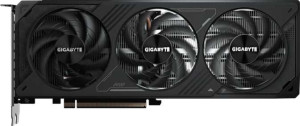
Gigabyte GeForce RTX 5070 WindForce OC SFF
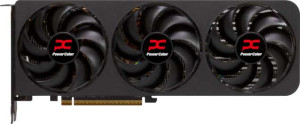
PowerColor Reaper Radeon RX 9070

Gigabyte GeForce RTX 5070 WindForce OC SFF PowerColor Reaper Radeon RX 9070

Overview

Choosing between the Gigabyte GeForce RTX 5070 WindForce OC SFF and the PowerColor Reaper Radeon RX 9070 means navigating two compelling but distinctly different approaches to GPU performance. This head-to-head comparison dives into their contrasting architectures, memory configurations, compute throughput, and feature sets to help you determine which card is the right fit for your specific setup and workload.

Common Features

  • Both products support Double Precision Floating Point (DPFP).
  • Both products support ECC memory.
  • Both products support OpenGL version 4.6.
  • Both products support multi-display technology.
  • Both products support ray tracing.
  • Both products support 3D.
  • Neither product has XeSS (XMX) support.
  • Neither product has LHR.
  • Both products support up to 4 displays.
  • Both products have an HDMI output with 1 HDMI port at version HDMI 2.1b.
  • Both products have 3 DisplayPort outputs.
  • Neither product has USB-C ports.
  • Neither product has DVI outputs.
  • Neither product has mini DisplayPort outputs.
  • Both products use PCIe version 5.
  • Both products are manufactured on a 5 nm semiconductor process.
  • Neither product uses air-water cooling.

Main Differences

  • GPU base clock speed is 2325 MHz on Gigabyte GeForce RTX 5070 WindForce OC SFF and 1330 MHz on PowerColor Reaper Radeon RX 9070.
  • GPU turbo clock is 2542 MHz on Gigabyte GeForce RTX 5070 WindForce OC SFF and 2520 MHz on PowerColor Reaper Radeon RX 9070.
  • Pixel rate is 203.4 GPixel/s on Gigabyte GeForce RTX 5070 WindForce OC SFF and 322.6 GPixel/s on PowerColor Reaper Radeon RX 9070.
  • Floating-point performance is 31.24 TFLOPS on Gigabyte GeForce RTX 5070 WindForce OC SFF and 36.13 TFLOPS on PowerColor Reaper Radeon RX 9070.
  • Texture rate is 488.1 GTexels/s on Gigabyte GeForce RTX 5070 WindForce OC SFF and 564.5 GTexels/s on PowerColor Reaper Radeon RX 9070.
  • GPU memory speed is 1750 MHz on Gigabyte GeForce RTX 5070 WindForce OC SFF and 2518 MHz on PowerColor Reaper Radeon RX 9070.
  • Shading units count is 6144 on Gigabyte GeForce RTX 5070 WindForce OC SFF and 3584 on PowerColor Reaper Radeon RX 9070.
  • Texture mapping units (TMUs) number 192 on Gigabyte GeForce RTX 5070 WindForce OC SFF and 224 on PowerColor Reaper Radeon RX 9070.
  • Render output units (ROPs) number 80 on Gigabyte GeForce RTX 5070 WindForce OC SFF and 128 on PowerColor Reaper Radeon RX 9070.
  • Effective memory speed is 28000 MHz on Gigabyte GeForce RTX 5070 WindForce OC SFF and 20000 MHz on PowerColor Reaper Radeon RX 9070.
  • Maximum memory bandwidth is 672 GB/s on Gigabyte GeForce RTX 5070 WindForce OC SFF and 644.6 GB/s on PowerColor Reaper Radeon RX 9070.
  • VRAM is 12GB on Gigabyte GeForce RTX 5070 WindForce OC SFF and 16GB on PowerColor Reaper Radeon RX 9070.
  • Memory type is GDDR7 on Gigabyte GeForce RTX 5070 WindForce OC SFF and GDDR6 on PowerColor Reaper Radeon RX 9070.
  • Memory bus width is 192-bit on Gigabyte GeForce RTX 5070 WindForce OC SFF and 256-bit on PowerColor Reaper Radeon RX 9070.
  • DirectX version is DirectX 12 Ultimate on Gigabyte GeForce RTX 5070 WindForce OC SFF and DirectX 12 on PowerColor Reaper Radeon RX 9070.
  • OpenCL version is 3 on Gigabyte GeForce RTX 5070 WindForce OC SFF and 2.2 on PowerColor Reaper Radeon RX 9070.
  • DLSS support is present on Gigabyte GeForce RTX 5070 WindForce OC SFF but not available on PowerColor Reaper Radeon RX 9070.
  • Resizable BAR technology is Intel Resizable BAR on Gigabyte GeForce RTX 5070 WindForce OC SFF and AMD SAM on PowerColor Reaper Radeon RX 9070.
  • RGB lighting is present on Gigabyte GeForce RTX 5070 WindForce OC SFF but not available on PowerColor Reaper Radeon RX 9070.
  • GPU architecture is Blackwell on Gigabyte GeForce RTX 5070 WindForce OC SFF and RDNA 4.0 on PowerColor Reaper Radeon RX 9070.
  • Thermal Design Power (TDP) is 250W on Gigabyte GeForce RTX 5070 WindForce OC SFF and 220W on PowerColor Reaper Radeon RX 9070.
  • Transistor count is 31100 million on Gigabyte GeForce RTX 5070 WindForce OC SFF and 53900 million on PowerColor Reaper Radeon RX 9070.
  • Card width is 282 mm on Gigabyte GeForce RTX 5070 WindForce OC SFF and 304 mm on PowerColor Reaper Radeon RX 9070.
  • Card height is 110 mm on Gigabyte GeForce RTX 5070 WindForce OC SFF and 127 mm on PowerColor Reaper Radeon RX 9070.
Specs Comparison
Gigabyte GeForce RTX 5070 WindForce OC SFF

Gigabyte GeForce RTX 5070 WindForce OC SFF

PowerColor Reaper Radeon RX 9070

PowerColor Reaper Radeon RX 9070

Performance:
GPU clock speed 2325 MHz 1330 MHz
GPU turbo 2542 MHz 2520 MHz
pixel rate 203.4 GPixel/s 322.6 GPixel/s
floating-point performance 31.24 TFLOPS 36.13 TFLOPS
texture rate 488.1 GTexels/s 564.5 GTexels/s
GPU memory speed 1750 MHz 2518 MHz
shading units 6144 3584
texture mapping units (TMUs) 192 224
render output units (ROPs) 80 128
Has Double Precision Floating Point (DPFP)

At first glance, the Gigabyte RTX 5070 WindForce OC SFF appears to have a clock speed advantage with a significantly higher base of 2325 MHz versus the PowerColor Reaper RX 9070's 1330 MHz. However, this comparison is misleading in isolation: both GPUs converge almost identically at their respective boost clocks — 2542 MHz vs 2520 MHz — meaning their sustained peak frequencies are virtually equivalent. The base clock gap simply reflects different architectural and power-management philosophies between NVIDIA's Ada/Blackwell lineage and AMD's RDNA 4, not a real-world performance lead for the Gigabyte card.

Where the RX 9070 meaningfully pulls ahead is in raw throughput metrics. Its 322.6 GPixel/s pixel fill rate dwarfs the RTX 5070's 203.4 GPixel/s — a nearly 60% advantage driven by its much larger ROP count (128 vs 80). This translates directly to higher frame buffer output capacity, particularly relevant at elevated resolutions. Similarly, the RX 9070 leads in texture throughput (564.5 vs 488.1 GTexels/s), floating-point compute (36.13 vs 31.24 TFLOPS), and memory speed (2518 vs 1750 MHz), suggesting faster data delivery to the GPU cores. The RTX 5070, by contrast, pairs its higher shading unit count (6144 vs 3584) with lower per-unit throughput, reflecting a denser but differently tuned compute cluster.

On raw performance specs alone, the PowerColor Reaper RX 9070 holds a clear edge: it outperforms the RTX 5070 WindForce OC SFF in pixel rate, texture rate, compute throughput, and memory bandwidth potential. Both cards support Double Precision Floating Point, so there is no differentiator there. Buyers prioritizing peak rasterization throughput and compute headroom will find the RX 9070's spec sheet more compelling, while the RTX 5070's higher shading unit count may offer advantages in workloads that are sensitive to parallelism rather than raw fill rate — though that nuance falls outside what these figures alone can confirm.
Memory:
effective memory speed 28000 MHz 20000 MHz
maximum memory bandwidth 672 GB/s 644.6 GB/s
VRAM 12GB 16GB
GDDR version GDDR7 GDDR6
memory bus width 192-bit 256-bit
Supports ECC memory

The Gigabyte GeForce RTX 5070 WindForce OC SFF is equipped with 12GB of VRAM, while the PowerColor Reaper Radeon RX 9070 has a larger 16GB of VRAM. The RTX 5070 uses GDDR7 memory, while the RX 9070 utilizes GDDR6. In terms of memory bus width, the RTX 5070 has a 192-bit interface, whereas the RX 9070 features a wider 256-bit interface, which can impact memory performance at higher resolutions or workloads.

The effective memory speed of the RTX 5070 is 28000 MHz, significantly higher than the RX 9070’s 20000 MHz. This higher memory speed may provide faster data transfer rates for the GeForce card, potentially improving performance in memory-intensive tasks. On the other hand, the RX 9070 boasts a slightly lower maximum memory bandwidth at 644.6 GB/s compared to the RTX 5070’s 672 GB/s, giving the GeForce card a marginal edge in this area.

Both cards support ECC memory, ensuring improved data integrity during use, though neither has any additional unique memory features in this comparison. Overall, the two cards have different strengths in memory specs, with the RTX 5070 offering faster memory speed and higher bandwidth, while the RX 9070 provides more VRAM and a wider memory bus.

Features:
DirectX version DirectX 12 Ultimate DirectX 12
OpenGL version 4.6 4.6
OpenCL version 3 2.2
Supports multi-display technology
supports ray tracing
Supports 3D
supports DLSS
has XeSS (XMX)
AMD SAM / Intel Resizable BAR Intel Resizable BAR AMD SAM
has LHR
has RGB lighting
supported displays 4 4

The Gigabyte GeForce RTX 5070 WindForce OC SFF supports DirectX 12 Ultimate, while the PowerColor Reaper Radeon RX 9070 supports the earlier DirectX 12 version. Both cards share the same OpenGL version (4.6) and OpenCL version, though the RTX 5070 supports OpenCL 3, while the RX 9070 supports OpenCL 2.2. In terms of multi-display technology, both cards support it, allowing for multiple monitors to be connected simultaneously.

When it comes to additional features, the RTX 5070 supports DLSS (Deep Learning Super Sampling), whereas the RX 9070 does not. Both cards support ray tracing and 3D, offering advanced visual effects. Additionally, the RTX 5070 supports Intel Resizable BAR (a feature for improved performance with compatible CPUs), while the RX 9070 supports AMD SAM (Smart Access Memory), a similar feature for AMD systems.

The RTX 5070 has RGB lighting, adding a customizable visual feature, while the RX 9070 does not include RGB lighting. Both cards support up to four displays. Neither card has LHR (Lite Hash Rate), which may be relevant for cryptocurrency mining. Lastly, both cards do not feature XeSS (Intel's Xe Super Sampling) technology.

Ports:
has an HDMI output
HDMI ports 1 1
HDMI version HDMI 2.1b HDMI 2.1b
DisplayPort outputs 3 3
USB-C ports 0 0
DVI outputs 0 0
mini DisplayPort outputs 0 0

Both the Gigabyte GeForce RTX 5070 WindForce OC SFF and the PowerColor Reaper Radeon RX 9070 feature a single HDMI output with HDMI 2.1b support. Each card is equipped with 1 HDMI port. Both products also offer 3 DisplayPort outputs, ensuring compatibility with multiple displays. Neither card includes USB-C ports, DVI outputs, or mini DisplayPort outputs, as both lack these additional ports.

In terms of display connectivity, the two cards are identical. They both offer the same number and types of ports, with no differences in HDMI, DisplayPort, or other output options.

General info:
GPU architecture Blackwell RDNA 4.0
release date January 2025 March 2025
Thermal Design Power (TDP) 250W 220W
PCI Express (PCIe) version 5 5
semiconductor size 5 nm 5 nm
number of transistors 31100 million 53900 million
Has air-water cooling
width 282 mm 304 mm
height 110 mm 127 mm

The Gigabyte GeForce RTX 5070 WindForce OC SFF and the PowerColor Reaper Radeon RX 9070 both utilize a 5 nm semiconductor size, ensuring high efficiency and performance. The GPU architecture of the RTX 5070 is based on Blackwell, while the RX 9070 uses the RDNA 4.0 architecture, indicating different design approaches in each card.

In terms of power consumption, the RTX 5070 has a higher Thermal Design Power (TDP) of 250W, compared to the 220W TDP of the RX 9070. This suggests that the RTX 5070 may require slightly more power for operation. Both cards use PCI Express version 5, ensuring fast data transfer capabilities. The number of transistors in the RTX 5070 is 31,100 million, whereas the RX 9070 has 53,900 million transistors, which could imply a difference in processing capabilities between the two cards.

Neither card features air-water cooling, as both rely on standard cooling methods. In terms of physical dimensions, the RTX 5070 has a width of 282 mm and a height of 110 mm, while the RX 9070 is larger, measuring 304 mm in width and 127 mm in height, which may affect the space requirements in your system.

Comparison Summary & Verdict

After a thorough specification review, both cards present strong arguments depending on your priorities. The Gigabyte GeForce RTX 5070 WindForce OC SFF stands out with DLSS support, DirectX 12 Ultimate, GDDR7 memory at an effective 28000 MHz, and a more compact form factor, making it ideal for NVIDIA ecosystem users who value cutting-edge upscaling technology and a smaller build. The PowerColor Reaper Radeon RX 9070 counters with higher floating-point performance at 36.13 TFLOPS, a generous 16GB VRAM buffer on a wider 256-bit bus, superior pixel and texture rates, and a lower 220W TDP, making it well-suited for users who prioritize memory headroom, raw rasterization throughput, and reduced power consumption.

Gigabyte GeForce RTX 5070 WindForce OC SFF
Buy Gigabyte GeForce RTX 5070 WindForce OC SFF if...

Buy the Gigabyte GeForce RTX 5070 WindForce OC SFF if you want DLSS support, DirectX 12 Ultimate, and fast GDDR7 memory packed into a more compact, RGB-equipped card.

PowerColor Reaper Radeon RX 9070
Buy PowerColor Reaper Radeon RX 9070 if...

Buy the PowerColor Reaper Radeon RX 9070 if you need a larger 16GB VRAM buffer, higher floating-point performance, and superior pixel and texture throughput at a more power-efficient 220W TDP.