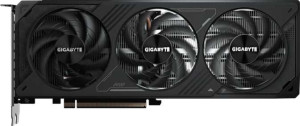
Gigabyte GeForce RTX 5070 WindForce OC SFF
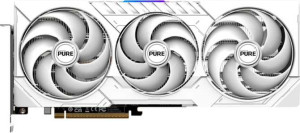
Sapphire Pure Radeon RX 9070 XT

Gigabyte GeForce RTX 5070 WindForce OC SFF Sapphire Pure Radeon RX 9070 XT

Overview

Welcome to our detailed specification comparison between the Gigabyte GeForce RTX 5070 WindForce OC SFF and the Sapphire Pure Radeon RX 9070 XT. These two modern GPUs, built on Nvidia Blackwell and AMD RDNA 4.0 architectures respectively, approach the mid-to-high-end market with very different philosophies. We examine key battlegrounds including raw compute throughput, memory configuration, power consumption, and physical dimensions to help you make the most informed decision.

Common Features

  • Both products support Double Precision Floating Point (DPFP).
  • Both products support ECC memory.
  • Both products are compatible with DirectX 12 Ultimate.
  • Both products support OpenGL version 4.6.
  • Both products support multi-display technology.
  • Both products support ray tracing.
  • Both products support 3D.
  • XeSS (XMX) support is not available on either product.
  • LHR is not present on either product.
  • RGB lighting is featured on both products.
  • Both products have an HDMI output using HDMI version 2.1b.
  • Neither product has USB-C ports.
  • Neither product has DVI outputs.
  • Neither product has mini DisplayPort outputs.
  • Both products use PCI Express (PCIe) version 5.
  • Neither product has air-water cooling.

Main Differences

  • GPU base clock speed is 2325 MHz on Gigabyte GeForce RTX 5070 WindForce OC SFF and 1660 MHz on Sapphire Pure Radeon RX 9070 XT.
  • GPU turbo clock speed is 2542 MHz on Gigabyte GeForce RTX 5070 WindForce OC SFF and 3010 MHz on Sapphire Pure Radeon RX 9070 XT.
  • Pixel rate is 203.4 GPixel/s on Gigabyte GeForce RTX 5070 WindForce OC SFF and 385.3 GPixel/s on Sapphire Pure Radeon RX 9070 XT.
  • Floating-point performance is 31.24 TFLOPS on Gigabyte GeForce RTX 5070 WindForce OC SFF and 49.32 TFLOPS on Sapphire Pure Radeon RX 9070 XT.
  • Texture rate is 488.1 GTexels/s on Gigabyte GeForce RTX 5070 WindForce OC SFF and 770.6 GTexels/s on Sapphire Pure Radeon RX 9070 XT.
  • GPU memory speed is 1750 MHz on Gigabyte GeForce RTX 5070 WindForce OC SFF and 2518 MHz on Sapphire Pure Radeon RX 9070 XT.
  • Shading units number 6144 on Gigabyte GeForce RTX 5070 WindForce OC SFF and 4096 on Sapphire Pure Radeon RX 9070 XT.
  • Texture mapping units (TMUs) total 192 on Gigabyte GeForce RTX 5070 WindForce OC SFF and 256 on Sapphire Pure Radeon RX 9070 XT.
  • Render output units (ROPs) number 80 on Gigabyte GeForce RTX 5070 WindForce OC SFF and 128 on Sapphire Pure Radeon RX 9070 XT.
  • Effective memory speed is 28000 MHz on Gigabyte GeForce RTX 5070 WindForce OC SFF and 20000 MHz on Sapphire Pure Radeon RX 9070 XT.
  • Maximum memory bandwidth is 672 GB/s on Gigabyte GeForce RTX 5070 WindForce OC SFF and 644.6 GB/s on Sapphire Pure Radeon RX 9070 XT.
  • VRAM is 12GB on Gigabyte GeForce RTX 5070 WindForce OC SFF and 16GB on Sapphire Pure Radeon RX 9070 XT.
  • Memory type is GDDR7 on Gigabyte GeForce RTX 5070 WindForce OC SFF and GDDR6 on Sapphire Pure Radeon RX 9070 XT.
  • Memory bus width is 192-bit on Gigabyte GeForce RTX 5070 WindForce OC SFF and 256-bit on Sapphire Pure Radeon RX 9070 XT.
  • OpenCL version is 3 on Gigabyte GeForce RTX 5070 WindForce OC SFF and 2.2 on Sapphire Pure Radeon RX 9070 XT.
  • DLSS support is present on Gigabyte GeForce RTX 5070 WindForce OC SFF but not available on Sapphire Pure Radeon RX 9070 XT.
  • Resizable BAR technology is Intel Resizable BAR on Gigabyte GeForce RTX 5070 WindForce OC SFF and AMD SAM on Sapphire Pure Radeon RX 9070 XT.
  • HDMI port count is 1 on Gigabyte GeForce RTX 5070 WindForce OC SFF and 2 on Sapphire Pure Radeon RX 9070 XT.
  • DisplayPort output count is 3 on Gigabyte GeForce RTX 5070 WindForce OC SFF and 2 on Sapphire Pure Radeon RX 9070 XT.
  • GPU architecture is Blackwell on Gigabyte GeForce RTX 5070 WindForce OC SFF and RDNA 4.0 on Sapphire Pure Radeon RX 9070 XT.
  • Thermal Design Power (TDP) is 250W on Gigabyte GeForce RTX 5070 WindForce OC SFF and 317W on Sapphire Pure Radeon RX 9070 XT.
  • Semiconductor size is 5 nm on Gigabyte GeForce RTX 5070 WindForce OC SFF and 4 nm on Sapphire Pure Radeon RX 9070 XT.
  • Transistor count is 31,100 million on Gigabyte GeForce RTX 5070 WindForce OC SFF and 53,900 million on Sapphire Pure Radeon RX 9070 XT.
  • Card width is 282 mm on Gigabyte GeForce RTX 5070 WindForce OC SFF and 320 mm on Sapphire Pure Radeon RX 9070 XT.
  • Card height is 110 mm on Gigabyte GeForce RTX 5070 WindForce OC SFF and 120.3 mm on Sapphire Pure Radeon RX 9070 XT.
Specs Comparison
Gigabyte GeForce RTX 5070 WindForce OC SFF

Gigabyte GeForce RTX 5070 WindForce OC SFF

Sapphire Pure Radeon RX 9070 XT

Sapphire Pure Radeon RX 9070 XT

Performance:
GPU clock speed 2325 MHz 1660 MHz
GPU turbo 2542 MHz 3010 MHz
pixel rate 203.4 GPixel/s 385.3 GPixel/s
floating-point performance 31.24 TFLOPS 49.32 TFLOPS
texture rate 488.1 GTexels/s 770.6 GTexels/s
GPU memory speed 1750 MHz 2518 MHz
shading units 6144 4096
texture mapping units (TMUs) 192 256
render output units (ROPs) 80 128
Has Double Precision Floating Point (DPFP)

On paper, the Gigabyte RTX 5070 WindForce OC SFF appears competitive with its higher base clock of 2325 MHz versus the Sapphire Pure RX 9070 XT's 1660 MHz, but that framing is misleading. The RX 9070 XT is architecturally designed to operate at a much wider clock range, boosting all the way to 3010 MHz under load — a significantly higher ceiling than the RTX 5070's 2542 MHz turbo. In practice, GPUs spend the majority of their time at or near boost clocks during gaming workloads, which means the RX 9070 XT's real-world operating frequency is substantially higher.

That clock advantage compounds into decisive wins across every throughput metric. The RX 9070 XT delivers 49.32 TFLOPS of floating-point performance versus 31.24 TFLOPS — a roughly 58% lead — and its pixel rate of 385.3 GPixel/s and texture rate of 770.6 GTexels/s are nearly double those of the RTX 5070. This translates directly to greater rendering throughput at high resolutions and with demanding visual effects. The RX 9070 XT also packs more ROPs (128 vs 80) and TMUs (256 vs 192), which reinforce its advantage in pixel output and texture sampling respectively. Its memory runs at a considerably faster 2518 MHz versus 1750 MHz, reducing potential memory bandwidth bottlenecks under heavy loads.

The RTX 5070 does hold one notable structural lead: 6144 shading units versus 4096 on the RX 9070 XT. However, this advantage is clearly outweighed by the AMD card's higher clocks and superior downstream throughput metrics. Both cards support Double Precision Floating Point, a parity feature relevant mainly to compute workloads. Overall, the Sapphire Pure RX 9070 XT holds a clear and consistent performance edge across all key throughput indicators in this group.

Memory:
effective memory speed 28000 MHz 20000 MHz
maximum memory bandwidth 672 GB/s 644.6 GB/s
VRAM 12GB 16GB
GDDR version GDDR7 GDDR6
memory bus width 192-bit 256-bit
Supports ECC memory

The Gigabyte GeForce RTX 5070 WindForce OC SFF features an effective memory speed of 28000 MHz, which is notably faster than the Sapphire Pure Radeon RX 9070 XT's effective memory speed of 20000 MHz. In terms of memory bandwidth, the RTX 5070 offers a maximum of 672 GB/s, slightly ahead of the RX 9070 XT’s 644.6 GB/s, though the difference is relatively small. Both cards support ECC memory, ensuring error correction in critical applications.

When it comes to VRAM, the RX 9070 XT has 16GB, which is 4GB more than the RTX 5070's 12GB. The increased VRAM on the RX 9070 XT may benefit tasks involving high-resolution textures or large datasets. Additionally, the RTX 5070 uses GDDR7 memory, while the RX 9070 XT utilizes GDDR6, which could have an impact on overall memory performance due to the newer generation in the RTX 5070.

The memory bus width differs between the two products as well: the RTX 5070 uses a 192-bit memory bus, while the RX 9070 XT has a wider 256-bit bus. The wider bus on the RX 9070 XT could contribute to better data throughput, potentially enhancing memory-intensive tasks like gaming or rendering.

Features:
DirectX version DirectX 12 Ultimate DirectX 12 Ultimate
OpenGL version 4.6 4.6
OpenCL version 3 2.2
Supports multi-display technology
supports ray tracing
Supports 3D
supports DLSS
has XeSS (XMX)
AMD SAM / Intel Resizable BAR Intel Resizable BAR AMD SAM
has LHR
has RGB lighting
supported displays 4 4

Both the Gigabyte GeForce RTX 5070 WindForce OC SFF and the Sapphire Pure Radeon RX 9070 XT support DirectX 12 Ultimate, ensuring compatibility with the latest graphical features. They also share the same OpenGL version of 4.6 and support multi-display technology, allowing for expansive setups. However, the RTX 5070 supports OpenCL version 3, while the RX 9070 XT is limited to OpenCL 2.2, which could impact certain compute tasks on the RTX 5070.

In terms of additional features, both cards support ray tracing, 3D rendering, and RGB lighting, making them attractive options for gamers and content creators. However, the RTX 5070 supports DLSS, which enhances performance in compatible games, while the RX 9070 XT does not offer DLSS support. The RTX 5070 also uses Intel Resizable BAR (part of the AMD SAM/Intel Resizable BAR support), whereas the RX 9070 XT uses AMD SAM, which could affect performance optimizations depending on your system configuration.

Both cards do not feature XeSS (XMX), and neither has the LHR (Lite Hash Rate) limitation, making them suitable for users who want to avoid hash rate restrictions. Finally, both cards support up to 4 displays, offering ample connectivity for multi-monitor setups.

Ports:
has an HDMI output
HDMI ports 1 2
HDMI version HDMI 2.1b HDMI 2.1b
DisplayPort outputs 3 2
USB-C ports 0 0
DVI outputs 0 0
mini DisplayPort outputs 0 0

Both the Gigabyte GeForce RTX 5070 WindForce OC SFF and the Sapphire Pure Radeon RX 9070 XT have HDMI outputs with HDMI 2.1b support. The RTX 5070 has 1 HDMI port, while the RX 9070 XT comes with 2 HDMI ports, offering more flexibility for connecting displays. In terms of DisplayPort outputs, the RTX 5070 features 3, while the RX 9070 XT has 2, providing more display connectivity options on the RTX 5070.

Neither card includes USB-C ports, DVI outputs, or mini DisplayPort outputs, so both are limited to traditional HDMI and DisplayPort connections for display setups. Overall, the RTX 5070 offers slightly more flexibility in DisplayPort outputs, while the RX 9070 XT offers an extra HDMI port.

General info:
GPU architecture Blackwell RDNA 4.0
release date January 2025 March 2025
Thermal Design Power (TDP) 250W 317W
PCI Express (PCIe) version 5 5
semiconductor size 5 nm 4 nm
number of transistors 31100 million 53900 million
Has air-water cooling
width 282 mm 320 mm
height 110 mm 120.3 mm

The Gigabyte GeForce RTX 5070 WindForce OC SFF is based on the Blackwell GPU architecture, while the Sapphire Pure Radeon RX 9070 XT uses the RDNA 4.0 architecture. Both cards support PCI Express 5.0, offering high-speed connectivity with modern motherboards. The RTX 5070 has a thermal design power (TDP) of 250W, which is lower than the RX 9070 XT's 317W TDP, indicating that the RX 9070 XT may require more power and cooling under load.

In terms of semiconductor size, the RTX 5070 uses a 5 nm process, while the RX 9070 XT uses a slightly more advanced 4 nm process. This may contribute to differences in power efficiency and performance. The RTX 5070 has 31,100 million transistors, while the RX 9070 XT has 53,900 million transistors, a significantly higher count that may indicate greater computational power.

Both cards lack air-water cooling, relying on traditional cooling solutions. In terms of physical dimensions, the RTX 5070 is 282 mm in length and 110 mm in height, while the RX 9070 XT is slightly larger at 320 mm in length and 120.3 mm in height, suggesting that the RX 9070 XT may require more space within the case.

Comparison Summary & Verdict

Both cards serve distinct audiences. The Gigabyte GeForce RTX 5070 WindForce OC SFF is the clear choice for builders working with space-constrained cases, thanks to its compact 282x110mm footprint and a notably lower 250W TDP. It also holds the edge with DLSS support, faster effective memory speed, and OpenCL 3 compatibility, making it ideal for Nvidia-ecosystem users. The Sapphire Pure Radeon RX 9070 XT, however, dominates on raw throughput with 49.32 TFLOPS of floating-point performance, a higher pixel and texture rate, a wider 256-bit memory bus, and a generous 16GB GDDR6 frame buffer, making it the stronger pick for gamers and creators pushing demanding workloads at high resolutions where outright performance is the priority.

Gigabyte GeForce RTX 5070 WindForce OC SFF
Buy Gigabyte GeForce RTX 5070 WindForce OC SFF if...

Buy the Gigabyte GeForce RTX 5070 WindForce OC SFF if you want a compact, power-efficient Nvidia GPU with DLSS support and a smaller physical footprint suited to small form factor builds.

Sapphire Pure Radeon RX 9070 XT
Buy Sapphire Pure Radeon RX 9070 XT if...

Buy the Sapphire Pure Radeon RX 9070 XT if you need maximum raw compute performance, a larger 16GB frame buffer, and higher pixel and texture throughput for demanding gaming or professional workloads.