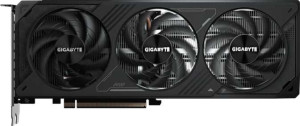
In the Performance category, the Gigabyte GeForce RTX 5070 WindForce OC SFF and the Zotac Gaming GeForce RTX 5070 Solid OC are in complete lockstep across every measurable metric. Both cards share an identical base clock of 2325 MHz and boost to 2542 MHz, delivering the same 31.24 TFLOPS of floating-point performance — the primary indicator of raw shader throughput in games and compute workloads. Memory bandwidth potential is also matched, with both running at 1750 MHz GPU memory speed.
Digging deeper into the render pipeline, the parity continues without exception: both GPUs field 6144 shading units, 192 TMUs, and 80 ROPs. The TMU count determines how quickly textures are applied to geometry (488.1 GTexels/s), while the ROP count governs pixel output and anti-aliasing throughput (203.4 GPixel/s). These figures being identical means neither card has a pipeline bottleneck advantage over the other in any rendering scenario. Both also support Double Precision Floating Point (DPFP), which matters for certain professional compute tasks, though it is less relevant for pure gaming.
The verdict for this group is an absolute tie. Every performance specification — from clocks and FLOPS to the granular shader and raster unit counts — is numerically identical. Any real-world performance difference between these two cards will come down to thermal headroom and power delivery (which fall under other spec groups), not the GPU core configuration itself. Buyers choosing between them on performance grounds alone have no basis to prefer one over the other.