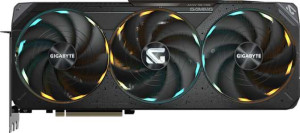
Gigabyte GeForce RTX 5080 Gaming OC
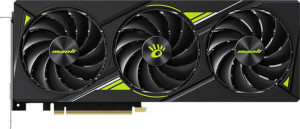
Manli Nebula GeForce RTX 5080

Gigabyte GeForce RTX 5080 Gaming OC Manli Nebula GeForce RTX 5080

Overview

Choosing between the Gigabyte GeForce RTX 5080 Gaming OC and the Manli Nebula GeForce RTX 5080 is no simple task — both cards are rooted in the same Blackwell architecture, carry 16GB of GDDR7 memory, and draw the same 360W TDP. The real contest unfolds across peak GPU turbo clocks, raw throughput figures, physical dimensions, and feature sets, where each card carves out its own distinct identity.

Common Features

  • Both cards have a base GPU clock speed of 2295 MHz.
  • Both cards have a GPU memory speed of 1875 MHz.
  • Both cards feature 10752 shading units.
  • Both cards have 336 texture mapping units (TMUs).
  • Both cards have 112 render output units (ROPs).
  • Double Precision Floating Point (DPFP) is supported on both cards.
  • Both cards have an effective memory speed of 30000 MHz.
  • Both cards offer a maximum memory bandwidth of 960 GB/s.
  • Both cards come with 16GB of VRAM.
  • Both cards use GDDR7 memory.
  • Both cards have a 256-bit memory bus width.
  • ECC memory is supported on both cards.
  • Both cards support DirectX 12 Ultimate.
  • Both cards support OpenGL version 4.6.
  • Both cards support OpenCL version 3.
  • Multi-display technology is supported on both cards.
  • Ray tracing is supported on both cards.
  • 3D support is available on both cards.
  • DLSS is supported on both cards.
  • XeSS (XMX) is not available on either card.
  • Both cards include one HDMI 2.1b output.
  • Both cards have three DisplayPort outputs.
  • Neither card has USB-C, DVI, or mini DisplayPort outputs.
  • Both cards are based on the Blackwell GPU architecture.
  • Both cards have a Thermal Design Power (TDP) of 360W.
  • Both cards use PCIe version 5.
  • Both cards are manufactured on a 5 nm semiconductor process.
  • Both cards contain 45600 million transistors.
  • Air-water cooling is not available on either card.

Main Differences

  • GPU turbo clock speed is 2730 MHz on Gigabyte GeForce RTX 5080 Gaming OC and 2617 MHz on Manli Nebula GeForce RTX 5080.
  • Pixel rate is 305.8 GPixel/s on Gigabyte GeForce RTX 5080 Gaming OC and 293.1 GPixel/s on Manli Nebula GeForce RTX 5080.
  • Floating-point performance is 58.71 TFLOPS on Gigabyte GeForce RTX 5080 Gaming OC and 56.28 TFLOPS on Manli Nebula GeForce RTX 5080.
  • Texture rate is 917.3 GTexels/s on Gigabyte GeForce RTX 5080 Gaming OC and 879.3 GTexels/s on Manli Nebula GeForce RTX 5080.
  • RGB lighting is present on Gigabyte GeForce RTX 5080 Gaming OC but not available on Manli Nebula GeForce RTX 5080.
  • The number of supported displays is 5 on Gigabyte GeForce RTX 5080 Gaming OC and 4 on Manli Nebula GeForce RTX 5080.
  • Card width is 340 mm on Gigabyte GeForce RTX 5080 Gaming OC and 312 mm on Manli Nebula GeForce RTX 5080.
  • Card height is 140 mm on Gigabyte GeForce RTX 5080 Gaming OC and 124 mm on Manli Nebula GeForce RTX 5080.
Specs Comparison
Gigabyte GeForce RTX 5080 Gaming OC

Gigabyte GeForce RTX 5080 Gaming OC

Manli Nebula GeForce RTX 5080

Manli Nebula GeForce RTX 5080

Performance:
GPU clock speed 2295 MHz 2295 MHz
GPU turbo 2730 MHz 2617 MHz
pixel rate 305.8 GPixel/s 293.1 GPixel/s
floating-point performance 58.71 TFLOPS 56.28 TFLOPS
texture rate 917.3 GTexels/s 879.3 GTexels/s
GPU memory speed 1875 MHz 1875 MHz
shading units 10752 10752
texture mapping units (TMUs) 336 336
render output units (ROPs) 112 112
Has Double Precision Floating Point (DPFP)

Both the Gigabyte Gaming OC and the Manli Nebula share the same RTX 5080 silicon foundation, evidenced by their identical base clock of 2295 MHz, matching shader counts (10,752 units), TMU and ROP configurations (336/112), and equal memory speed of 1875 MHz. This common base means both cards deliver the same theoretical ceiling under sustained, thermally-constrained workloads — the real divergence lies in how aggressively each card boosts above that floor.

The critical differentiator is the GPU boost clock: the Gigabyte Gaming OC reaches 2730 MHz versus the Manli Nebula's 2617 MHz — a gap of 113 MHz, or roughly 4.3%. This directly cascades into every throughput metric: the Gaming OC posts a floating-point performance of 58.71 TFLOPS against the Nebula's 56.28 TFLOPS, a texture rate of 917.3 GTexels/s versus 879.3 GTexels/s, and a pixel fill rate of 305.8 GPixel/s versus 293.1 GPixel/s. In practice, that ~4% boost headroom translates to a modest but measurable frame-rate advantage in GPU-bound scenarios, particularly at high resolutions where the texture and pixel pipelines are under sustained pressure.

The Gigabyte GeForce RTX 5080 Gaming OC holds a clear, if modest, performance edge in this group. Both cards support Double Precision Floating Point, so professional compute workloads are equally capable on either. However, for gaming and general GPU throughput, Gigabyte's higher factory overclock gives it a consistent lead across all peak-performance metrics. Users prioritizing maximum out-of-the-box performance should favor the Gaming OC; the Manli Nebula remains competitive but is the lower-clocked option of the two.
Memory:
effective memory speed 30000 MHz 30000 MHz
maximum memory bandwidth 960 GB/s 960 GB/s
VRAM 16GB 16GB
GDDR version GDDR7 GDDR7
memory bus width 256-bit 256-bit
Supports ECC memory

The memory specifications for the Gigabyte GeForce RTX 5080 Gaming OC and the Manli Nebula GeForce RTX 5080 are identical across all key aspects. Both products feature an effective memory speed of 30000 MHz, providing the same high-speed memory performance. The maximum memory bandwidth is also the same for both, at 960 GB/s, ensuring similar data transfer capabilities.

In terms of VRAM, both GPUs are equipped with 16GB of memory, giving them ample capacity for demanding tasks. Both models use GDDR7 memory, a cutting-edge memory type that offers improved performance and efficiency compared to previous versions. Additionally, both have a 256-bit memory bus width, which contributes to efficient data processing.

Lastly, both the Gigabyte and Manli GPUs support ECC (Error-Correcting Code) memory, which helps prevent memory corruption, ensuring more reliable and stable performance. Overall, when it comes to memory specifications, there is no difference between the two products; they are perfectly matched in every regard.

Features:
DirectX version DirectX 12 Ultimate DirectX 12 Ultimate
OpenGL version 4.6 4.6
OpenCL version 3 3
Supports multi-display technology
supports ray tracing
Supports 3D
supports DLSS
has XeSS (XMX)
AMD SAM / Intel Resizable BAR Intel Resizable BAR Intel Resizable BAR
has LHR
has RGB lighting
supported displays 5 4

The Gigabyte GeForce RTX 5080 Gaming OC and Manli Nebula GeForce RTX 5080 offer a similar set of features. Both GPUs support DirectX 12 Ultimate, OpenGL 4.6, and OpenCL 3, ensuring compatibility with a wide range of modern software and applications. They also both support multi-display technology, ray tracing, and 3D, along with DLSS, making them suitable for high-end gaming and graphical workloads.

However, there are some differences in their features. The Gigabyte model includes RGB lighting, while the Manli model does not. Additionally, the Gigabyte card supports up to five displays, while the Manli model is limited to four supported displays. Both products are equipped with Intel Resizable BAR support and lack XeSS (XMX), as well as LHR (Lite Hash Rate) functionality.

Overall, the feature sets of both cards are quite similar, but the Gigabyte GeForce RTX 5080 Gaming OC offers more in terms of RGB lighting and multi-display support, making it the more feature-rich option in this comparison.

Ports:
has an HDMI output
HDMI ports 1 1
HDMI version HDMI 2.1b HDMI 2.1b
DisplayPort outputs 3 3
USB-C ports 0 0
DVI outputs 0 0
mini DisplayPort outputs 0 0

The Gigabyte GeForce RTX 5080 Gaming OC and the Manli Nebula GeForce RTX 5080 have identical port configurations. Both models feature one HDMI output with HDMI 2.1b support, along with three DisplayPort outputs. Neither card includes USB-C ports, DVI outputs, or mini DisplayPort outputs.

Since the port setups for both products are exactly the same, users can expect similar connectivity options, with no significant differences between the two in this category.

General info:
GPU architecture Blackwell Blackwell
release date January 2025 February 2025
Thermal Design Power (TDP) 360W 360W
PCI Express (PCIe) version 5 5
semiconductor size 5 nm 5 nm
number of transistors 45600 million 45600 million
Has air-water cooling
width 340 mm 312 mm
height 140 mm 124 mm

The Gigabyte GeForce RTX 5080 Gaming OC and Manli Nebula GeForce RTX 5080 are nearly identical in their general specifications. Both cards are built on the Blackwell GPU architecture and share a thermal design power (TDP) of 360W. They both support PCI Express (PCIe) version 5, and are constructed with a semiconductor size of 5 nm. Additionally, both GPUs feature the same number of transistors, at 45,600 million.

One notable difference between the two is the physical size. The Gigabyte model is slightly larger, with a width of 340 mm and a height of 140 mm, compared to the Manli card, which measures 312 mm in width and 124 mm in height. Neither product includes air-water cooling.

Overall, the specifications are largely identical, with the primary distinction being the size, where the Gigabyte model is a bit larger than the Manli version.

Comparison Summary & Verdict

At their core, the Gigabyte GeForce RTX 5080 Gaming OC and the Manli Nebula GeForce RTX 5080 are built on identical foundations: the same Blackwell GPU, 16GB GDDR7 memory on a 256-bit bus with 960 GB/s bandwidth, and a shared 360W TDP. Differences emerge where it counts for buyers. The Gigabyte card holds a clear performance edge, reaching a GPU turbo clock of 2730 MHz versus 2617 MHz, translating into higher floating-point throughput and texture rates. It also adds RGB lighting and support for up to five simultaneous displays. The Manli card concedes those advantages but compensates with a more compact footprint — 312 mm wide and 124 mm tall compared to 340 mm and 140 mm — making it the smarter pick for smaller chassis. Choose the Gigabyte if you want the highest possible clocks and a feature-rich experience; opt for the Manli Nebula if a smaller card size is a practical necessity for your build.

Gigabyte GeForce RTX 5080 Gaming OC
Buy Gigabyte GeForce RTX 5080 Gaming OC if...

Buy the Gigabyte GeForce RTX 5080 Gaming OC if you want the highest GPU turbo clock, stronger raw performance figures, RGB lighting, and the ability to drive up to five displays at once.

Manli Nebula GeForce RTX 5080
Buy Manli Nebula GeForce RTX 5080 if...

Choose the Manli Nebula GeForce RTX 5080 if a more compact card is a priority, as its smaller width and height make it a better fit for tighter cases while still sharing the same core specs.