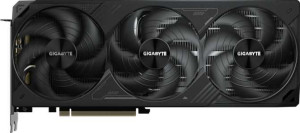
Gigabyte GeForce RTX 5080 WindForce OC SFF
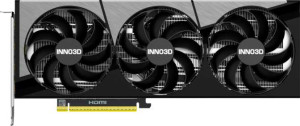
Inno3D GeForce RTX 5080 X3 Gaming OC

Gigabyte GeForce RTX 5080 WindForce OC SFF Inno3D GeForce RTX 5080 X3 Gaming OC

Overview

When choosing between the Gigabyte GeForce RTX 5080 WindForce OC SFF and the Inno3D GeForce RTX 5080 X3 Gaming OC, both cards share the same Blackwell architecture and 16GB of GDDR7 memory, making this a closely contested match. The real battlegrounds lie in their peak boost clocks, raw compute throughput, physical dimensions, and aesthetic choices like RGB lighting. Read on to see how these two RTX 5080 variants compare across every key specification.

Common Features

  • Both cards share a base GPU clock speed of 2295 MHz.
  • Both cards have a GPU memory speed of 1875 MHz.
  • Both cards feature 10752 shading units.
  • Both cards include 336 texture mapping units (TMUs).
  • Both cards have 112 render output units (ROPs).
  • Double Precision Floating Point (DPFP) is supported on both cards.
  • Both cards have an effective memory speed of 30000 MHz.
  • Both cards offer a maximum memory bandwidth of 960 GB/s.
  • Both cards come with 16GB of VRAM.
  • Both cards use GDDR7 memory.
  • Both cards feature a 256-bit memory bus width.
  • ECC memory is supported on both cards.
  • Both cards support DirectX 12 Ultimate.
  • Both cards support OpenGL version 4.6.
  • Both cards support OpenCL version 3.
  • Multi-display technology is supported on both cards.
  • Ray tracing is supported on both cards.
  • 3D technology is supported on both cards.
  • DLSS is supported on both cards.
  • XeSS (XMX) is not available on either card.
  • Both cards include one HDMI 2.1b output.
  • Both cards feature three DisplayPort outputs.
  • Neither card includes USB-C, DVI, or mini DisplayPort outputs.
  • Both cards are built on the Blackwell GPU architecture.
  • Both cards have a Thermal Design Power (TDP) of 360W.
  • Both cards use PCIe version 5.
  • Both cards are manufactured on a 5 nm semiconductor process.
  • Both cards contain 45600 million transistors.
  • Air-water cooling is not available on either card.

Main Differences

  • GPU turbo clock speed is 2670 MHz on Gigabyte GeForce RTX 5080 WindForce OC SFF and 2700 MHz on Inno3D GeForce RTX 5080 X3 Gaming OC.
  • Pixel rate is 299 GPixel/s on Gigabyte GeForce RTX 5080 WindForce OC SFF and 302.4 GPixel/s on Inno3D GeForce RTX 5080 X3 Gaming OC.
  • Floating-point performance is 57.42 TFLOPS on Gigabyte GeForce RTX 5080 WindForce OC SFF and 58.06 TFLOPS on Inno3D GeForce RTX 5080 X3 Gaming OC.
  • Texture rate is 897.1 GTexels/s on Gigabyte GeForce RTX 5080 WindForce OC SFF and 907.2 GTexels/s on Inno3D GeForce RTX 5080 X3 Gaming OC.
  • RGB lighting is present on Inno3D GeForce RTX 5080 X3 Gaming OC but not available on Gigabyte GeForce RTX 5080 WindForce OC SFF.
  • Card width is 304 mm on Gigabyte GeForce RTX 5080 WindForce OC SFF and 300 mm on Inno3D GeForce RTX 5080 X3 Gaming OC.
  • Card height is 126 mm on Gigabyte GeForce RTX 5080 WindForce OC SFF and 120 mm on Inno3D GeForce RTX 5080 X3 Gaming OC.
Specs Comparison
Gigabyte GeForce RTX 5080 WindForce OC SFF

Gigabyte GeForce RTX 5080 WindForce OC SFF

Inno3D GeForce RTX 5080 X3 Gaming OC

Inno3D GeForce RTX 5080 X3 Gaming OC

Performance:
GPU clock speed 2295 MHz 2295 MHz
GPU turbo 2670 MHz 2700 MHz
pixel rate 299 GPixel/s 302.4 GPixel/s
floating-point performance 57.42 TFLOPS 58.06 TFLOPS
texture rate 897.1 GTexels/s 907.2 GTexels/s
GPU memory speed 1875 MHz 1875 MHz
shading units 10752 10752
texture mapping units (TMUs) 336 336
render output units (ROPs) 112 112
Has Double Precision Floating Point (DPFP)

Both the Gigabyte WindForce OC SFF and the Inno3D X3 Gaming OC are built on the same RTX 5080 silicon, and it shows: they share identical base clocks of 2295 MHz, the same 10752 shading units, 336 TMUs, 112 ROPs, and 1875 MHz memory speed. This means the vast majority of their compute architecture is functionally equivalent, and both support Double Precision Floating Point — a feature relevant for professional and scientific workloads beyond pure gaming.

The only real differentiator within this group is the GPU boost clock. The Inno3D X3 Gaming OC reaches a turbo of 2700 MHz versus 2670 MHz on the Gigabyte WindForce OC SFF — a gap of just 30 MHz, or roughly 1.1%. This modest difference cascades into equally small gaps across derived metrics: the Inno3D posts 58.06 TFLOPS of floating-point performance versus 57.42 TFLOPS, and its texture rate of 907.2 GTexels/s edges out the Gigabyte's 897.1 GTexels/s. In practice, differences of this magnitude are below the threshold of perception in any real-world gaming or rendering scenario — they fall well within frame-time noise and benchmark variance.

The Inno3D X3 Gaming OC holds a narrow technical edge in peak performance purely due to its higher boost clock, but this advantage is cosmetic rather than meaningful. Users should not expect any measurable difference in games, creative applications, or even most compute tasks. The decision between these two cards should rest on other factors — form factor, cooling solution, acoustics, and price — rather than these near-identical performance figures.
Memory:
effective memory speed 30000 MHz 30000 MHz
maximum memory bandwidth 960 GB/s 960 GB/s
VRAM 16GB 16GB
GDDR version GDDR7 GDDR7
memory bus width 256-bit 256-bit
Supports ECC memory

The Gigabyte GeForce RTX 5080 WindForce OC SFF and the Inno3D GeForce RTX 5080 X3 Gaming OC share identical specifications in the memory category. Both cards feature an effective memory speed of 30000 MHz, a maximum memory bandwidth of 960 GB/s, and 16GB of VRAM. Additionally, they both utilize GDDR7 memory and have a memory bus width of 256-bit.

Another commonality is that both products support Error-Correcting Code (ECC) memory, ensuring higher data integrity for memory-intensive tasks.

In summary, the memory specifications of these two graphics cards are fully aligned, with no differences in terms of memory speed, bandwidth, VRAM, memory type, or bus width.

Features:
DirectX version DirectX 12 Ultimate DirectX 12 Ultimate
OpenGL version 4.6 4.6
OpenCL version 3 3
Supports multi-display technology
supports ray tracing
Supports 3D
supports DLSS
has XeSS (XMX)
AMD SAM / Intel Resizable BAR Intel Resizable BAR Intel Resizable BAR
has LHR
has RGB lighting
supported displays 4 4

The Gigabyte GeForce RTX 5080 WindForce OC SFF and the Inno3D GeForce RTX 5080 X3 Gaming OC are very similar in terms of features, with both cards supporting DirectX 12 Ultimate, OpenGL 4.6, and OpenCL 3. Additionally, both cards support multi-display technology, ray tracing, 3D rendering, and DLSS.

There are a couple of key differences between the two. The Inno3D card comes with RGB lighting, while the Gigabyte card does not have this feature. Both models support Intel's Resizable BAR technology, but neither supports XeSS (XMX) or has LHR (Lite Hash Rate) limitations.

In terms of display support, both cards are capable of supporting up to 4 displays, offering a similar level of versatility for multi-monitor setups.

Ports:
has an HDMI output
HDMI ports 1 1
HDMI version HDMI 2.1b HDMI 2.1b
DisplayPort outputs 3 3
USB-C ports 0 0
DVI outputs 0 0
mini DisplayPort outputs 0 0

The Gigabyte GeForce RTX 5080 WindForce OC SFF and the Inno3D GeForce RTX 5080 X3 Gaming OC are identical when it comes to their port configurations. Both cards feature 1 HDMI output with HDMI 2.1b support, 3 DisplayPort outputs, and no USB-C, DVI, or mini DisplayPort outputs.

In summary, there are no differences in the number or types of ports between the two models, providing the same connectivity options for displays and external devices.

General info:
GPU architecture Blackwell Blackwell
release date January 2025 April 2025
Thermal Design Power (TDP) 360W 360W
PCI Express (PCIe) version 5 5
semiconductor size 5 nm 5 nm
number of transistors 45600 million 45600 million
Has air-water cooling
width 304 mm 300 mm
height 126 mm 120 mm

The Gigabyte GeForce RTX 5080 WindForce OC SFF and the Inno3D GeForce RTX 5080 X3 Gaming OC share identical core specifications in terms of GPU architecture, thermal design power (TDP), PCI Express (PCIe) version, semiconductor size, and number of transistors. Both cards are built on the Blackwell architecture, have a TDP of 360W, support PCIe version 5, and feature a 5 nm semiconductor size with 45.6 billion transistors.

The main difference between the two products lies in their physical dimensions. The Gigabyte card measures 304 mm in width and 126 mm in height, while the Inno3D card is slightly smaller, with a width of 300 mm and a height of 120 mm.

Both cards do not feature air-water cooling systems, offering a similar cooling solution in terms of design and efficiency.

Comparison Summary & Verdict

Both the Gigabyte GeForce RTX 5080 WindForce OC SFF and the Inno3D GeForce RTX 5080 X3 Gaming OC are built on the same Blackwell architecture with identical 16GB GDDR7 memory, a 360W TDP, and the same port configuration, so neither holds a meaningful advantage in those foundational areas. The differences emerge in the details: the Inno3D steps ahead with a slightly higher GPU turbo clock of 2700 MHz, a marginally better floating-point output of 58.06 TFLOPS, and the added visual appeal of RGB lighting. The Gigabyte, by contrast, is fractionally larger at 304 x 126 mm versus the Inno3D at 300 x 120 mm. If maximizing peak clock speed and having a more vibrant aesthetic matters to you, the Inno3D X3 Gaming OC is the stronger pick. If a cleaner, no-RGB look and comparable performance at a compact size suit your build better, the Gigabyte WindForce OC SFF is a very capable alternative.

Gigabyte GeForce RTX 5080 WindForce OC SFF
Buy Gigabyte GeForce RTX 5080 WindForce OC SFF if...

Buy the Gigabyte GeForce RTX 5080 WindForce OC SFF if you prefer a no-RGB, slightly more compact card that still delivers near-identical performance to its rival.

Inno3D GeForce RTX 5080 X3 Gaming OC
Buy Inno3D GeForce RTX 5080 X3 Gaming OC if...

Buy the Inno3D GeForce RTX 5080 X3 Gaming OC if you want the higher boost clock of 2700 MHz, marginally better compute performance, and RGB lighting for a more visually striking setup.