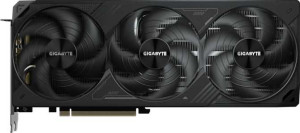
Gigabyte GeForce RTX 5080 WindForce SFF
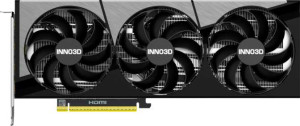
Inno3D GeForce RTX 5080 X3 Gaming OC

Gigabyte GeForce RTX 5080 WindForce SFF Inno3D GeForce RTX 5080 X3 Gaming OC

Overview

When selecting between two premium RTX 5080 cards, even the smallest differences can shape the right choice. This comparison pits the Gigabyte GeForce RTX 5080 WindForce SFF against the Inno3D GeForce RTX 5080 X3 Gaming OC, exploring key battlegrounds such as GPU boost clock speeds, raw compute throughput, aesthetics, and physical dimensions. Both share the Blackwell architecture and identical memory configurations, so the competition comes down to the performance headroom and design details that matter most to enthusiasts.

Common Features

  • Both cards share a base GPU clock speed of 2295 MHz.
  • Both cards have a GPU memory speed of 1875 MHz.
  • Both cards feature 10752 shading units.
  • Both cards include 336 texture mapping units (TMUs).
  • Both cards have 112 render output units (ROPs).
  • Double Precision Floating Point (DPFP) is supported on both cards.
  • Both cards have an effective memory speed of 30000 MHz.
  • Both cards offer a maximum memory bandwidth of 960 GB/s.
  • Both cards come with 16GB of VRAM.
  • Both cards use GDDR7 memory.
  • Both cards feature a 256-bit memory bus width.
  • ECC memory is supported on both cards.
  • Both cards support DirectX 12 Ultimate.
  • Both cards support OpenGL version 4.6.
  • Both cards support OpenCL version 3.
  • Multi-display technology is supported on both cards.
  • Ray tracing is supported on both cards.
  • 3D support is available on both cards.
  • DLSS is supported on both cards.
  • XeSS (XMX) is not available on either card.
  • Both cards include one HDMI port with HDMI 2.1b.
  • Both cards feature three DisplayPort outputs.
  • Neither card has USB-C ports, DVI outputs, or mini DisplayPort outputs.
  • Both cards are built on the Blackwell GPU architecture.
  • Both cards have a Thermal Design Power (TDP) of 360W.
  • Both cards use PCIe version 5.
  • Both cards are manufactured on a 5 nm semiconductor process.
  • Both cards feature 45600 million transistors.
  • Neither card uses air-water cooling.

Main Differences

  • GPU turbo clock speed is 2617 MHz on the Gigabyte GeForce RTX 5080 WindForce SFF and 2700 MHz on the Inno3D GeForce RTX 5080 X3 Gaming OC.
  • Pixel rate is 293.1 GPixel/s on the Gigabyte GeForce RTX 5080 WindForce SFF and 302.4 GPixel/s on the Inno3D GeForce RTX 5080 X3 Gaming OC.
  • Floating-point performance is 56.28 TFLOPS on the Gigabyte GeForce RTX 5080 WindForce SFF and 58.06 TFLOPS on the Inno3D GeForce RTX 5080 X3 Gaming OC.
  • Texture rate is 879.3 GTexels/s on the Gigabyte GeForce RTX 5080 WindForce SFF and 907.2 GTexels/s on the Inno3D GeForce RTX 5080 X3 Gaming OC.
  • RGB lighting is not present on the Gigabyte GeForce RTX 5080 WindForce SFF but is available on the Inno3D GeForce RTX 5080 X3 Gaming OC.
  • Card width is 304 mm on the Gigabyte GeForce RTX 5080 WindForce SFF and 300 mm on the Inno3D GeForce RTX 5080 X3 Gaming OC.
  • Card height is 126 mm on the Gigabyte GeForce RTX 5080 WindForce SFF and 120 mm on the Inno3D GeForce RTX 5080 X3 Gaming OC.
Specs Comparison
Gigabyte GeForce RTX 5080 WindForce SFF

Gigabyte GeForce RTX 5080 WindForce SFF

Inno3D GeForce RTX 5080 X3 Gaming OC

Inno3D GeForce RTX 5080 X3 Gaming OC

Performance:
GPU clock speed 2295 MHz 2295 MHz
GPU turbo 2617 MHz 2700 MHz
pixel rate 293.1 GPixel/s 302.4 GPixel/s
floating-point performance 56.28 TFLOPS 58.06 TFLOPS
texture rate 879.3 GTexels/s 907.2 GTexels/s
GPU memory speed 1875 MHz 1875 MHz
shading units 10752 10752
texture mapping units (TMUs) 336 336
render output units (ROPs) 112 112
Has Double Precision Floating Point (DPFP)

At their core, both the Gigabyte WindForce SFF and the Inno3D X3 Gaming OC are built on the same RTX 5080 silicon, sharing identical base specs: a 2295 MHz base clock, 10752 shading units, 336 TMUs, 112 ROPs, and 1875 MHz memory speed. This means the vast majority of their raw compute infrastructure is equivalent out of the box.

The meaningful divergence lies in the boost clock. The Inno3D X3 Gaming OC reaches a 2700 MHz turbo versus the Gigabyte WindForce SFF's 2617 MHz — an 83 MHz advantage. While that gap sounds modest in isolation, it translates directly into higher derived metrics: the Inno3D edges ahead with a 58.06 TFLOPS floating-point throughput versus 56.28 TFLOPS, a 907.2 GTexels/s texture rate versus 879.3, and a 302.4 GPixel/s pixel rate versus 293.1. In practice, these differences represent roughly a 3% performance uplift across compute-heavy and rendering workloads — noticeable in sustained GPU-accelerated tasks or when pushing high frame rates at 4K.

The Inno3D X3 Gaming OC holds a clear, if modest, performance edge in this group, entirely owing to its higher factory boost clock. The Gigabyte WindForce SFF is not meaningfully slower for typical gaming use, but users prioritizing peak theoretical throughput — particularly in GPU compute, 3D rendering, or competitive high-refresh gaming — will find the Inno3D's higher turbo ceiling the more capable card on paper.

Memory:
effective memory speed 30000 MHz 30000 MHz
maximum memory bandwidth 960 GB/s 960 GB/s
VRAM 16GB 16GB
GDDR version GDDR7 GDDR7
memory bus width 256-bit 256-bit
Supports ECC memory

Both the Gigabyte GeForce RTX 5080 WindForce SFF and the Inno3D GeForce RTX 5080 X3 Gaming OC share identical specifications when it comes to memory. Both cards feature an effective memory speed of 30000 MHz, a maximum memory bandwidth of 960 GB/s, and 16GB of VRAM. Additionally, both models utilize the GDDR7 memory version, have a 256-bit memory bus width, and support ECC memory.

As the specs for these memory attributes are exactly the same, there are no differences between the two products in this category.

Features:
DirectX version DirectX 12 Ultimate DirectX 12 Ultimate
OpenGL version 4.6 4.6
OpenCL version 3 3
Supports multi-display technology
supports ray tracing
Supports 3D
supports DLSS
has XeSS (XMX)
AMD SAM / Intel Resizable BAR Intel Resizable BAR Intel Resizable BAR
has LHR
has RGB lighting
supported displays 4 4

The Gigabyte GeForce RTX 5080 WindForce SFF and Inno3D GeForce RTX 5080 X3 Gaming OC share several common features. Both cards support DirectX 12 Ultimate, OpenGL 4.6, and OpenCL 3. They also support multi-display technology, ray tracing, 3D, and DLSS. Additionally, both models are equipped with Intel Resizable BAR, do not have LHR (Lite Hash Rate), and support up to 4 displays.

The main difference between the two products is that the Inno3D GeForce RTX 5080 X3 Gaming OC features RGB lighting, while the Gigabyte GeForce RTX 5080 WindForce SFF does not. Additionally, neither product supports XeSS (XMX), which is absent in both cards.

Ports:
has an HDMI output
HDMI ports 1 1
HDMI version HDMI 2.1b HDMI 2.1b
DisplayPort outputs 3 3
USB-C ports 0 0
DVI outputs 0 0
mini DisplayPort outputs 0 0

Both the Gigabyte GeForce RTX 5080 WindForce SFF and the Inno3D GeForce RTX 5080 X3 Gaming OC are equipped with the same port configuration. Each card has 1 HDMI output with HDMI 2.1b, 3 DisplayPort outputs, no USB-C ports, no DVI outputs, and no mini DisplayPort outputs. Therefore, the two models are identical in terms of their port offerings.

There are no differences in the ports available on either card.

General info:
GPU architecture Blackwell Blackwell
release date January 2025 April 2025
Thermal Design Power (TDP) 360W 360W
PCI Express (PCIe) version 5 5
semiconductor size 5 nm 5 nm
number of transistors 45600 million 45600 million
Has air-water cooling
width 304 mm 300 mm
height 126 mm 120 mm

Both the Gigabyte GeForce RTX 5080 WindForce SFF and the Inno3D GeForce RTX 5080 X3 Gaming OC share identical general specifications. Both cards feature the Blackwell GPU architecture, a Thermal Design Power (TDP) of 360W, and a PCI Express (PCIe) version 5 interface. Additionally, both cards use a 5 nm semiconductor size and contain 45600 million transistors. Neither card includes air-water cooling.

The main difference between the two models lies in their physical dimensions. The Gigabyte card has a width of 304 mm and a height of 126 mm, while the Inno3D card is slightly smaller, with a width of 300 mm and a height of 120 mm.

Comparison Summary & Verdict

Both cards are built on the same Blackwell architecture and share identical memory, ports, TDP, and feature sets, making them very evenly matched at their core. The differentiating factor is the Inno3D GeForce RTX 5080 X3 Gaming OC, which pulls ahead with a higher GPU turbo clock of 2700 MHz versus 2617 MHz, yielding a better pixel rate, texture rate, and floating-point performance of 58.06 TFLOPS. The Inno3D also adds RGB lighting for builders who value visual flair. The Gigabyte GeForce RTX 5080 WindForce SFF, slightly larger in dimensions, delivers the same foundational experience with a cleaner, no-RGB aesthetic. If maximising out-of-box boost performance and illuminated aesthetics are priorities, the Inno3D is the stronger pick; if a understated look is preferred and the small clock delta is inconsequential, the Gigabyte remains a fully capable choice.

Gigabyte GeForce RTX 5080 WindForce SFF
Buy Gigabyte GeForce RTX 5080 WindForce SFF if...

Choose the Gigabyte GeForce RTX 5080 WindForce SFF if you prefer a clean, RGB-free aesthetic and are comfortable with a marginally lower boost clock, knowing that all core specifications remain identical to its rival.

Inno3D GeForce RTX 5080 X3 Gaming OC
Buy Inno3D GeForce RTX 5080 X3 Gaming OC if...

Choose the Inno3D GeForce RTX 5080 X3 Gaming OC if you want the highest available boost clock, slightly superior pixel and texture rates, and the added visual appeal of RGB lighting in your build.