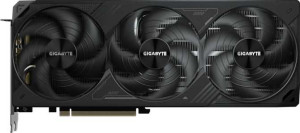
Gigabyte GeForce RTX 5080 WindForce SFF
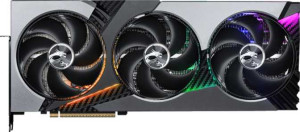
MSI GeForce RTX 5070 Ti Vanguard OC

Gigabyte GeForce RTX 5080 WindForce SFF MSI GeForce RTX 5070 Ti Vanguard OC

Overview

Welcome to our in-depth specification comparison between the Gigabyte GeForce RTX 5080 WindForce SFF and the MSI GeForce RTX 5070 Ti Vanguard OC. Both cards share the same Blackwell architecture and a strong feature set, yet they diverge in key areas such as raw compute performance, power consumption, and physical dimensions. Read on to see how these two Nvidia-based contenders stack up across every major spec category.

Common Features

  • Both cards share a base GPU clock speed of 2295 MHz.
  • Double Precision Floating Point (DPFP) is supported on both products.
  • Both cards come equipped with 16GB of VRAM.
  • Both use GDDR7 video memory.
  • Both feature a 256-bit memory bus width.
  • ECC memory support is available on both products.
  • Both support DirectX 12 Ultimate.
  • Both support OpenGL version 4.6.
  • Both support OpenCL version 3.
  • Multi-display technology is supported on both products.
  • Ray tracing is supported on both products.
  • 3D support is available on both products.
  • DLSS is supported on both products.
  • XeSS (XMX) is not available on either product.
  • Both cards include one HDMI port using HDMI 2.1b.
  • Both cards feature three DisplayPort outputs.
  • Neither card includes USB-C, DVI, or mini DisplayPort outputs.
  • Both are built on the Blackwell GPU architecture.
  • Both use PCIe version 5.
  • Both are manufactured on a 5 nm process with 45,600 million transistors.
  • Air-water cooling is not available on either product.

Main Differences

  • GPU turbo clock speed is 2617 MHz on Gigabyte GeForce RTX 5080 WindForce SFF and 2572 MHz on MSI GeForce RTX 5070 Ti Vanguard OC.
  • Pixel rate is 293.1 GPixel/s on Gigabyte GeForce RTX 5080 WindForce SFF and 246.9 GPixel/s on MSI GeForce RTX 5070 Ti Vanguard OC.
  • Floating-point performance is 56.28 TFLOPS on Gigabyte GeForce RTX 5080 WindForce SFF and 46.09 TFLOPS on MSI GeForce RTX 5070 Ti Vanguard OC.
  • Texture rate is 879.3 GTexels/s on Gigabyte GeForce RTX 5080 WindForce SFF and 720.2 GTexels/s on MSI GeForce RTX 5070 Ti Vanguard OC.
  • GPU memory speed is 1875 MHz on Gigabyte GeForce RTX 5080 WindForce SFF and 1750 MHz on MSI GeForce RTX 5070 Ti Vanguard OC.
  • Shading units number 10752 on Gigabyte GeForce RTX 5080 WindForce SFF and 8960 on MSI GeForce RTX 5070 Ti Vanguard OC.
  • Texture mapping units (TMUs) total 336 on Gigabyte GeForce RTX 5080 WindForce SFF and 280 on MSI GeForce RTX 5070 Ti Vanguard OC.
  • Render output units (ROPs) count 112 on Gigabyte GeForce RTX 5080 WindForce SFF and 96 on MSI GeForce RTX 5070 Ti Vanguard OC.
  • Effective memory speed is 30000 MHz on Gigabyte GeForce RTX 5080 WindForce SFF and 28000 MHz on MSI GeForce RTX 5070 Ti Vanguard OC.
  • Maximum memory bandwidth is 960 GB/s on Gigabyte GeForce RTX 5080 WindForce SFF and 896 GB/s on MSI GeForce RTX 5070 Ti Vanguard OC.
  • RGB lighting is present on MSI GeForce RTX 5070 Ti Vanguard OC but not available on Gigabyte GeForce RTX 5080 WindForce SFF.
  • Thermal Design Power (TDP) is 360W on Gigabyte GeForce RTX 5080 WindForce SFF and 300W on MSI GeForce RTX 5070 Ti Vanguard OC.
  • Card width is 304 mm on Gigabyte GeForce RTX 5080 WindForce SFF and 357 mm on MSI GeForce RTX 5070 Ti Vanguard OC.
  • Card height is 126 mm on Gigabyte GeForce RTX 5080 WindForce SFF and 151 mm on MSI GeForce RTX 5070 Ti Vanguard OC.
Specs Comparison
Gigabyte GeForce RTX 5080 WindForce SFF

Gigabyte GeForce RTX 5080 WindForce SFF

MSI GeForce RTX 5070 Ti Vanguard OC

MSI GeForce RTX 5070 Ti Vanguard OC

Performance:
GPU clock speed 2295 MHz 2295 MHz
GPU turbo 2617 MHz 2572 MHz
pixel rate 293.1 GPixel/s 246.9 GPixel/s
floating-point performance 56.28 TFLOPS 46.09 TFLOPS
texture rate 879.3 GTexels/s 720.2 GTexels/s
GPU memory speed 1875 MHz 1750 MHz
shading units 10752 8960
texture mapping units (TMUs) 336 280
render output units (ROPs) 112 96
Has Double Precision Floating Point (DPFP)

Both cards share an identical base GPU clock of 2295 MHz, meaning neither has a frequency advantage at rest. The real separation begins under load: the Gigabyte RTX 5080 WindForce boosts to 2617 MHz versus 2572 MHz on the MSI RTX 5070 Ti Vanguard OC. While that 45 MHz gap is modest on its own, it compounds with a significantly wider hardware advantage — the 5080 WindForce packs 10,752 shading units against 8,960 on the 5070 Ti Vanguard, a roughly 20% larger execution engine that directly amplifies every shader-heavy workload.

That architectural gap flows through every throughput metric. The WindForce delivers 56.28 TFLOPS of floating-point performance versus 46.09 TFLOPS — a ~22% lead that translates to noticeably faster frame generation, ray tracing calculations, and AI-accelerated tasks. Its texture rate of 879.3 GTexels/s versus 720.2 GTexels/s means richer, more detailed scenes render faster, while its higher pixel rate of 293.1 GPixel/s (versus 246.9) benefits high-resolution and high-refresh-rate gaming. The WindForce also runs its GDDR7 memory at 1875 MHz compared to 1750 MHz, providing a small but real boost in memory bandwidth headroom for large textures or 4K workloads.

Both cards support Double Precision Floating Point, which is relevant for compute and professional workloads rather than gaming. Overall, the Gigabyte RTX 5080 WindForce SFF holds a clear and consistent performance edge across every metric in this group — not from clock speeds, but from having substantially more GPU silicon at work. The MSI RTX 5070 Ti Vanguard OC is no slouch, but shoppers prioritizing raw throughput will find the 5080 WindForce the stronger performer by a significant margin.
Memory:
effective memory speed 30000 MHz 28000 MHz
maximum memory bandwidth 960 GB/s 896 GB/s
VRAM 16GB 16GB
GDDR version GDDR7 GDDR7
memory bus width 256-bit 256-bit
Supports ECC memory

Both the Gigabyte GeForce RTX 5080 WindForce SFF and the MSI GeForce RTX 5070 Ti Vanguard OC are equipped with 16GB of VRAM, making their memory size identical. However, the effective memory speed differs, with the Gigabyte card running at 30000 MHz, while the MSI model operates at 28000 MHz.

The maximum memory bandwidth of the Gigabyte card is 960 GB/s, which is higher than the MSI's 896 GB/s. Both cards utilize GDDR7 memory and have a 256-bit memory bus width, with no difference in these aspects.

Additionally, both cards support ECC memory (Error Correcting Code), ensuring that memory errors are detected and corrected for more stable performance.

Features:
DirectX version DirectX 12 Ultimate DirectX 12 Ultimate
OpenGL version 4.6 4.6
OpenCL version 3 3
Supports multi-display technology
supports ray tracing
Supports 3D
supports DLSS
has XeSS (XMX)
AMD SAM / Intel Resizable BAR Intel Resizable BAR Intel Resizable BAR
has LHR
has RGB lighting
supported displays 4 4

The Gigabyte GeForce RTX 5080 WindForce SFF and the MSI GeForce RTX 5070 Ti Vanguard OC share several key features, including support for DirectX 12 Ultimate, OpenGL 4.6, and OpenCL 3. Both cards also support multi-display technology, ray tracing, 3D, and DLSS, with no difference in these capabilities between the two models.

Both cards have Intel Resizable BAR support, and neither has XeSS (XMX) or LHR. However, a key difference between them is that the Gigabyte card does not feature RGB lighting, while the MSI model does include RGB lighting.

Finally, both cards support up to four displays, so the multi-monitor experience is the same for both the Gigabyte and MSI models.

Ports:
has an HDMI output
HDMI ports 1 1
HDMI version HDMI 2.1b HDMI 2.1b
DisplayPort outputs 3 3
USB-C ports 0 0
DVI outputs 0 0
mini DisplayPort outputs 0 0

Both the Gigabyte GeForce RTX 5080 WindForce SFF and the MSI GeForce RTX 5070 Ti Vanguard OC have similar port configurations. Each card features one HDMI output, with both using HDMI 2.1b. Additionally, both cards have three DisplayPort outputs, and neither includes USB-C, DVI, or mini DisplayPort outputs.

In summary, the port setup is identical for both cards, with no notable differences in HDMI, DisplayPort, or additional outputs.

General info:
GPU architecture Blackwell Blackwell
release date January 2025 February 2025
Thermal Design Power (TDP) 360W 300W
PCI Express (PCIe) version 5 5
semiconductor size 5 nm 5 nm
number of transistors 45600 million 45600 million
Has air-water cooling
width 304 mm 357 mm
height 126 mm 151 mm

Both the Gigabyte GeForce RTX 5080 WindForce SFF and the MSI GeForce RTX 5070 Ti Vanguard OC feature the Blackwell GPU architecture, and both use a 5 nm semiconductor size with 45600 million transistors. The PCI Express (PCIe) version is 5 for both cards as well. However, the thermal design power (TDP) differs between the two models: the Gigabyte card has a TDP of 360W, while the MSI card is lower at 300W.

In terms of physical dimensions, the Gigabyte card is 304 mm in width and 126 mm in height, while the MSI card is larger, measuring 357 mm in width and 151 mm in height. Neither card includes air-water cooling.

Comparison Summary & Verdict

After examining every specification, a clear picture emerges for each card. The Gigabyte GeForce RTX 5080 WindForce SFF holds a consistent lead in floating-point performance (56.28 TFLOPS vs 46.09 TFLOPS), shading units, texture rate, pixel rate, and memory bandwidth, making it the stronger choice for users who demand maximum GPU horsepower. Its notably more compact dimensions (304 mm x 126 mm) also make it an excellent fit for small form factor builds. The trade-off is a higher 360W TDP. The MSI GeForce RTX 5070 Ti Vanguard OC, on the other hand, delivers competitive performance at a lower 300W power draw and adds RGB lighting for users who value system aesthetics. It is the better pick for those building in standard cases who want capable performance with lower energy demands and visual flair.

Gigabyte GeForce RTX 5080 WindForce SFF
Buy Gigabyte GeForce RTX 5080 WindForce SFF if...

Buy the Gigabyte GeForce RTX 5080 WindForce SFF if you want the highest raw GPU performance and need a compact card that fits inside a small form factor case.

MSI GeForce RTX 5070 Ti Vanguard OC
Buy MSI GeForce RTX 5070 Ti Vanguard OC if...

Buy the MSI GeForce RTX 5070 Ti Vanguard OC if you prefer a lower 300W power draw, a standard-sized build, and want RGB lighting included out of the box.