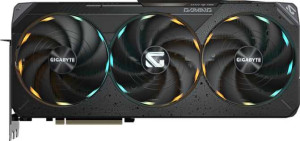
Gigabyte GeForce RTX 5090 Gaming OC
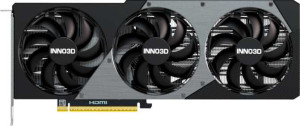
Inno3D GeForce RTX 5070 Ti X3 OC

Gigabyte GeForce RTX 5090 Gaming OC Inno3D GeForce RTX 5070 Ti X3 OC

Overview

Welcome to our in-depth specification comparison between the Gigabyte GeForce RTX 5090 Gaming OC and the Inno3D GeForce RTX 5070 Ti X3 OC, two Blackwell-architecture GPUs that share a common technological foundation yet diverge sharply in scale and ambition. Both cards support ray tracing, DLSS, and DirectX 12 Ultimate, but the battlegrounds worth watching are raw compute performance, memory capacity and bandwidth, power consumption, and physical footprint. Read on to see how every key specification stacks up.

Common Features

  • GPU memory speed is 1750 MHz on both products.
  • Both products support Double Precision Floating Point (DPFP).
  • Effective memory speed is 28000 MHz on both products.
  • Both products use GDDR7 memory.
  • ECC memory support is available on both products.
  • Both products support DirectX 12 Ultimate.
  • OpenGL version is 4.6 on both products.
  • OpenCL version is 3 on both products.
  • Multi-display technology support is available on both products.
  • Ray tracing support is available on both products.
  • 3D support is available on both products.
  • DLSS support is available on both products.
  • XeSS (XMX) support is not available on either product.
  • Both products have an HDMI output.
  • Both products have 1 HDMI port.
  • HDMI version is HDMI 2.1b on both products.
  • Both products have 3 DisplayPort outputs.
  • Neither product has USB-C ports, DVI outputs, or mini DisplayPort outputs.
  • Both products are based on the Blackwell GPU architecture.
  • Both products use PCIe version 5.
  • Both products are manufactured on a 5 nm semiconductor process.
  • Neither product features air-water cooling.

Main Differences

  • GPU clock speed is 2017 MHz on Gigabyte GeForce RTX 5090 Gaming OC and 2295 MHz on Inno3D GeForce RTX 5070 Ti X3 OC.
  • GPU turbo speed is 2550 MHz on Gigabyte GeForce RTX 5090 Gaming OC and 2482 MHz on Inno3D GeForce RTX 5070 Ti X3 OC.
  • Pixel rate is 448.8 GPixel/s on Gigabyte GeForce RTX 5090 Gaming OC and 238.3 GPixel/s on Inno3D GeForce RTX 5070 Ti X3 OC.
  • Floating-point performance is 111 TFLOPS on Gigabyte GeForce RTX 5090 Gaming OC and 44.48 TFLOPS on Inno3D GeForce RTX 5070 Ti X3 OC.
  • Texture rate is 1734 GTexels/s on Gigabyte GeForce RTX 5090 Gaming OC and 695 GTexels/s on Inno3D GeForce RTX 5070 Ti X3 OC.
  • Shading units count is 21760 on Gigabyte GeForce RTX 5090 Gaming OC and 8960 on Inno3D GeForce RTX 5070 Ti X3 OC.
  • Texture mapping units (TMUs) count is 680 on Gigabyte GeForce RTX 5090 Gaming OC and 280 on Inno3D GeForce RTX 5070 Ti X3 OC.
  • Render output units (ROPs) count is 176 on Gigabyte GeForce RTX 5090 Gaming OC and 96 on Inno3D GeForce RTX 5070 Ti X3 OC.
  • Maximum memory bandwidth is 1790 GB/s on Gigabyte GeForce RTX 5090 Gaming OC and 896 GB/s on Inno3D GeForce RTX 5070 Ti X3 OC.
  • VRAM is 32GB on Gigabyte GeForce RTX 5090 Gaming OC and 16GB on Inno3D GeForce RTX 5070 Ti X3 OC.
  • Memory bus width is 512-bit on Gigabyte GeForce RTX 5090 Gaming OC and 256-bit on Inno3D GeForce RTX 5070 Ti X3 OC.
  • RGB lighting is present on Gigabyte GeForce RTX 5090 Gaming OC but not available on Inno3D GeForce RTX 5070 Ti X3 OC.
  • Thermal Design Power (TDP) is 575W on Gigabyte GeForce RTX 5090 Gaming OC and 300W on Inno3D GeForce RTX 5070 Ti X3 OC.
  • Number of transistors is 92200 million on Gigabyte GeForce RTX 5090 Gaming OC and 45600 million on Inno3D GeForce RTX 5070 Ti X3 OC.
  • Width is 342 mm on Gigabyte GeForce RTX 5090 Gaming OC and 300 mm on Inno3D GeForce RTX 5070 Ti X3 OC.
  • Height is 152 mm on Gigabyte GeForce RTX 5090 Gaming OC and 116 mm on Inno3D GeForce RTX 5070 Ti X3 OC.
Specs Comparison
Gigabyte GeForce RTX 5090 Gaming OC

Gigabyte GeForce RTX 5090 Gaming OC

Inno3D GeForce RTX 5070 Ti X3 OC

Inno3D GeForce RTX 5070 Ti X3 OC

Performance:
GPU clock speed 2017 MHz 2295 MHz
GPU turbo 2550 MHz 2482 MHz
pixel rate 448.8 GPixel/s 238.3 GPixel/s
floating-point performance 111 TFLOPS 44.48 TFLOPS
texture rate 1734 GTexels/s 695 GTexels/s
GPU memory speed 1750 MHz 1750 MHz
shading units 21760 8960
texture mapping units (TMUs) 680 280
render output units (ROPs) 176 96
Has Double Precision Floating Point (DPFP)

At first glance, the Inno3D RTX 5070 Ti X3 OC appears competitive on clock speeds: its base GPU clock of 2295 MHz actually exceeds the Gigabyte RTX 5090 Gaming OC's 2017 MHz. However, the 5090 Gaming OC surges ahead under sustained load with a higher turbo of 2550 MHz versus the 5070 Ti's 2482 MHz. This means the 5090 not only closes the gap at peak but surpasses it where it matters most — under heavy gaming or rendering workloads.

The real performance story, though, is in the execution resources. The RTX 5090 Gaming OC fields 21,760 shading units, 680 TMUs, and 176 ROPs — roughly 2.4×, 2.4×, and 1.8× more than the 5070 Ti X3 OC's 8,960 / 280 / 96 respectively. These aren't marginal differences; they translate directly into throughput: the 5090 delivers 111 TFLOPS of floating-point performance and a texture rate of 1,734 GTexels/s, compared to the 5070 Ti's 44.48 TFLOPS and 695 GTexels/s — approximately 2.5× the compute and texturing muscle. Pixel fill rate follows suit at 448.8 GPixel/s versus 238.3 GPixel/s, meaning the 5090 can push far more pixels per second, which is especially impactful at 4K and beyond. GPU memory speed is identical at 1750 MHz for both, and both support Double Precision Floating Point, making neither card uniquely advantaged for DPFP workloads on that front alone.

The verdict is unambiguous: the Gigabyte RTX 5090 Gaming OC holds a commanding performance advantage across every meaningful throughput metric in this group. The 5070 Ti X3 OC's higher base clock is a minor footnote against the 5090's overwhelming lead in shader count, compute performance, and rasterization capacity. Users prioritizing raw rendering power — whether for high-refresh 4K gaming, creative workloads, or AI inference — will find the 5090 decisively ahead.
Memory:
effective memory speed 28000 MHz 28000 MHz
maximum memory bandwidth 1790 GB/s 896 GB/s
VRAM 32GB 16GB
GDDR version GDDR7 GDDR7
memory bus width 512-bit 256-bit
Supports ECC memory

The Gigabyte GeForce RTX 5090 Gaming OC and the Inno3D GeForce RTX 5070 Ti X3 OC have several differences in their memory specifications. Both products feature an effective memory speed of 28000 MHz and are equipped with GDDR7 memory, but their other memory characteristics differ significantly. The RTX 5090 has a much larger VRAM size of 32GB, while the RTX 5070 Ti offers 16GB of VRAM.

Additionally, the maximum memory bandwidth of the RTX 5090 is considerably higher at 1790 GB/s, compared to the RTX 5070 Ti's 896 GB/s. The memory bus width also varies, with the RTX 5090 utilizing a 512-bit bus width, while the RTX 5070 Ti uses a narrower 256-bit bus width.

Both products support ECC (Error-Correcting Code) memory, ensuring improved data integrity, which is common to both cards.

Features:
DirectX version DirectX 12 Ultimate DirectX 12 Ultimate
OpenGL version 4.6 4.6
OpenCL version 3 3
Supports multi-display technology
supports ray tracing
Supports 3D
supports DLSS
has XeSS (XMX)
AMD SAM / Intel Resizable BAR Intel Resizable BAR Intel Resizable BAR
has LHR
has RGB lighting
supported displays 4 4

Both the Gigabyte GeForce RTX 5090 Gaming OC and the Inno3D GeForce RTX 5070 Ti X3 OC share several key features, with no significant differences in DirectX, OpenGL, or OpenCL versions. Both cards support DirectX 12 Ultimate, OpenGL 4.6, and OpenCL 3. Additionally, they both support multi-display technology, ray tracing, 3D, and DLSS. They also feature Intel Resizable BAR, with no support for AMD SAM, and neither card has LHR (Lite Hash Rate) restrictions.

One noticeable difference is that the RTX 5090 includes RGB lighting, while the RTX 5070 Ti does not. Both cards support up to four displays, making them suitable for multi-monitor setups. Lastly, both GPUs do not feature XeSS (XMX) support.

Ports:
has an HDMI output
HDMI ports 1 1
HDMI version HDMI 2.1b HDMI 2.1b
DisplayPort outputs 3 3
USB-C ports 0 0
DVI outputs 0 0
mini DisplayPort outputs 0 0

The ports available on the Gigabyte GeForce RTX 5090 Gaming OC and the Inno3D GeForce RTX 5070 Ti X3 OC are identical. Both cards include one HDMI 2.1b output, with no difference in HDMI version. Each card also offers three DisplayPort outputs, but neither features USB-C, DVI, or mini DisplayPort outputs.

Overall, the port configuration for both products is the same, with no variations between the two in terms of available outputs.

General info:
GPU architecture Blackwell Blackwell
release date January 2025 February 2025
Thermal Design Power (TDP) 575W 300W
PCI Express (PCIe) version 5 5
semiconductor size 5 nm 5 nm
number of transistors 92200 million 45600 million
Has air-water cooling
width 342 mm 300 mm
height 152 mm 116 mm

Both the Gigabyte GeForce RTX 5090 Gaming OC and the Inno3D GeForce RTX 5070 Ti X3 OC are based on the Blackwell GPU architecture and use a 5 nm semiconductor size. Both also support PCI Express version 5. However, the RTX 5090 has a significantly higher thermal design power (TDP) of 575W, compared to the RTX 5070 Ti’s 300W TDP.

The number of transistors also differs between the two cards, with the RTX 5090 containing 92200 million transistors, while the RTX 5070 Ti has 45600 million transistors. Both products feature standard air cooling, with no air-water cooling solutions provided.

In terms of physical dimensions, the RTX 5090 is larger, measuring 342 mm in width and 152 mm in height, compared to the RTX 5070 Ti’s smaller size of 300 mm in width and 116 mm in height.

Comparison Summary & Verdict

After examining every specification, a clear picture emerges for each card. The Gigabyte GeForce RTX 5090 Gaming OC is an uncompromising flagship, delivering 111 TFLOPS of floating-point performance, 32 GB of GDDR7 memory across a 512-bit bus, and a massive 1790 GB/s of memory bandwidth — numbers that make it the obvious choice for 4K content creation, high-fidelity gaming, and workloads that demand maximum VRAM headroom, all backed by RGB lighting for enthusiast builds. The Inno3D GeForce RTX 5070 Ti X3 OC, on the other hand, offers a notably higher base clock speed of 2295 MHz, a far more manageable 300W TDP, and a compact form factor, making it a compelling option for users who want strong high-refresh gaming performance in a power-efficient and space-friendly package without the premium price of a flagship tier. Both cards share the same port configuration, PCIe 5 interface, and 5 nm process node, so the decision ultimately comes down to how much performance and VRAM headroom your workload truly demands versus how much power and space you can afford.

Gigabyte GeForce RTX 5090 Gaming OC
Buy Gigabyte GeForce RTX 5090 Gaming OC if...

Buy the Gigabyte GeForce RTX 5090 Gaming OC if you need maximum floating-point performance, the largest VRAM pool, and the highest memory bandwidth available, and your system can accommodate its 575W TDP and larger dimensions.

Inno3D GeForce RTX 5070 Ti X3 OC
Buy Inno3D GeForce RTX 5070 Ti X3 OC if...

Buy the Inno3D GeForce RTX 5070 Ti X3 OC if you want a higher base clock speed, a significantly lower 300W power draw, and a more compact card size without sacrificing modern feature support.