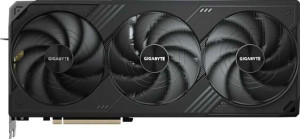
Gigabyte GeForce RTX 5090 WindForce
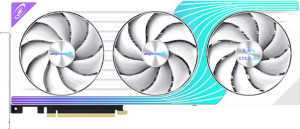
Manli Stellar GeForce RTX 5090 OC

Gigabyte GeForce RTX 5090 WindForce Manli Stellar GeForce RTX 5090 OC

Overview

When two flagship-tier graphics cards share the same Blackwell GPU architecture and 32GB of GDDR7 memory, the differences that set them apart become all the more meaningful. This head-to-head comparison between the Gigabyte GeForce RTX 5090 WindForce and the Manli Stellar GeForce RTX 5090 OC digs into the details that matter most to enthusiast buyers, from raw computational throughput and memory bandwidth to physical dimensions and aesthetic features like RGB lighting.

Common Features

  • Both cards share a base GPU clock speed of 2017 MHz.
  • Both cards have a GPU memory speed of 1750 MHz.
  • Both cards feature 21760 shading units.
  • Both cards include 680 texture mapping units (TMUs).
  • Both cards have 176 render output units (ROPs).
  • Double Precision Floating Point (DPFP) is supported on both cards.
  • Both cards have an effective memory speed of 28000 MHz.
  • Both cards come with 32GB of VRAM.
  • Both cards use GDDR7 memory.
  • Both cards feature a 512-bit memory bus width.
  • ECC memory support is available on both cards.
  • Both cards support DirectX 12 Ultimate.
  • Both cards support OpenGL version 4.6.
  • Both cards support OpenCL version 3.
  • Multi-display technology is supported on both cards.
  • Ray tracing is supported on both cards.
  • 3D support is available on both cards.
  • DLSS support is available on both cards.
  • XeSS (XMX) support is not available on either card.
  • Both cards feature one HDMI 2.1b port and three DisplayPort outputs, with no USB-C, DVI, or mini DisplayPort outputs.
  • Both cards are built on the Blackwell GPU architecture.
  • Both cards have a Thermal Design Power (TDP) of 575W.
  • Both cards use PCIe version 5.
  • Both cards are manufactured on a 5 nm semiconductor process.
  • Both cards contain 92200 million transistors.
  • Air-water cooling is not available on either card.

Main Differences

  • GPU turbo clock speed is 2407 MHz on Gigabyte GeForce RTX 5090 WindForce and 2437 MHz on Manli Stellar GeForce RTX 5090 OC.
  • Pixel rate is 423.6 GPixel/s on Gigabyte GeForce RTX 5090 WindForce and 428.9 GPixel/s on Manli Stellar GeForce RTX 5090 OC.
  • Floating-point performance is 104.8 TFLOPS on Gigabyte GeForce RTX 5090 WindForce and 106.1 TFLOPS on Manli Stellar GeForce RTX 5090 OC.
  • Texture rate is 1637 GTexels/s on Gigabyte GeForce RTX 5090 WindForce and 1657 GTexels/s on Manli Stellar GeForce RTX 5090 OC.
  • Maximum memory bandwidth is 1790 GB/s on Gigabyte GeForce RTX 5090 WindForce and 1792 GB/s on Manli Stellar GeForce RTX 5090 OC.
  • RGB lighting is present on Manli Stellar GeForce RTX 5090 OC but not available on Gigabyte GeForce RTX 5090 WindForce.
  • Width is 342 mm on Gigabyte GeForce RTX 5090 WindForce and 360 mm on Manli Stellar GeForce RTX 5090 OC.
  • Height is 150 mm on Gigabyte GeForce RTX 5090 WindForce and 146 mm on Manli Stellar GeForce RTX 5090 OC.
Specs Comparison
Gigabyte GeForce RTX 5090 WindForce

Gigabyte GeForce RTX 5090 WindForce

Manli Stellar GeForce RTX 5090 OC

Manli Stellar GeForce RTX 5090 OC

Performance:
GPU clock speed 2017 MHz 2017 MHz
GPU turbo 2407 MHz 2437 MHz
pixel rate 423.6 GPixel/s 428.9 GPixel/s
floating-point performance 104.8 TFLOPS 106.1 TFLOPS
texture rate 1637 GTexels/s 1657 GTexels/s
GPU memory speed 1750 MHz 1750 MHz
shading units 21760 21760
texture mapping units (TMUs) 680 680
render output units (ROPs) 176 176
Has Double Precision Floating Point (DPFP)

Both cards are built on the same silicon foundation, sharing identical base clocks of 2017 MHz, memory speeds of 1750 MHz, and the full complement of 21,760 shading units, 680 TMUs, and 176 ROPs. This means the core rendering pipeline and memory subsystem behave identically under normal workloads, and both support Double Precision Floating Point — relevant for GPU-accelerated compute tasks beyond gaming.

The meaningful separation emerges at boost frequency. The Manli Stellar RTX 5090 OC reaches a higher GPU turbo of 2437 MHz versus the Gigabyte WindForce's 2407 MHz — a 30 MHz advantage that directly cascades into every derived throughput metric. The Manli edges ahead with 106.1 TFLOPS of floating-point performance against 104.8 TFLOPS, a 1657 GTexels/s texture rate versus 1637 GTexels/s, and a pixel rate of 428.9 GPixel/s compared to 423.6 GPixel/s. In practice, these gaps are in the 1–1.5% range, meaning real-world frame rate differences will typically fall within benchmark noise.

Based strictly on the provided specs, the Manli Stellar OC holds a narrow but consistent performance edge across every throughput metric due to its higher factory boost clock. For users prioritizing maximum out-of-the-box compute and rendering headroom, the Manli is the technical winner in this group — though the advantage is slim enough that thermal behavior and power delivery (not covered here) will likely matter more in sustained workloads.
Memory:
effective memory speed 28000 MHz 28000 MHz
maximum memory bandwidth 1790 GB/s 1792 GB/s
VRAM 32GB 32GB
GDDR version GDDR7 GDDR7
memory bus width 512-bit 512-bit
Supports ECC memory

The Gigabyte GeForce RTX 5090 WindForce and Manli Stellar GeForce RTX 5090 OC both share identical effective memory speeds of 28000 MHz, along with the same VRAM of 32GB and GDDR7 memory type. Additionally, both cards feature a 512-bit memory bus width and support ECC memory, ensuring stability and error correction.

However, there is a slight difference in maximum memory bandwidth, with the Manli card offering 1792 GB/s, just slightly higher than the Gigabyte's 1790 GB/s. This difference is minimal, but it may have a small impact in memory-intensive tasks.

Overall, the memory specifications of these two cards are very similar, with only a marginal difference in maximum memory bandwidth separating them.

Features:
DirectX version DirectX 12 Ultimate DirectX 12 Ultimate
OpenGL version 4.6 4.6
OpenCL version 3 3
Supports multi-display technology
supports ray tracing
Supports 3D
supports DLSS
has XeSS (XMX)
AMD SAM / Intel Resizable BAR Intel Resizable BAR Intel Resizable BAR
has RGB lighting
supported displays 4 4

The Gigabyte GeForce RTX 5090 WindForce and Manli Stellar GeForce RTX 5090 OC share many features in common. Both cards support DirectX 12 Ultimate, OpenGL 4.6, and OpenCL 3, ensuring compatibility with the latest graphics APIs. They also both support multi-display technology, ray tracing, 3D, and DLSS, making them well-equipped for modern gaming and professional applications.

One key difference between the two cards is the inclusion of RGB lighting on the Manli card, while the Gigabyte card does not have RGB lighting. Additionally, both cards support Intel Resizable BAR, with no mention of AMD SAM support on either card.

Both cards can support up to 4 displays, ensuring a great setup for multi-monitor configurations. Additionally, neither card has XeSS (XMX) support.

Ports:
has an HDMI output
HDMI ports 1 1
HDMI version HDMI 2.1b HDMI 2.1b
DisplayPort outputs 3 3
USB-C ports 0 0
DVI outputs 0 0
mini DisplayPort outputs 0 0

The Gigabyte GeForce RTX 5090 WindForce and Manli Stellar GeForce RTX 5090 OC share identical port configurations. Both cards feature one HDMI output, with an HDMI version of 2.1b, and offer three DisplayPort outputs. Neither card includes USB-C ports, DVI outputs, or mini DisplayPort outputs.

Overall, the two products are exactly the same in terms of available ports, offering the same range of connectivity options for users.

General info:
GPU architecture Blackwell Blackwell
release date January 2025 February 2025
Thermal Design Power (TDP) 575W 575W
PCI Express (PCIe) version 5 5
semiconductor size 5 nm 5 nm
number of transistors 92200 million 92200 million
Has air-water cooling
width 342 mm 360 mm
height 150 mm 146 mm

Both the Gigabyte GeForce RTX 5090 WindForce and the Manli Stellar GeForce RTX 5090 OC feature the same GPU architecture, Blackwell, and are built with a 5 nm semiconductor size. Both cards have the same number of transistors, with 92,200 million transistors, and share a thermal design power (TDP) of 575W. Additionally, both cards support PCI Express version 5 and do not feature air-water cooling.

The cards differ slightly in their physical dimensions. The Gigabyte model is 342 mm in width and 150 mm in height, while the Manli model is slightly wider at 360 mm and a little shorter in height at 146 mm.

Overall, the two cards have very similar specifications, with the main difference being their dimensions, where the Manli card is slightly larger in width but smaller in height compared to the Gigabyte card.

Comparison Summary & Verdict

Both cards are cut from the same silicon cloth, sharing a 575W TDP, a 512-bit memory bus, 32GB of GDDR7 VRAM, and a comprehensive feature set that includes ray tracing, DLSS, and DirectX 12 Ultimate support. However, the distinctions are worth weighing carefully. The Manli Stellar GeForce RTX 5090 OC edges ahead in every performance metric, offering a higher 2437 MHz GPU turbo clock, 106.1 TFLOPS of floating-point performance, and a marginally greater memory bandwidth of 1792 GB/s, alongside RGB lighting for those who value aesthetics. The Gigabyte GeForce RTX 5090 WindForce, meanwhile, is the more physically compact option at just 342 mm wide, making it the smarter pick for builds where case clearance is a concern. Choose the Manli for maximum out-of-the-box performance and visual flair; choose the Gigabyte if a slimmer footprint is your priority.

Gigabyte GeForce RTX 5090 WindForce
Buy Gigabyte GeForce RTX 5090 WindForce if...

Buy the Gigabyte GeForce RTX 5090 WindForce if you have a space-constrained build and need a narrower card at 342 mm wide without sacrificing the core RTX 5090 feature set.

Manli Stellar GeForce RTX 5090 OC
Buy Manli Stellar GeForce RTX 5090 OC if...

Buy the Manli Stellar GeForce RTX 5090 OC if you want the highest turbo clock speed, slightly better performance across all compute metrics, and RGB lighting for a more visually striking build.