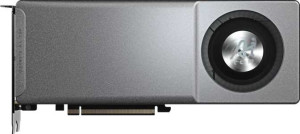
Gigabyte Radeon AI Pro R9700 AI Top
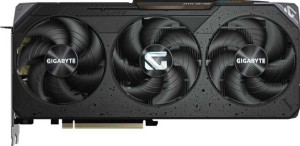
Gigabyte Radeon RX 9070 Gaming OC

Gigabyte Radeon AI Pro R9700 AI Top Gigabyte Radeon RX 9070 Gaming OC

Overview

Welcome to our in-depth specification comparison between the Gigabyte Radeon AI Pro R9700 AI Top and the Gigabyte Radeon RX 9070 Gaming OC. Both cards share the same RDNA 4.0 architecture and PCIe 5 platform, yet they diverge in meaningful ways across raw compute performance, memory capacity, power consumption, and physical design — making this a fascinating head-to-head for different types of buyers.

Common Features

  • Both products have a GPU memory speed of 2518 MHz.
  • Both products have 128 render output units (ROPs).
  • Double Precision Floating Point (DPFP) support is available on both products.
  • Both products use GDDR6 memory.
  • Both products have a 256-bit memory bus width.
  • ECC memory support is available on both products.
  • Both products support DirectX 12 Ultimate.
  • Both products support OpenGL version 4.6.
  • Both products support OpenCL version 2.2.
  • Multi-display technology support is available on both products.
  • Ray tracing support is available on both products.
  • 3D support is available on both products.
  • FSR4 support is available on both products.
  • XeSS (XMX) support is not available on either product.
  • Both products have an HDMI output with HDMI version 2.1b.
  • Neither product has USB-C ports, DVI outputs, or mini DisplayPort outputs.
  • Both products are built on the RDNA 4.0 GPU architecture.
  • Both products use PCI Express (PCIe) version 5.
  • Both products feature 53,900 million transistors.
  • Air-water cooling is not available on either product.

Main Differences

  • GPU base clock speed is 1660 MHz on Gigabyte Radeon AI Pro R9700 AI Top and 1440 MHz on Gigabyte Radeon RX 9070 Gaming OC.
  • GPU turbo clock speed is 2920 MHz on Gigabyte Radeon AI Pro R9700 AI Top and 2700 MHz on Gigabyte Radeon RX 9070 Gaming OC.
  • Pixel rate is 373.8 GPixel/s on Gigabyte Radeon AI Pro R9700 AI Top and 345.6 GPixel/s on Gigabyte Radeon RX 9070 Gaming OC.
  • Floating-point performance is 47.84 TFLOPS on Gigabyte Radeon AI Pro R9700 AI Top and 38.71 TFLOPS on Gigabyte Radeon RX 9070 Gaming OC.
  • Texture rate is 747.5 GTexels/s on Gigabyte Radeon AI Pro R9700 AI Top and 604.8 GTexels/s on Gigabyte Radeon RX 9070 Gaming OC.
  • Shading units total 4096 on Gigabyte Radeon AI Pro R9700 AI Top and 3584 on Gigabyte Radeon RX 9070 Gaming OC.
  • Texture mapping units (TMUs) number 256 on Gigabyte Radeon AI Pro R9700 AI Top and 224 on Gigabyte Radeon RX 9070 Gaming OC.
  • Effective memory speed is 20100 MHz on Gigabyte Radeon AI Pro R9700 AI Top and 20000 MHz on Gigabyte Radeon RX 9070 Gaming OC.
  • Maximum memory bandwidth is 640 GB/s on Gigabyte Radeon AI Pro R9700 AI Top and 644.6 GB/s on Gigabyte Radeon RX 9070 Gaming OC.
  • VRAM is 32 GB on Gigabyte Radeon AI Pro R9700 AI Top and 16 GB on Gigabyte Radeon RX 9070 Gaming OC.
  • AMD SAM is supported on Gigabyte Radeon AI Pro R9700 AI Top, while Intel Resizable BAR is supported on Gigabyte Radeon RX 9070 Gaming OC.
  • RGB lighting is present on Gigabyte Radeon RX 9070 Gaming OC but not available on Gigabyte Radeon AI Pro R9700 AI Top.
  • HDMI port count is 1 on Gigabyte Radeon AI Pro R9700 AI Top and 2 on Gigabyte Radeon RX 9070 Gaming OC.
  • DisplayPort outputs number 3 on Gigabyte Radeon AI Pro R9700 AI Top and 2 on Gigabyte Radeon RX 9070 Gaming OC.
  • Thermal Design Power (TDP) is 300W on Gigabyte Radeon AI Pro R9700 AI Top and 220W on Gigabyte Radeon RX 9070 Gaming OC.
  • Semiconductor size is 4 nm on Gigabyte Radeon AI Pro R9700 AI Top and 5 nm on Gigabyte Radeon RX 9070 Gaming OC.
  • Card width is 267 mm on Gigabyte Radeon AI Pro R9700 AI Top and 288 mm on Gigabyte Radeon RX 9070 Gaming OC.
  • Card height is 111 mm on Gigabyte Radeon AI Pro R9700 AI Top and 132 mm on Gigabyte Radeon RX 9070 Gaming OC.
Specs Comparison
Gigabyte Radeon AI Pro R9700 AI Top

Gigabyte Radeon AI Pro R9700 AI Top

Gigabyte Radeon RX 9070 Gaming OC

Gigabyte Radeon RX 9070 Gaming OC

Performance:
GPU clock speed 1660 MHz 1440 MHz
GPU turbo 2920 MHz 2700 MHz
pixel rate 373.8 GPixel/s 345.6 GPixel/s
floating-point performance 47.84 TFLOPS 38.71 TFLOPS
texture rate 747.5 GTexels/s 604.8 GTexels/s
GPU memory speed 2518 MHz 2518 MHz
shading units 4096 3584
texture mapping units (TMUs) 256 224
render output units (ROPs) 128 128
Has Double Precision Floating Point (DPFP)

The Radeon AI Pro R9700 AI Top holds a meaningful clock speed advantage over the RX 9070 Gaming OC, with a base clock of 1660 MHz versus 1440 MHz and a turbo of 2920 MHz versus 2700 MHz. In practice, a higher sustained turbo clock directly translates to faster shader execution and snappier frame delivery, particularly in workloads that keep the GPU fully saturated.

The shader and texture hardware gap reinforces this edge. The AI Pro R9700 carries 4096 shading units and 256 TMUs compared to the RX 9070's 3584 shading units and 224 TMUs — a roughly 14% increase in both. Combined with the clock advantage, this pushes the AI Pro R9700's texture throughput to 747.5 GTexels/s versus 604.8 GTexels/s, and floating-point performance to 47.84 TFLOPS versus 38.71 TFLOPS. That ~23% TFLOPS gap is significant: it means the AI Pro R9700 can process substantially more geometry, shading, and compute tasks per second, which matters both in high-resolution gaming and in AI or creative compute workloads. Pixel fill rate follows a similar pattern, though the ROP count is identical at 128 ROPs on both cards, meaning the pixel rate difference is driven purely by clocks.

Both cards share the same 2518 MHz memory speed and both support Double Precision Floating Point (DPFP), so neither has an advantage in memory bandwidth or FP64 compute capability. Overall, the AI Pro R9700 AI Top has a clear performance edge in this group across nearly every compute and throughput metric, making it the stronger card for users who need maximum shader and AI compute performance.

Memory:
effective memory speed 20100 MHz 20000 MHz
maximum memory bandwidth 640 GB/s 644.6 GB/s
VRAM 32GB 16GB
GDDR version GDDR6 GDDR6
memory bus width 256-bit 256-bit
Supports ECC memory

The most striking difference in this group is VRAM capacity: the AI Pro R9700 AI Top ships with 32GB of GDDR6, exactly double the 16GB found on the RX 9070 Gaming OC. For gaming alone, 16GB is comfortably sufficient at even 4K resolutions today, but 32GB opens the door to large AI model inference, professional creative workloads, and future-proofing against increasingly texture-heavy games and applications. This doubling of VRAM is the single most meaningful differentiator in the memory category.

Interestingly, the bandwidth figures are nearly identical and even slightly favor the RX 9070 Gaming OC at 644.6 GB/s versus 640 GB/s — a negligible real-world difference. Both cards use a 256-bit memory bus and GDDR6, so the architectural foundation is the same. The effective memory speeds are also functionally equivalent at roughly 20,000 MHz, meaning neither card has a throughput advantage once data is already in the frame buffer.

Both cards support ECC memory, which is noteworthy — error-correcting memory reduces data corruption risk in compute and AI workloads, a feature more commonly associated with professional or workstation-class hardware. On balance, the AI Pro R9700 AI Top clearly wins this group, primarily on the strength of its 32GB VRAM, which positions it for workloads that the RX 9070 Gaming OC simply cannot sustain at high model or asset sizes.

Features:
DirectX version DirectX 12 Ultimate DirectX 12 Ultimate
OpenGL version 4.6 4.6
OpenCL version 2.2 2.2
Supports multi-display technology
supports ray tracing
Supports 3D
has FSR4
has XeSS (XMX)
AMD SAM / Intel Resizable BAR AMD SAM Intel Resizable BAR
has LHR
has RGB lighting
supported displays 4 4

Across the core feature set, these two cards are remarkably well-matched. Both support DirectX 12 Ultimate, ray tracing, FSR4, and up to 4 simultaneous displays, so neither has an advantage in API compatibility, upscaling technology, or multi-monitor flexibility. The shared OpenCL 2.2 and OpenGL 4.6 support further confirms that both cards operate on the same software foundation for compute and legacy graphics workloads.

The only functional differentiator worth noting is the resizable BAR implementation: the AI Pro R9700 AI Top lists AMD SAM while the RX 9070 Gaming OC lists Intel Resizable BAR. In practice, both are implementations of the same PCIe specification that allows the CPU to access the full GPU frame buffer at once, improving performance in supported games. The labeling difference reflects platform targeting rather than a capability gap — neither card holds a meaningful advantage here.

Where the cards diverge cosmetically: the RX 9070 Gaming OC includes RGB lighting, while the AI Pro R9700 does not. For a workstation or professional environment, the absence of RGB on the AI Top is arguably a feature in itself. Overall, this group is essentially a tie — both cards share every functionally significant feature, and the differences that do exist come down to platform branding and aesthetics rather than capability.

Ports:
has an HDMI output
HDMI ports 1 2
HDMI version HDMI 2.1b HDMI 2.1b
DisplayPort outputs 3 2
USB-C ports 0 0
DVI outputs 0 0
mini DisplayPort outputs 0 0

Both cards top out at four total display outputs and use the same HDMI 2.1b standard, so peak bandwidth and resolution capability per port is identical. The difference lies entirely in how that count is divided: the AI Pro R9700 AI Top offers 1 HDMI + 3 DisplayPort, while the RX 9070 Gaming OC goes 2 HDMI + 2 DisplayPort. Neither configuration is objectively superior — the right choice depends entirely on the displays a user owns.

The RX 9070 Gaming OC's dual-HDMI layout is a practical advantage for users connecting two HDMI-native devices simultaneously — such as a TV and a gaming monitor — without needing an adapter. Conversely, the AI Pro R9700's three DisplayPort outputs better serve multi-monitor workstation setups, where DisplayPort daisy-chaining and higher-end professional displays are more common.

Since total output count, maximum supported displays, and port version are all equal, this group is a contextual tie. The RX 9070 Gaming OC has a slight edge for living-room or mixed HDMI environments, while the AI Pro R9700 AI Top is better suited to DisplayPort-heavy professional desk setups — but neither card is at a disadvantage in absolute terms.

General info:
GPU architecture RDNA 4.0 RDNA 4.0
release date July 2025 March 2025
Thermal Design Power (TDP) 300W 220W
PCI Express (PCIe) version 5 5
semiconductor size 4 nm 5 nm
number of transistors 53900 million 53900 million
Has air-water cooling
width 267 mm 288 mm
height 111 mm 132 mm

Both cards are built on the same RDNA 4.0 architecture and connect via PCIe 5.0, so the generational foundation is identical. Notably, they also share the exact same transistor count of 53,900 million, which confirms they are built around the same die. The key difference at the silicon level is process node: the AI Pro R9700 AI Top uses a 4 nm process versus 5 nm on the RX 9070 Gaming OC. A smaller node generally allows for higher clock speeds or improved power efficiency at equivalent performance — context that helps explain how the AI Top achieves its higher turbo clocks seen in the Performance group.

The TDP gap is the most practically significant differentiator here. At 300W, the AI Pro R9700 demands notably more from a system's power supply and cooling compared to the RX 9070 Gaming OC's 220W. That 80W difference means higher electricity consumption over time and a greater heat load inside the case — relevant for users in small form factor builds or those with tightly specced PSUs. Neither card offers liquid cooling as an option, so both rely entirely on air cooling to manage their respective thermal envelopes.

Physical dimensions tell an interesting story: despite its higher power draw, the AI Pro R9700 AI Top is actually the more compact card at 267 × 111 mm, while the RX 9070 Gaming OC measures a larger 288 × 132 mm. For case compatibility, the AI Top is easier to fit. Overall, this group has no single clear winner — the RX 9070 Gaming OC has a meaningful advantage in power efficiency and physical size, while the AI Pro R9700 AI Top benefits from the more advanced process node.

Comparison Summary & Verdict

After examining all the specifications, a clear picture emerges for each card. The Gigabyte Radeon AI Pro R9700 AI Top stands out with its superior 32 GB of VRAM, higher shading unit count of 4096, and stronger floating-point performance at 47.84 TFLOPS, making it the obvious choice for professional workloads, AI tasks, and content creation that demand large memory buffers and peak compute throughput — albeit at a higher 300W TDP. The Gigabyte Radeon RX 9070 Gaming OC, on the other hand, offers a more power-efficient 220W envelope, RGB lighting, dual HDMI outputs, and a competitive 16 GB of GDDR6 memory, positioning it as a well-rounded option for mainstream gaming rigs. Both cards support ray tracing, FSR4, and DirectX 12 Ultimate, so neither compromises on modern feature parity. Your decision ultimately comes down to whether you need professional-grade memory and compute headroom or an efficient, feature-rich gaming GPU.

Gigabyte Radeon AI Pro R9700 AI Top
Buy Gigabyte Radeon AI Pro R9700 AI Top if...

Buy the Gigabyte Radeon AI Pro R9700 AI Top if you need 32 GB of VRAM and maximum compute performance for AI, professional, or memory-intensive workloads.

Gigabyte Radeon RX 9070 Gaming OC
Buy Gigabyte Radeon RX 9070 Gaming OC if...

Buy the Gigabyte Radeon RX 9070 Gaming OC if you want a power-efficient gaming GPU with RGB lighting and dual HDMI outputs at a lower 220W TDP.