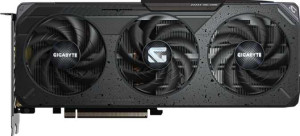
Gigabyte Radeon RX 9060 XT Gaming 16GB
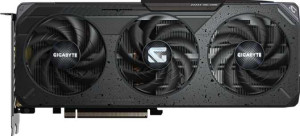
Gigabyte Radeon RX 9060 XT Gaming OC 16GB

Gigabyte Radeon RX 9060 XT Gaming 16GB Gigabyte Radeon RX 9060 XT Gaming OC 16GB

Overview

Welcome to our detailed specification comparison between the Gigabyte Radeon RX 9060 XT Gaming 16GB and the Gigabyte Radeon RX 9060 XT Gaming OC 16GB. Both cards share the same RDNA 4.0 architecture, 16GB of GDDR6 memory, and a 160W TDP, making this a closely contested matchup. The key battlegrounds in this comparison revolve around clock speeds and resulting compute throughput, where the two cards take noticeably different positions despite their otherwise identical hardware foundations.

Common Features

  • GPU memory speed is 2518 MHz on both products.
  • Both products have 2048 shading units.
  • Both products have 128 texture mapping units (TMUs).
  • Both products have 64 render output units (ROPs).
  • Double Precision Floating Point (DPFP) is supported on both products.
  • Effective memory speed is 20000 MHz on both products.
  • Maximum memory bandwidth is 322.3 GB/s on both products.
  • Both products feature 16GB of VRAM.
  • Both products use GDDR6 memory.
  • Memory bus width is 128-bit on both products.
  • ECC memory is supported on both products.
  • Both products support DirectX 12 Ultimate.
  • OpenGL version 4.6 is available on both products.
  • OpenCL version 2.2 is available on both products.
  • Multi-display technology is supported on both products.
  • Ray tracing is supported on both products.
  • 3D support is available on both products.
  • DLSS is not supported on either product.
  • FSR4 is available on both products.
  • Both products have one HDMI 2.1b output and two DisplayPort outputs, with no USB-C or DVI outputs.
  • Both products are built on the RDNA 4.0 architecture.
  • Thermal Design Power (TDP) is 160W on both products.
  • Both products use PCIe version 5.
  • Both products are manufactured on a 4 nm process with 29700 million transistors.
  • Neither product features air-water cooling.
  • Both products share the same dimensions of 281 mm width and 118 mm height.

Main Differences

  • GPU base clock speed is 1700 MHz on Gigabyte Radeon RX 9060 XT Gaming 16GB and 1900 MHz on Gigabyte Radeon RX 9060 XT Gaming OC 16GB.
  • GPU turbo clock speed is 3230 MHz on Gigabyte Radeon RX 9060 XT Gaming 16GB and 3320 MHz on Gigabyte Radeon RX 9060 XT Gaming OC 16GB.
  • Pixel rate is 206.7 GPixel/s on Gigabyte Radeon RX 9060 XT Gaming 16GB and 212.5 GPixel/s on Gigabyte Radeon RX 9060 XT Gaming OC 16GB.
  • Floating-point performance is 26.46 TFLOPS on Gigabyte Radeon RX 9060 XT Gaming 16GB and 27.2 TFLOPS on Gigabyte Radeon RX 9060 XT Gaming OC 16GB.
  • Texture rate is 413.4 GTexels/s on Gigabyte Radeon RX 9060 XT Gaming 16GB and 425 GTexels/s on Gigabyte Radeon RX 9060 XT Gaming OC 16GB.
Specs Comparison
Gigabyte Radeon RX 9060 XT Gaming 16GB

Gigabyte Radeon RX 9060 XT Gaming 16GB

Gigabyte Radeon RX 9060 XT Gaming OC 16GB

Gigabyte Radeon RX 9060 XT Gaming OC 16GB

Performance:
GPU clock speed 1700 MHz 1900 MHz
GPU turbo 3230 MHz 3320 MHz
pixel rate 206.7 GPixel/s 212.5 GPixel/s
floating-point performance 26.46 TFLOPS 27.2 TFLOPS
texture rate 413.4 GTexels/s 425 GTexels/s
GPU memory speed 2518 MHz 2518 MHz
shading units 2048 2048
texture mapping units (TMUs) 128 128
render output units (ROPs) 64 64
Has Double Precision Floating Point (DPFP)

Both cards share the same fundamental silicon: identical 2048 shading units, 128 TMUs, and 64 ROPs, meaning their theoretical throughput ceiling is set by the same hardware. The real differentiator lies entirely in clock speeds. The Gaming OC ships with a higher base clock of 1900 MHz versus 1700 MHz on the standard Gaming, and its turbo ceiling reaches 3320 MHz compared to 3230 MHz — a gap of 90 MHz at peak. In practice, the base clock delta matters more than it looks: a 200 MHz higher floor means the OC variant sustains elevated performance even in thermally constrained or power-limited scenarios where a card cannot always boost to its ceiling.

Those clock advantages translate directly into every throughput metric. The OC edges ahead with 27.2 TFLOPS of floating-point performance versus 26.46 TFLOPS, a roughly 2.8% lead. Similarly, its texture rate of 425 GTexels/s and pixel fill rate of 212.5 GPixel/s outpace the standard model′s 413.4 GTexels/s and 206.7 GPixel/s. In real-world rendering, this translates to a small but consistent frame-rate advantage across rasterized workloads — particularly in texture-heavy or high-resolution scenes. Memory bandwidth is a non-factor here, as both cards run their VRAM at an identical 2518 MHz.

The Gaming OC holds a clear, if modest, performance edge in this group. The gains are proportional — roughly 2–3% across the board — which is unlikely to be transformative at any given resolution, but is real and consistent. For users choosing strictly on performance, the OC variant wins. The standard Gaming is not slower by any architectural shortcoming; it simply runs the same chip at a more conservative clock profile.
Memory:
effective memory speed 20000 MHz 20000 MHz
maximum memory bandwidth 322.3 GB/s 322.3 GB/s
VRAM 16GB 16GB
GDDR version GDDR6 GDDR6
memory bus width 128-bit 128-bit
Supports ECC memory

On memory, there is nothing to separate these two cards — every single spec is identical. Both carry 16GB of GDDR6 running at an effective 20000 MHz across a 128-bit bus, yielding 322.3 GB/s of peak memory bandwidth. That bandwidth figure is a practical ceiling for how fast either card can feed its GPU cores with data, and since both share it equally, neither has a pipeline advantage in memory-bound scenarios.

The 128-bit bus width is worth contextualizing: it is narrower than what higher-end GPUs offer, so the 20 Gbps GDDR6 speed is doing real work to compensate. The resulting 322 GB/s is a respectable figure for this market segment and should be sufficient for 1080p and 1440p gaming without becoming a bottleneck in typical workloads. The 16GB VRAM capacity is a genuine strength here — it provides substantial headroom for high-resolution texture packs, modern titles with aggressive VRAM usage, and future-proofing against increasingly demanding games. ECC memory support is present on both, though it is rarely a deciding factor for gaming use cases.

This group is a straightforward tie. Choosing between the Gaming and Gaming OC based on memory specs alone is impossible — the subsystem is, in every measurable way, the same on both cards.

Features:
DirectX version DirectX 12 Ultimate DirectX 12 Ultimate
OpenGL version 4.6 4.6
OpenCL version 2.2 2.2
Supports multi-display technology
supports ray tracing
Supports 3D
supports DLSS
has FSR4
has XeSS (XMX)
AMD SAM / Intel Resizable BAR AMD SAM AMD SAM
has LHR
has RGB lighting
supported displays 3 3

Feature parity is absolute here — the Gaming and Gaming OC are identical in every category. Both support DirectX 12 Ultimate, which is the relevant API ceiling for modern PC gaming and unlocks hardware-level ray tracing, mesh shaders, and variable rate shading. Speaking of which, ray tracing support is confirmed on both, meaning users get access to hardware-accelerated lighting and shadow effects in compatible titles rather than relying on slower software fallbacks.

The upscaling picture is worth unpacking. Neither card supports DLSS — that remains exclusive to Nvidia hardware — but both carry FSR4, AMD′s latest upscaling generation. FSR4 represents a meaningful step forward for AMD′s upscaling quality and is the primary tool these cards will use to boost frame rates at higher resolutions. The absence of XeSS (XMX) is a minor footnote; FSR4 covers the same functional ground for this use case. AMD SAM (Smart Access Memory) support is also present on both, which can yield tangible CPU-to-GPU bandwidth improvements on compatible AMD platforms.

With a 3-display limit and RGB lighting included on both, even the peripheral feature set is a wash. This group is a definitive tie — a buyer choosing between these two cards gets precisely the same software ecosystem, API support, and feature set regardless of which variant they select.

Ports:
has an HDMI output
HDMI ports 1 1
HDMI version HDMI 2.1b HDMI 2.1b
DisplayPort outputs 2 2
USB-C ports 0 0
DVI outputs 0 0
mini DisplayPort outputs 0 0

Connectivity is identical across both cards. Each offers 1 HDMI 2.1b port and 2 DisplayPort outputs, totaling three physical connections — consistent with the 3-display limit noted in the features group. The absence of USB-C, DVI, or mini DisplayPort outputs is the same on both, so neither card offers a layout advantage for users with specific cable or adapter requirements.

HDMI 2.1b is the headline here for shared context: it supports high refresh rates at 4K and beyond, along with Variable Refresh Rate (VRR) over HDMI — relevant for users connecting to modern TVs rather than monitors. The dual DisplayPort outputs round out a practical, if conservative, rear I/O that covers the vast majority of monitor setups without redundancy.

Another clean tie. The port configuration is a straight copy between the Gaming and Gaming OC, leaving no basis for differentiation in this group.

General info:
GPU architecture RDNA 4.0 RDNA 4.0
release date June 2025 June 2025
Thermal Design Power (TDP) 160W 160W
PCI Express (PCIe) version 5 5
semiconductor size 4 nm 4 nm
number of transistors 29700 million 29700 million
Has air-water cooling
width 281 mm 281 mm
height 118 mm 118 mm

At the foundational level, these two cards are built from the same cloth. Both are based on the RDNA 4.0 architecture fabricated on a 4nm process node, packing 29.7 billion transistors into identical physical dimensions of 281 × 118 mm. The 4nm node is significant context: it enables higher transistor density and improved power efficiency compared to older process generations, which is part of why AMD can deliver competitive performance within a contained power envelope.

That power envelope — a 160W TDP shared by both variants — is a notable data point. It means the Gaming OC achieves its higher clock speeds from the Performance group without drawing any additional power budget, at least by rated specification. Both cards also use PCIe 5.0, the current-generation interface, ensuring maximum CPU-to-GPU bandwidth headroom on compatible platforms, though real-world gains over PCIe 4.0 are marginal at this performance tier.

This group is a tie in every respect. Same silicon, same process, same physical footprint, same TDP — the Gaming OC squeezes more clock speed out of an identical platform, but nothing in this spec group differentiates the two cards for a buyer evaluating build compatibility, case clearance, or system power requirements.

Comparison Summary & Verdict

After a thorough review of all available specifications, both the Gigabyte Radeon RX 9060 XT Gaming 16GB and the Gigabyte Radeon RX 9060 XT Gaming OC 16GB prove to be highly capable cards built on the same solid foundation: identical 16GB GDDR6 memory, a 128-bit bus with 322.3 GB/s bandwidth, full DirectX 12 Ultimate and ray tracing support, and FSR4 compatibility. The OC variant pulls ahead with a higher base clock of 1900 MHz and a turbo of 3320 MHz, translating into a floating-point performance advantage of 27.2 TFLOPS vs 26.46 TFLOPS and a superior texture rate of 425 GTexels/s. The standard Gaming card, clocked at 1700 MHz base and 3230 MHz turbo, still delivers very competitive performance at what is typically a lower price point. Choose the Gaming OC if you want every last frame squeezed out of the hardware; choose the standard Gaming edition if value-per-dollar is your primary concern.

Gigabyte Radeon RX 9060 XT Gaming 16GB
Buy Gigabyte Radeon RX 9060 XT Gaming 16GB if...

Buy the Gigabyte Radeon RX 9060 XT Gaming 16GB if you want a cost-effective entry into the RX 9060 XT lineup and are comfortable with slightly lower clock speeds and compute throughput in exchange for better value.

Gigabyte Radeon RX 9060 XT Gaming OC 16GB
Buy Gigabyte Radeon RX 9060 XT Gaming OC 16GB if...

Buy the Gigabyte Radeon RX 9060 XT Gaming OC 16GB if you want the maximum out-of-the-box performance the RX 9060 XT can offer, with higher base and turbo clocks, a better pixel rate, and superior floating-point throughput.