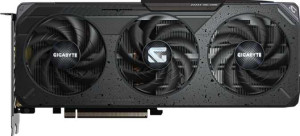
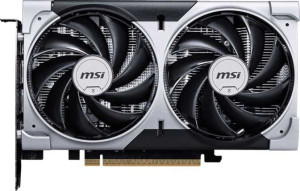
Where these two cards diverge most meaningfully in features is upscaling support. The MSI RTX 5060 supports DLSS, Nvidia's AI-driven upscaling technology, while the RX 9060 XT does not — and neither card supports XeSS. DLSS is broadly integrated across modern game titles and can deliver substantial frame rate gains with minimal perceived image quality loss, particularly at higher resolutions. Its absence on the RX 9060 XT means that card relies on AMD's own upscaling ecosystem (such as FSR), which, while widely available, is not listed in the provided specs for this group and therefore not a factor here. For users who heavily lean on upscaling to boost performance in supported titles, this is a real functional gap in favor of the RTX 5060.
The RTX 5060 also supports one additional display, accommodating up to 4 simultaneous outputs versus 3 on the RX 9060 XT. For multi-monitor productivity setups or enthusiasts running triple-display gaming rigs alongside a reference monitor, that extra output adds genuine flexibility. On the software API side, the RTX 5060 edges ahead with OpenCL 3 compared to the RX 9060 XT's OpenCL 2.2 — a newer version that exposes additional compute capabilities relevant to GPU-accelerated professional and scientific applications. Both cards are otherwise well-matched on foundational compatibility, sharing DirectX 12 Ultimate, OpenGL 4.6, ray tracing support, and multi-display capability.
The RX 9060 XT's only exclusive feature in this group is RGB lighting, which is purely aesthetic. Taken together, the RTX 5060 holds a clearer overall edge in features — its DLSS support, higher display count, and newer OpenCL version represent tangible functional advantages, while the RX 9060 XT offers nothing in this group that compensates from a capability standpoint.