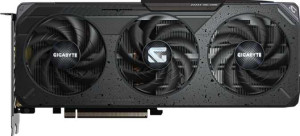
Gigabyte Radeon RX 9060 XT Gaming 16GB
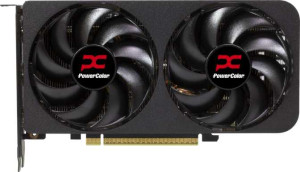
PowerColor Reaper Radeon RX 9060 XT 16GB

Gigabyte Radeon RX 9060 XT Gaming 16GB PowerColor Reaper Radeon RX 9060 XT 16GB

Overview

Comparing the Gigabyte Radeon RX 9060 XT Gaming 16GB and the PowerColor Reaper Radeon RX 9060 XT 16GB is a fascinating exercise, as both cards share the same RDNA 4.0 foundation and identical core performance specs. Yet differences in physical dimensions and aesthetic design choices mean the right pick depends heavily on your specific build requirements. Read on to discover how these two RX 9060 XT variants compare across every key specification.

Common Features

  • Both cards have a base GPU clock speed of 1700 MHz.
  • Both cards have a GPU turbo clock speed of 3230 MHz.
  • Both cards deliver a pixel rate of 206.7 GPixel/s.
  • Both cards offer a floating-point performance of 26.46 TFLOPS.
  • Both cards have a texture rate of 413.4 GTexels/s.
  • Both cards have a GPU memory speed of 2518 MHz.
  • Both cards include 2048 shading units.
  • Both cards include 128 texture mapping units (TMUs).
  • Both cards come with 16GB of VRAM.
  • Both cards use GDDR6 memory.
  • Both cards have an effective memory speed of 20000 MHz.
  • Both cards provide a maximum memory bandwidth of 322.3 GB/s.
  • Both cards use a 128-bit memory bus width.
  • ECC memory is supported on both cards.
  • Both cards support DirectX 12 Ultimate.
  • Both cards support OpenGL version 4.6.
  • Both cards support OpenCL version 2.2.
  • Multi-display technology is supported on both cards.
  • Ray tracing is supported on both cards.
  • 3D support is available on both cards.
  • DLSS is not supported on either card.
  • FSR4 is available on both cards.
  • Both cards include one HDMI 2.1b output.
  • Both cards include two DisplayPort outputs.
  • Neither card has USB-C or DVI outputs.
  • Both cards are built on the RDNA 4.0 GPU architecture.
  • Both cards have a Thermal Design Power (TDP) of 160W.
  • Both cards use PCIe version 5.
  • Both cards are manufactured on a 4 nm process.
  • Both cards contain 29700 million transistors.
  • Neither card uses air-water cooling.

Main Differences

  • RGB lighting is present on the Gigabyte Radeon RX 9060 XT Gaming 16GB but not available on the PowerColor Reaper Radeon RX 9060 XT 16GB.
  • The width is 281 mm on the Gigabyte Radeon RX 9060 XT Gaming 16GB and 220 mm on the PowerColor Reaper Radeon RX 9060 XT 16GB.
  • The height is 118 mm on the Gigabyte Radeon RX 9060 XT Gaming 16GB and 120 mm on the PowerColor Reaper Radeon RX 9060 XT 16GB.
Specs Comparison
Gigabyte Radeon RX 9060 XT Gaming 16GB

Gigabyte Radeon RX 9060 XT Gaming 16GB

PowerColor Reaper Radeon RX 9060 XT 16GB

PowerColor Reaper Radeon RX 9060 XT 16GB

Performance:
GPU clock speed 1700 MHz 1700 MHz
GPU turbo 3230 MHz 3230 MHz
pixel rate 206.7 GPixel/s 206.7 GPixel/s
floating-point performance 26.46 TFLOPS 26.46 TFLOPS
texture rate 413.4 GTexels/s 413.4 GTexels/s
GPU memory speed 2518 MHz 2518 MHz
shading units 2048 2048
texture mapping units (TMUs) 128 128
render output units (ROPs) 64 64
Has Double Precision Floating Point (DPFP)

When comparing the Performance specs of the Gigabyte Radeon RX 9060 XT Gaming 16GB and the PowerColor Reaper Radeon RX 9060 XT 16GB, the data tells a straightforward story: these two cards are built on an identical performance foundation. Both share a base GPU clock of 1700 MHz and a peak turbo of 3230 MHz, meaning neither card will boost higher or sustain clocks more aggressively than the other at the silicon level.

Digging into the throughput figures reinforces this parity. Both deliver 26.46 TFLOPS of floating-point performance, a pixel rate of 206.7 GPixel/s, and a texture rate of 413.4 GTexels/s — numbers that stem directly from the identical shader count of 2048 units, 128 TMUs, and 64 ROPs. Memory bandwidth potential is also matched, with both running at 2518 MHz VRAM speed. Even the presence of Double Precision Floating Point (DPFP) support is shared, which is relevant for compute workloads and certain professional applications, though less critical for pure gaming.

In terms of raw Performance specs, these two cards are in a complete tie. Neither holds any measurable GPU performance advantage over the other. For buyers deciding between them, performance is not a differentiating factor — the decision should come down to other spec groups such as cooling design, dimensions, power delivery, or price.

Memory:
effective memory speed 20000 MHz 20000 MHz
maximum memory bandwidth 322.3 GB/s 322.3 GB/s
VRAM 16GB 16GB
GDDR version GDDR6 GDDR6
memory bus width 128-bit 128-bit
Supports ECC memory

The memory subsystem is often what separates a capable mid-range card from one that struggles at higher resolutions and with modern, texture-heavy titles. Both the Gigabyte RX 9060 XT Gaming and the PowerColor Reaper RX 9060 XT arrive with 16GB of GDDR6 VRAM — a generous allocation for this class of GPU that future-proofs the cards against increasingly VRAM-hungry games and creative workloads.

Running across a 128-bit memory bus at an effective speed of 20000 MHz, both cards achieve a peak bandwidth of 322.3 GB/s. That bus width is a common limitation at this tier, but the high clock rate compensates meaningfully, keeping bandwidth competitive for 1080p and 1440p workloads. Both also support ECC memory, a feature typically associated with professional and compute-oriented use cases, adding a layer of data integrity assurance that most gaming-focused buyers won't need but won't be penalized for having.

Across every memory specification — capacity, speed, bandwidth, bus width, and ECC support — these two cards are an exact match. Memory is not a differentiating factor here, and neither card holds any advantage over the other in this category.

Features:
DirectX version DirectX 12 Ultimate DirectX 12 Ultimate
OpenGL version 4.6 4.6
OpenCL version 2.2 2.2
Supports multi-display technology
supports ray tracing
Supports 3D
supports DLSS
has FSR4
has XeSS (XMX)
AMD SAM / Intel Resizable BAR AMD SAM AMD SAM
has LHR
has RGB lighting
supported displays 3 3

At the software and API level, these two cards are virtually inseparable. Both support DirectX 12 Ultimate and ray tracing, meaning users get access to the full suite of modern rendering features — hardware-accelerated ray tracing, mesh shaders, and variable-rate shading — without compromise on either card. FSR4 support is also shared, which is significant: AMD's latest upscaling generation delivers a meaningful image quality leap over its predecessors and helps maintain high framerates at elevated resolutions. The absence of DLSS on both is expected for AMD hardware and is not a disadvantage specific to either card.

Both cards also support AMD SAM (Smart Access Memory), which allows a compatible AMD CPU to access the full VRAM pool directly, unlocking a tangible performance uplift in SAM-optimized titles. Multi-display support across up to 3 simultaneous displays is identical as well, making neither card more appealing for productivity or sim-racing multi-monitor setups than the other.

The sole differentiator in this group comes down to aesthetics: the Gigabyte RX 9060 XT Gaming includes RGB lighting, while the PowerColor Reaper does not. This gives the Gigabyte card a minor edge for users building inside windowed cases who value customizable lighting — but it carries zero functional or performance significance. Buyers who are indifferent to RGB will find no meaningful feature advantage on either side.

Ports:
has an HDMI output
HDMI ports 1 1
HDMI version HDMI 2.1b HDMI 2.1b
DisplayPort outputs 2 2
USB-C ports 0 0
DVI outputs 0 0
mini DisplayPort outputs 0 0

Both the Gigabyte RX 9060 XT Gaming and the PowerColor Reaper RX 9060 XT offer an identical port layout: one HDMI 2.1b output and two DisplayPort outputs, totaling three display connections — which aligns with the three-display maximum established in the Features group. HDMI 2.1b is the latest revision of the standard, supporting high refresh rates at 4K and beyond, making it well-suited for modern gaming monitors and TVs alike.

Neither card includes a USB-C output, which means users hoping to connect a USB-C or Thunderbolt display directly will need an active adapter. The absence of legacy DVI and mini DisplayPort outputs is unsurprising at this product tier and generation, and unlikely to affect most buyers. The three-port total does, however, cover the vast majority of single, dual, and triple-monitor configurations without requiring a hub or splitter.

Port connectivity is a complete tie between these two cards. The layout is practical and modern, and since neither card deviates from the other in any respect here, this category offers no basis for choosing one over the other.

General info:
GPU architecture RDNA 4.0 RDNA 4.0
release date June 2025 June 2025
Thermal Design Power (TDP) 160W 160W
PCI Express (PCIe) version 5 5
semiconductor size 4 nm 4 nm
number of transistors 29700 million 29700 million
Has air-water cooling
width 281 mm 220 mm
height 118 mm 120 mm

Sharing the same RDNA 4.0 architecture, 4 nm fabrication process, and 29.7 billion transistors, both cards draw from an identical silicon foundation. A 160W TDP is quite efficient for this performance tier, and with PCIe 5.0 support, neither card will face any bandwidth bottleneck on modern motherboards — though PCIe 4.0 systems will also run these cards without meaningful performance loss.

The only meaningful split in this group is physical size. The Gigabyte RX 9060 XT Gaming measures 281 mm in length, while the PowerColor Reaper comes in notably more compact at 220 mm — a difference of 61 mm that is significant in practice. That extra length on the Gigabyte card may cause clearance issues in smaller mid-tower or mini-ITX cases, whereas the PowerColor's shorter footprint makes it a considerably more flexible option for compact builds. Height is essentially the same at 118 mm vs 120 mm, so that dimension is a non-factor.

For users building in a full-size tower, the size difference is unlikely to matter. But for anyone working with a smaller enclosure or tight GPU clearance, the PowerColor Reaper holds a clear physical advantage with its more compact 220 mm length — making it the more versatile choice from a general build compatibility standpoint.

Comparison Summary & Verdict

Both the Gigabyte Radeon RX 9060 XT Gaming 16GB and the PowerColor Reaper Radeon RX 9060 XT 16GB deliver the exact same 26.46 TFLOPS of floating-point performance, 16GB of GDDR6 memory, and full support for ray tracing, FSR4, and DirectX 12 Ultimate — making performance a non-factor in this matchup. The decision comes down to form factor and aesthetics. The PowerColor Reaper at 220 mm wide is the clear winner for compact or small form factor builds where space is at a premium. The Gigabyte Gaming card, at 281 mm, is the better fit for standard mid-tower or full-tower cases, and its RGB lighting makes it the preferred choice for builders who care about a visually striking system. Neither card is objectively superior — your ideal pick is determined entirely by your case size and personal preference for lighting.

Gigabyte Radeon RX 9060 XT Gaming 16GB
Buy Gigabyte Radeon RX 9060 XT Gaming 16GB if...

Buy the Gigabyte Radeon RX 9060 XT Gaming 16GB if you want RGB lighting in your build and your case comfortably accommodates a 281 mm card.

PowerColor Reaper Radeon RX 9060 XT 16GB
Buy PowerColor Reaper Radeon RX 9060 XT 16GB if...

Buy the PowerColor Reaper Radeon RX 9060 XT 16GB if you have a compact or small form factor case, as its significantly shorter 220 mm width gives it a clear size advantage.