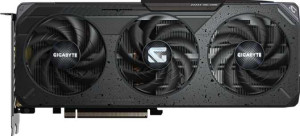
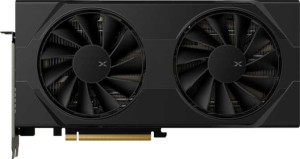
When comparing the Performance specs of the Gigabyte Radeon RX 9060 XT Gaming OC 16GB and the XFX Swift Radeon RX 9060 XT OC Gaming Edition 16GB, the data tells a straightforward story: these two cards are built on an identical performance foundation. Both share a base GPU clock of 1900 MHz and a peak turbo of 3320 MHz, which is a notably high boost frequency for this tier and suggests strong sustained performance headroom in demanding workloads. Memory speed is also locked in sync at 2518 MHz, meaning neither card has an edge in bandwidth delivery to the GPU cores.
At the shader and compute level, the parity continues without exception. Both cards field 2048 shading units, 128 TMUs, and 64 ROPs, yielding identical throughput figures: a pixel fill rate of 212.5 GPixel/s, a texture rate of 425 GTexels/s, and 27.2 TFLOPS of floating-point performance. In practice, this means rasterization throughput, texture sampling capacity, and general compute capability will be indistinguishable between the two in any real-world gaming or creative workload. Both also support Double Precision Floating Point, which benefits scientific and professional compute tasks, though this is a shared trait and confers no relative advantage to either.
The verdict for this group is a complete tie. Every performance metric provided is numerically identical across both cards. Neither the Gigabyte Gaming OC nor the XFX Swift OC holds any measurable performance edge based on the available data. Buyers should look to other spec groups — such as cooling, power delivery, or build quality — to differentiate between these two offerings.