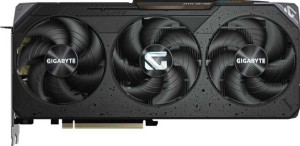
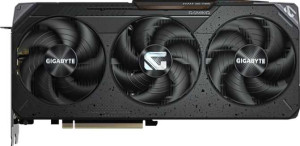
The most telling gap between these two cards lies in their raw compute muscle. The RX 9070 XT Gaming OC delivers 50.14 TFLOPS of floating-point performance versus 38.71 TFLOPS on the RX 9070 Gaming OC — a roughly 30% advantage that directly translates to more headroom in shader-heavy workloads, ray tracing, and compute tasks. This gap is driven by the XT's larger shader array (4096 vs. 3584 shading units) and a significantly higher GPU turbo clock (3060 MHz vs. 2700 MHz), meaning the XT both has more execution units and runs them faster.
The texture throughput story reinforces this lead: the XT reaches 783.4 GTexels/s compared to 604.8 GTexels/s on the non-XT, which matters in texture-rich, high-resolution scenes where the GPU must sample and filter large amounts of surface data per frame. Pixel fill rate follows a similar pattern — 391.7 GPixel/s vs. 345.6 GPixel/s — though the gap here is narrower because both cards share the same 128 ROPs, making pixel output the most evenly matched dimension of their performance profiles. Memory speed is identical at 2518 MHz on both, so bandwidth is not a differentiator.
Overall, the RX 9070 XT Gaming OC holds a clear and meaningful performance advantage in this group. The combination of more shading units, higher boost clocks, and substantially greater compute and texture throughput gives it a consistent edge across virtually every GPU-bound scenario. The non-XT is not a weak card, but buyers prioritizing peak performance should lean toward the XT without hesitation.