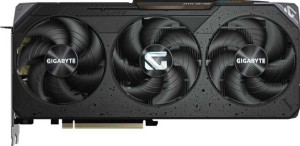
Gigabyte Radeon RX 9070 Gaming OC
MSI GeForce RTX 5070 Shadow 3X

Gigabyte Radeon RX 9070 Gaming OC MSI GeForce RTX 5070 Shadow 3X

Overview

Welcome to our in-depth spec comparison between the Gigabyte Radeon RX 9070 Gaming OC and the MSI GeForce RTX 5070 Shadow 3X — two mid-to-high-end graphics cards built on cutting-edge 5 nm architecture. These GPUs take notably different approaches across key areas such as memory configuration, raw compute throughput, display output flexibility, and feature support, making the choice between them anything but straightforward.

Common Features

  • Both products support Double Precision Floating Point (DPFP).
  • Both products support ECC memory.
  • Both products are compatible with DirectX 12 Ultimate.
  • Both products support OpenGL version 4.6.
  • Both products support multi-display technology.
  • Both products support ray tracing.
  • Both products support 3D.
  • XeSS (XMX) support is not available on either product.
  • AMD SAM / Intel Resizable BAR is listed as Intel Resizable BAR on both products.
  • LHR is not present on either product.
  • Both products include an HDMI output with HDMI version 2.1b.
  • Neither product has USB-C ports.
  • Neither product has DVI outputs.
  • Neither product has mini DisplayPort outputs.
  • Both products use PCI Express version 5.
  • Both products are manufactured on a 5 nm semiconductor process.
  • Air-water cooling is not available on either product.

Main Differences

  • GPU base clock speed is 1440 MHz on Gigabyte Radeon RX 9070 Gaming OC and 2325 MHz on MSI GeForce RTX 5070 Shadow 3X.
  • GPU turbo clock speed is 2700 MHz on Gigabyte Radeon RX 9070 Gaming OC and 2512 MHz on MSI GeForce RTX 5070 Shadow 3X.
  • Pixel rate is 345.6 GPixel/s on Gigabyte Radeon RX 9070 Gaming OC and 201 GPixel/s on MSI GeForce RTX 5070 Shadow 3X.
  • Floating-point performance is 38.71 TFLOPS on Gigabyte Radeon RX 9070 Gaming OC and 30.87 TFLOPS on MSI GeForce RTX 5070 Shadow 3X.
  • Texture rate is 604.8 GTexels/s on Gigabyte Radeon RX 9070 Gaming OC and 482.3 GTexels/s on MSI GeForce RTX 5070 Shadow 3X.
  • GPU memory speed is 2518 MHz on Gigabyte Radeon RX 9070 Gaming OC and 1750 MHz on MSI GeForce RTX 5070 Shadow 3X.
  • Shading units total 3584 on Gigabyte Radeon RX 9070 Gaming OC and 6144 on MSI GeForce RTX 5070 Shadow 3X.
  • Texture mapping units (TMUs) number 224 on Gigabyte Radeon RX 9070 Gaming OC and 192 on MSI GeForce RTX 5070 Shadow 3X.
  • Render output units (ROPs) number 128 on Gigabyte Radeon RX 9070 Gaming OC and 80 on MSI GeForce RTX 5070 Shadow 3X.
  • Effective memory speed is 20000 MHz on Gigabyte Radeon RX 9070 Gaming OC and 28000 MHz on MSI GeForce RTX 5070 Shadow 3X.
  • Maximum memory bandwidth is 644.6 GB/s on Gigabyte Radeon RX 9070 Gaming OC and 672 GB/s on MSI GeForce RTX 5070 Shadow 3X.
  • VRAM is 16 GB on Gigabyte Radeon RX 9070 Gaming OC and 12 GB on MSI GeForce RTX 5070 Shadow 3X.
  • GDDR version is GDDR6 on Gigabyte Radeon RX 9070 Gaming OC and GDDR7 on MSI GeForce RTX 5070 Shadow 3X.
  • Memory bus width is 256-bit on Gigabyte Radeon RX 9070 Gaming OC and 192-bit on MSI GeForce RTX 5070 Shadow 3X.
  • OpenCL version is 2.2 on Gigabyte Radeon RX 9070 Gaming OC and 3 on MSI GeForce RTX 5070 Shadow 3X.
  • DLSS support is present on MSI GeForce RTX 5070 Shadow 3X but not available on Gigabyte Radeon RX 9070 Gaming OC.
  • RGB lighting is present on Gigabyte Radeon RX 9070 Gaming OC but not available on MSI GeForce RTX 5070 Shadow 3X.
  • HDMI port count is 2 on Gigabyte Radeon RX 9070 Gaming OC and 1 on MSI GeForce RTX 5070 Shadow 3X.
  • DisplayPort output count is 2 on Gigabyte Radeon RX 9070 Gaming OC and 3 on MSI GeForce RTX 5070 Shadow 3X.
  • GPU architecture is RDNA 4.0 on Gigabyte Radeon RX 9070 Gaming OC and Blackwell on MSI GeForce RTX 5070 Shadow 3X.
  • Thermal Design Power (TDP) is 220W on Gigabyte Radeon RX 9070 Gaming OC and 250W on MSI GeForce RTX 5070 Shadow 3X.
  • Transistor count is 53900 million on Gigabyte Radeon RX 9070 Gaming OC and 31100 million on MSI GeForce RTX 5070 Shadow 3X.
  • Card width is 288 mm on Gigabyte Radeon RX 9070 Gaming OC and 303 mm on MSI GeForce RTX 5070 Shadow 3X.
  • Card height is 132 mm on Gigabyte Radeon RX 9070 Gaming OC and 121 mm on MSI GeForce RTX 5070 Shadow 3X.
Specs Comparison
Gigabyte Radeon RX 9070 Gaming OC

Gigabyte Radeon RX 9070 Gaming OC

MSI GeForce RTX 5070 Shadow 3X

MSI GeForce RTX 5070 Shadow 3X

Performance:
GPU clock speed 1440 MHz 2325 MHz
GPU turbo 2700 MHz 2512 MHz
pixel rate 345.6 GPixel/s 201 GPixel/s
floating-point performance 38.71 TFLOPS 30.87 TFLOPS
texture rate 604.8 GTexels/s 482.3 GTexels/s
GPU memory speed 2518 MHz 1750 MHz
shading units 3584 6144
texture mapping units (TMUs) 224 192
render output units (ROPs) 128 80
Has Double Precision Floating Point (DPFP)

At first glance, the MSI RTX 5070's higher base clock of 2325 MHz versus the Gigabyte RX 9070's 1440 MHz might suggest a raw speed advantage — but GPU architectures don't work that way. Clock speed only means something in the context of how much work is done per cycle. The RTX 5070 also peaks at a lower turbo of 2512 MHz, while the RX 9070 boosts all the way to 2700 MHz, erasing even that base-clock narrative under sustained load.

Where it really matters, the RX 9070 dominates across the throughput metrics. Its 38.71 TFLOPS of floating-point performance outpaces the RTX 5070's 30.87 TFLOPS — a roughly 25% gap that directly translates to raw shader compute capacity. The RX 9070 also leads in pixel rate (345.6 vs. 201 GPixel/s) and texture rate (604.8 vs. 482.3 GTexels/s), meaning it can push more pixels and sample more textures per second. These figures directly impact rendering throughput in rasterized workloads, and the gaps here are substantial. The RX 9070's faster memory speed of 2518 MHz versus 1750 MHz on the RTX 5070 further supports higher bandwidth, reducing potential bottlenecks when feeding data to those shader units.

The RTX 5070's one notable hardware advantage is its significantly higher shading unit count (6144 vs. 3584), but this advantage is clearly not translating into higher throughput given the TFLOPS and texture rate deltas — pointing to the RX 9070's architecture running each unit more efficiently at these clock speeds. Both cards support Double Precision Floating Point, which matters for scientific or compute workloads. Overall, the Gigabyte RX 9070 Gaming OC holds a clear performance edge on every major throughput metric in this group.

Memory:
effective memory speed 20000 MHz 28000 MHz
maximum memory bandwidth 644.6 GB/s 672 GB/s
VRAM 16GB 12GB
GDDR version GDDR6 GDDR7
memory bus width 256-bit 192-bit
Supports ECC memory

The memory configurations here tell an interesting architectural story. The RTX 5070 uses the newer GDDR7 standard running at an effective 28000 MHz, versus the RX 9070's GDDR6 at 20000 MHz — a generational leap in per-pin speed. Yet Nvidia pairs that fast memory with a narrower 192-bit bus, while AMD goes wider at 256-bit. The result is a near-dead-heat in maximum memory bandwidth: 672 GB/s for the RTX 5070 versus 644.6 GB/s for the RX 9070. In practice, that ~4% bandwidth difference is negligible — both cards will feed their GPUs at effectively the same rate in real-world scenarios.

The more consequential differentiator is VRAM capacity. The RX 9070 carries 16GB compared to the RTX 5070's 12GB. At 4K with heavily modded games, large texture packs, or AI-assisted workloads, VRAM capacity becomes a hard ceiling — once you hit it, performance can cliff sharply. The 4GB advantage gives the RX 9070 meaningful headroom, both today and as titles grow more memory-hungry over the next few years. Both cards support ECC memory, which is a niche but welcome feature for users running compute or professional workloads where data integrity matters.

On balance, the Gigabyte RX 9070 Gaming OC holds the edge in this group. The RTX 5070's GDDR7 technology is impressive, but it's effectively neutralized by the bus-width tradeoff, leaving VRAM capacity as the deciding factor — and a 16GB vs 12GB gap is difficult to dismiss for anyone planning to push high resolutions or use this card beyond a typical upgrade cycle.

Features:
DirectX version DirectX 12 Ultimate DirectX 12 Ultimate
OpenGL version 4.6 4.6
OpenCL version 2.2 3
Supports multi-display technology
supports ray tracing
Supports 3D
supports DLSS
has XeSS (XMX)
AMD SAM / Intel Resizable BAR Intel Resizable BAR Intel Resizable BAR
has LHR
has RGB lighting
supported displays 4 4

Much of this feature set is shared ground — both cards support DirectX 12 Ultimate, ray tracing, multi-display output up to 4 screens, and Resizable BAR, making them equally capable on the foundational checklist. The one API difference worth noting is OpenCL: the RTX 5070 supports OpenCL 3 versus the RX 9070's OpenCL 2.2, which could matter for GPU-accelerated compute tasks or certain creative applications that leverage the newer standard.

The sharpest dividing line in this group is upscaling. The RTX 5070 supports DLSS, Nvidia's AI-driven upscaling technology, while the RX 9070 does not list equivalent support — no DLSS, and no XeSS either. For gamers who rely on upscaling to boost frame rates at high resolutions, this is a meaningful practical gap. DLSS in particular has broad game support and a well-established reputation for image quality, and its absence on the RX 9070 means users of that card are more dependent on native rendering performance alone.

The remaining differences are minor by comparison. The RX 9070 includes RGB lighting, which the RTX 5070 lacks — relevant only to those building aesthetically coordinated systems. On the whole, the MSI RTX 5070 holds the edge in this group, primarily on the strength of DLSS support, which is a tangible in-game feature rather than a spec-sheet footnote.

Ports:
has an HDMI output
HDMI ports 2 1
HDMI version HDMI 2.1b HDMI 2.1b
DisplayPort outputs 2 3
USB-C ports 0 0
DVI outputs 0 0
mini DisplayPort outputs 0 0

Both cards offer a total of four display outputs and share the same HDMI 2.1b standard — capable of driving 4K at high refresh rates or 8K displays — so the maximum connected monitor count and top-end display compatibility are identical. The difference lies purely in how those four ports are distributed.

The RX 9070 opts for a 2 HDMI + 2 DisplayPort split, while the RTX 5070 goes 1 HDMI + 3 DisplayPort. In practice, this matters most depending on your display setup. Users running multiple TVs, capture devices, or monitors that only accept HDMI will find the RX 9070's dual HDMI more convenient, avoiding the need for adapters. Conversely, the RTX 5070's three DisplayPort outputs suit multi-monitor PC setups better, since most desktop monitors — particularly high-refresh-rate gaming panels — use DisplayPort as their primary connection.

Neither configuration is objectively superior; it comes down to what you're plugging in. For a typical gaming desk with two or three DisplayPort monitors, the RTX 5070 has a slight practical edge. For mixed or HDMI-heavy environments, the RX 9070 is the more flexible choice. Overall, this group is essentially a tie — same total outputs, same HDMI version, just a different port mix tailored to different use cases.

General info:
GPU architecture RDNA 4.0 Blackwell
release date March 2025 March 2025
Thermal Design Power (TDP) 220W 250W
PCI Express (PCIe) version 5 5
semiconductor size 5 nm 5 nm
number of transistors 53900 million 31100 million
Has air-water cooling
width 288 mm 303 mm
height 132 mm 121 mm

Manufactured on the same 5nm process node and both connecting via PCIe 5, these cards share a common hardware foundation — but the silicon beneath the heatsink tells a striking story. The RX 9070 packs 53,900 million transistors versus the RTX 5070's 31,100 million, a gap of over 70%. A higher transistor count generally reflects more on-die logic and compute resources, and in this case it aligns directly with the RX 9070's throughput leads seen in raw performance metrics. Getting that density from the same 5nm node is a notable engineering achievement for AMD's RDNA 4.0 architecture.

Power efficiency is another area where the RX 9070 distinguishes itself. Its 220W TDP against the RTX 5070's 250W means it draws 30 fewer watts under full load — relevant not just for electricity costs, but for thermal headroom, fan noise, and PSU requirements. Users in compact builds or with tighter power budgets will appreciate the lower ceiling, and it makes the RX 9070's performance-per-watt ratio particularly compelling given its stronger throughput numbers.

Physically, the two cards are close in size, with the RTX 5070 being slightly longer (303mm vs 288mm) and the RX 9070 a bit taller (132mm vs 121mm) — differences small enough that case compatibility should be checked individually rather than declared an advantage for either. Overall, the RX 9070 Gaming OC holds the edge in this group, combining a far higher transistor count with a lower TDP — a combination that points to a more efficient architectural design.

Comparison Summary & Verdict

After examining all the evidence, both cards deliver strong but distinctly different value propositions. The Gigabyte Radeon RX 9070 Gaming OC stands out with higher floating-point performance at 38.71 TFLOPS, a larger 16 GB GDDR6 VRAM pool, more ROPs and TMUs, and a lower 220W TDP — making it an attractive pick for workloads that demand raw throughput and generous video memory headroom. The MSI GeForce RTX 5070 Shadow 3X, on the other hand, counters with a higher base clock, faster GDDR7 memory at 28000 MHz effective speed, more shading units, and exclusive access to DLSS support — a significant advantage for gamers who rely on AI-powered upscaling. It also offers three DisplayPort outputs for multi-monitor setups. Ultimately, the Gigabyte card suits users who prioritize compute muscle and VRAM capacity, while the MSI card is the better fit for gamers who value DLSS, newer memory technology, and a higher base clock frequency.

Gigabyte Radeon RX 9070 Gaming OC
Buy Gigabyte Radeon RX 9070 Gaming OC if...

Buy the Gigabyte Radeon RX 9070 Gaming OC if you want more VRAM (16 GB vs 12 GB), higher raw floating-point performance, and a lower power draw of 220W.

MSI GeForce RTX 5070 Shadow 3X
Buy MSI GeForce RTX 5070 Shadow 3X if...

Buy the MSI GeForce RTX 5070 Shadow 3X if you rely on DLSS for AI-powered upscaling, want faster GDDR7 memory, or need three DisplayPort outputs for a multi-monitor setup.