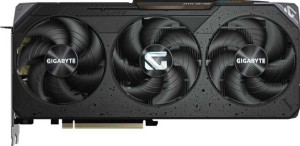
Gigabyte Radeon RX 9070 Gaming OC
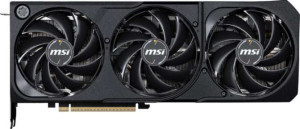
MSI GeForce RTX 5070 Shadow 3X OC

Gigabyte Radeon RX 9070 Gaming OC MSI GeForce RTX 5070 Shadow 3X OC

Overview

When choosing between the Gigabyte Radeon RX 9070 Gaming OC and the MSI GeForce RTX 5070 Shadow 3X OC, buyers face a genuinely close contest between two modern mid-to-high-end GPUs built on entirely different architectures. This comparison dives into the key battlegrounds: raw compute throughput, memory configuration, feature support, and physical design — to help you decide which card truly fits your needs.

Common Features

  • Both products support Double Precision Floating Point (DPFP).
  • Both products support ECC memory.
  • Both products use a 5 nm semiconductor size.
  • Both products use PCIe version 5.
  • Both products support DirectX 12 Ultimate.
  • Both products support OpenGL version 4.6.
  • Both products support multi-display technology.
  • Both products support ray tracing.
  • Both products support 3D.
  • XeSS (XMX) support is not available on either product.
  • Neither product has LHR.
  • Both products feature an HDMI 2.1b output.
  • Neither product includes USB-C ports.
  • Neither product includes DVI outputs.
  • Neither product includes mini DisplayPort outputs.
  • Neither product has air-water cooling.
  • Both products support Intel Resizable BAR.

Main Differences

  • GPU base clock speed is 1440 MHz on Gigabyte Radeon RX 9070 Gaming OC and 2325 MHz on MSI GeForce RTX 5070 Shadow 3X OC.
  • GPU turbo clock is 2700 MHz on Gigabyte Radeon RX 9070 Gaming OC and 2542 MHz on MSI GeForce RTX 5070 Shadow 3X OC.
  • Pixel rate is 345.6 GPixel/s on Gigabyte Radeon RX 9070 Gaming OC and 203.4 GPixel/s on MSI GeForce RTX 5070 Shadow 3X OC.
  • Floating-point performance is 38.71 TFLOPS on Gigabyte Radeon RX 9070 Gaming OC and 31.24 TFLOPS on MSI GeForce RTX 5070 Shadow 3X OC.
  • Texture rate is 604.8 GTexels/s on Gigabyte Radeon RX 9070 Gaming OC and 488.1 GTexels/s on MSI GeForce RTX 5070 Shadow 3X OC.
  • GPU memory speed is 2518 MHz on Gigabyte Radeon RX 9070 Gaming OC and 1750 MHz on MSI GeForce RTX 5070 Shadow 3X OC.
  • Shading units total 3584 on Gigabyte Radeon RX 9070 Gaming OC and 6144 on MSI GeForce RTX 5070 Shadow 3X OC.
  • Texture mapping units (TMUs) number 224 on Gigabyte Radeon RX 9070 Gaming OC and 192 on MSI GeForce RTX 5070 Shadow 3X OC.
  • Render output units (ROPs) number 128 on Gigabyte Radeon RX 9070 Gaming OC and 80 on MSI GeForce RTX 5070 Shadow 3X OC.
  • Effective memory speed is 20000 MHz on Gigabyte Radeon RX 9070 Gaming OC and 28000 MHz on MSI GeForce RTX 5070 Shadow 3X OC.
  • Maximum memory bandwidth is 644.6 GB/s on Gigabyte Radeon RX 9070 Gaming OC and 672 GB/s on MSI GeForce RTX 5070 Shadow 3X OC.
  • VRAM is 16 GB on Gigabyte Radeon RX 9070 Gaming OC and 12 GB on MSI GeForce RTX 5070 Shadow 3X OC.
  • Memory type is GDDR6 on Gigabyte Radeon RX 9070 Gaming OC and GDDR7 on MSI GeForce RTX 5070 Shadow 3X OC.
  • Memory bus width is 256-bit on Gigabyte Radeon RX 9070 Gaming OC and 192-bit on MSI GeForce RTX 5070 Shadow 3X OC.
  • OpenCL version is 2.2 on Gigabyte Radeon RX 9070 Gaming OC and 3 on MSI GeForce RTX 5070 Shadow 3X OC.
  • DLSS support is present on MSI GeForce RTX 5070 Shadow 3X OC but not available on Gigabyte Radeon RX 9070 Gaming OC.
  • RGB lighting is present on Gigabyte Radeon RX 9070 Gaming OC but not available on MSI GeForce RTX 5070 Shadow 3X OC.
  • HDMI port count is 2 on Gigabyte Radeon RX 9070 Gaming OC and 1 on MSI GeForce RTX 5070 Shadow 3X OC.
  • DisplayPort output count is 2 on Gigabyte Radeon RX 9070 Gaming OC and 3 on MSI GeForce RTX 5070 Shadow 3X OC.
  • GPU architecture is RDNA 4.0 on Gigabyte Radeon RX 9070 Gaming OC and Blackwell on MSI GeForce RTX 5070 Shadow 3X OC.
  • Thermal Design Power (TDP) is 220W on Gigabyte Radeon RX 9070 Gaming OC and 250W on MSI GeForce RTX 5070 Shadow 3X OC.
  • Number of transistors is 53900 million on Gigabyte Radeon RX 9070 Gaming OC and 31100 million on MSI GeForce RTX 5070 Shadow 3X OC.
  • Width is 288 mm on Gigabyte Radeon RX 9070 Gaming OC and 303 mm on MSI GeForce RTX 5070 Shadow 3X OC.
  • Height is 132 mm on Gigabyte Radeon RX 9070 Gaming OC and 121 mm on MSI GeForce RTX 5070 Shadow 3X OC.
Specs Comparison
Gigabyte Radeon RX 9070 Gaming OC

Gigabyte Radeon RX 9070 Gaming OC

MSI GeForce RTX 5070 Shadow 3X OC

MSI GeForce RTX 5070 Shadow 3X OC

Performance:
GPU clock speed 1440 MHz 2325 MHz
GPU turbo 2700 MHz 2542 MHz
pixel rate 345.6 GPixel/s 203.4 GPixel/s
floating-point performance 38.71 TFLOPS 31.24 TFLOPS
texture rate 604.8 GTexels/s 488.1 GTexels/s
GPU memory speed 2518 MHz 1750 MHz
shading units 3584 6144
texture mapping units (TMUs) 224 192
render output units (ROPs) 128 80
Has Double Precision Floating Point (DPFP)

At first glance, the MSI RTX 5070 appears to hold a raw hardware advantage with 6,144 shading units versus the Gigabyte RX 9070's 3,584 — nearly 72% more shader processors. However, shader count alone does not determine real-world throughput. The RX 9070 compensates aggressively through clock speed: its GPU turbo of 2700 MHz dramatically outpaces the RTX 5070's 2542 MHz boost, and more importantly, the RX 9070 carries a higher count of both TMUs (224 vs. 192) and ROPs (128 vs. 80). ROPs in particular govern pixel output and are a direct bottleneck for high-resolution rendering, making this a meaningful gap.

When those clock speeds are multiplied through the pipeline, the throughput numbers tell a decisive story. The RX 9070 achieves a floating-point performance of 38.71 TFLOPS compared to the RTX 5070's 31.24 TFLOPS — a roughly 24% lead in raw compute. Its pixel fill rate of 345.6 GPixel/s is nearly 70% higher than the RTX 5070's 203.4 GPixel/s, which translates directly to the GPU's ability to push pixels at high resolutions and frame rates. The texture rate advantage (604.8 vs. 488.1 GTexels/s) is similarly notable. Additionally, the RX 9070's memory speed of 2518 MHz significantly outpaces the RTX 5070's 1750 MHz, reducing a potential data-starving bottleneck in memory-intensive workloads.

On the performance metrics provided, the Gigabyte RX 9070 Gaming OC holds a clear edge. Despite its lower shader unit count, its superior clock speeds, higher ROP and TMU counts, faster memory, and substantially better fill-rate and compute figures all point in the same direction. Both cards support Double Precision Floating Point, making that a non-differentiator. For users prioritizing raw rasterization throughput based strictly on these specs, the RX 9070 is the stronger performer in this group.
Memory:
effective memory speed 20000 MHz 28000 MHz
maximum memory bandwidth 644.6 GB/s 672 GB/s
VRAM 16GB 12GB
GDDR version GDDR6 GDDR7
memory bus width 256-bit 192-bit
Supports ECC memory

The memory configurations here represent two distinct engineering philosophies. The RTX 5070 opts for GDDR7 running at an effective 28000 MHz, paired with a narrower 192-bit bus, while the RX 9070 uses GDDR6 on a wider 256-bit bus clocked at 20000 MHz. GDDR7 is a generational leap in per-pin efficiency, allowing NVIDIA to achieve competitive bandwidth despite the reduced bus width — a more die-area-efficient approach that frees up space on the GPU package.

The bandwidth outcome is remarkably close: the RTX 5070 reaches 672 GB/s versus the RX 9070's 644.6 GB/s, a gap of under 5%. In practice, both cards will rarely hit a memory bandwidth ceiling in typical gaming scenarios, making this distinction largely imperceptible in day-to-day use. Where the two diverge meaningfully is VRAM capacity: the RX 9070 ships with 16GB against the RTX 5070's 12GB. At 4K with high-resolution texture packs, or in GPU-accelerated compute and AI workloads, that extra 4GB becomes a genuine functional advantage — the difference between fitting an asset entirely in VRAM versus suffering costly system-memory spills.

Both cards support ECC memory, which is a shared feature of note for users running precision workloads. Overall, this group does not produce a clear-cut winner — the RTX 5070 leads on memory speed and technology generation, but the RX 9070's larger 16GB frame buffer is the more consequential advantage for future-proofing and memory-intensive tasks. Users focused on longevity and high-VRAM workloads will favor the RX 9070; those prioritizing raw memory efficiency and cutting-edge technology will lean toward the RTX 5070.

Features:
DirectX version DirectX 12 Ultimate DirectX 12 Ultimate
OpenGL version 4.6 4.6
OpenCL version 2.2 3
Supports multi-display technology
supports ray tracing
Supports 3D
supports DLSS
has XeSS (XMX)
AMD SAM / Intel Resizable BAR Intel Resizable BAR Intel Resizable BAR
has LHR
has RGB lighting
supported displays 4 4

Much of the feature landscape here is shared ground: both cards support DirectX 12 Ultimate, OpenGL 4.6, ray tracing, 3D output, multi-display up to 4 screens, and Resizable BAR — a solid, modern baseline that neither card can claim as an exclusive advantage. The more telling divergence lies in upscaling support. The RTX 5070 supports DLSS, NVIDIA's AI-driven upscaling technology, while the RX 9070 does not support DLSS — and neither card supports XeSS. DLSS is one of the most impactful in-game features available today, capable of significantly boosting frame rates while preserving image quality in supported titles, and its absence on the RX 9070 is a meaningful functional gap in games that lean on it heavily.

The OpenCL version difference — 3.0 on the RTX 5070 versus 2.2 on the RX 9070 — is worth noting for users running GPU-accelerated compute tasks such as video processing or scientific workloads, as OpenCL 3.0 provides a more current API feature set. For purely gaming-focused users, this distinction carries little weight. On the aesthetic side, the RX 9070 includes RGB lighting while the RTX 5070 does not — a minor but real consideration for users building visually styled systems.

Taken together, the RTX 5070 holds the feature advantage in this group. DLSS support is the deciding factor: it is a widely adopted, high-impact technology that meaningfully expands playable frame rates in a large and growing library of games. The RX 9070's RGB lighting is a cosmetic consolation that does not offset a functional software feature gap of this magnitude.

Ports:
has an HDMI output
HDMI ports 2 1
HDMI version HDMI 2.1b HDMI 2.1b
DisplayPort outputs 2 3
USB-C ports 0 0
DVI outputs 0 0
mini DisplayPort outputs 0 0

Both cards offer a total of four display outputs and share the same HDMI 2.1b standard — capable of driving 4K at high refresh rates or 8K output — so neither holds an advantage on connection quality. The difference is purely in how those four ports are distributed. The RX 9070 provides 2 HDMI and 2 DisplayPort outputs, while the RTX 5070 goes the opposite direction with 1 HDMI and 3 DisplayPort.

Whether this matters depends entirely on the user's display setup. HDMI is the dominant standard for TVs, consumer monitors, and living-room configurations, making the RX 9070's dual-HDMI layout friendlier for users who connect to a television alongside a monitor, or who run two HDMI-native displays without needing an adapter. Conversely, DisplayPort is generally preferred in multi-monitor desktop workstation setups, where daisy-chaining and higher refresh rate reliability are priorities — giving the RTX 5070 a slight edge there. Neither card includes USB-C or DVI outputs, so those are non-factors.

This group is effectively a tie in capability, with the winner depending on personal use case. The RX 9070 suits HDMI-heavy setups better, while the RTX 5070 is more accommodating for DisplayPort-centric multi-monitor rigs. Users with a standard single-monitor or mixed setup will find both cards equally capable with no adapters required.

General info:
GPU architecture RDNA 4.0 Blackwell
release date March 2025 March 2025
Thermal Design Power (TDP) 220W 250W
PCI Express (PCIe) version 5 5
semiconductor size 5 nm 5 nm
number of transistors 53900 million 31100 million
Has air-water cooling
width 288 mm 303 mm
height 132 mm 121 mm

Sharing the same 5nm process node and PCIe 5.0 interface, these two cards are built on equal manufacturing footing — but their silicon tells a very different story. The RX 9070 packs 53,900 million transistors versus the RTX 5070's 31,100 million, a gap of over 70%. Transistor count reflects the complexity and density of the die, and AMD's RDNA 4.0 architecture has clearly invested that silicon area heavily — contributing directly to the higher compute throughput observed in the Performance group. NVIDIA's Blackwell architecture, by contrast, achieves its results with a leaner, more compact die, which has its own engineering merits in terms of yield and cost efficiency.

Power consumption is where the RTX 5070 gives something back. Its TDP of 250W runs 30W higher than the RX 9070's 220W. That difference has real consequences: it means higher electricity draw over long gaming sessions, greater heat output that demands more from case airflow, and potentially a stricter PSU requirement. For users in thermally constrained builds or those mindful of running costs, the RX 9070's lower power envelope is a tangible practical advantage. Neither card uses liquid cooling in these SKUs, so both depend entirely on their air-cooling solutions to manage thermals.

On physical size, the RTX 5070 is slightly longer at 303mm versus the RX 9070's 288mm, while the RX 9070 is marginally taller. Both are large cards by any measure, and case compatibility should be verified regardless of choice. Overall, the RX 9070 holds the advantage in this group: its lower 220W TDP makes it the more power-efficient option, and its dramatically higher transistor count signals a more complex and capable die — all while fitting into a slightly more compact length footprint.

Comparison Summary & Verdict

Both cards share a strong foundation — PCIe 5.0, DirectX 12 Ultimate, ray tracing support, and a 5 nm process — but they diverge sharply in several areas. The Gigabyte Radeon RX 9070 Gaming OC stands out with higher floating-point performance (38.71 TFLOPS), more VRAM (16 GB), a wider 256-bit memory bus, and a lower 220W TDP, making it an excellent choice for users who prioritize raw rasterization power and memory headroom. The MSI GeForce RTX 5070 Shadow 3X OC counters with GDDR7 memory, a significantly higher shading unit count (6144), faster effective memory speed, and exclusive DLSS support, giving it an edge for gamers who rely on AI-powered upscaling and modern NVIDIA features. Choose the Gigabyte if capacity and compute efficiency matter most; choose the MSI if DLSS workflows and next-gen memory technology are your priority.

Gigabyte Radeon RX 9070 Gaming OC
Buy Gigabyte Radeon RX 9070 Gaming OC if...

Buy the Gigabyte Radeon RX 9070 Gaming OC if you want more VRAM (16 GB), higher raw floating-point performance, and a lower power draw without needing DLSS support.

MSI GeForce RTX 5070 Shadow 3X OC
Buy MSI GeForce RTX 5070 Shadow 3X OC if...

Buy the MSI GeForce RTX 5070 Shadow 3X OC if DLSS support, faster GDDR7 memory, and a higher shading unit count for AI-assisted rendering are priorities for your workload.